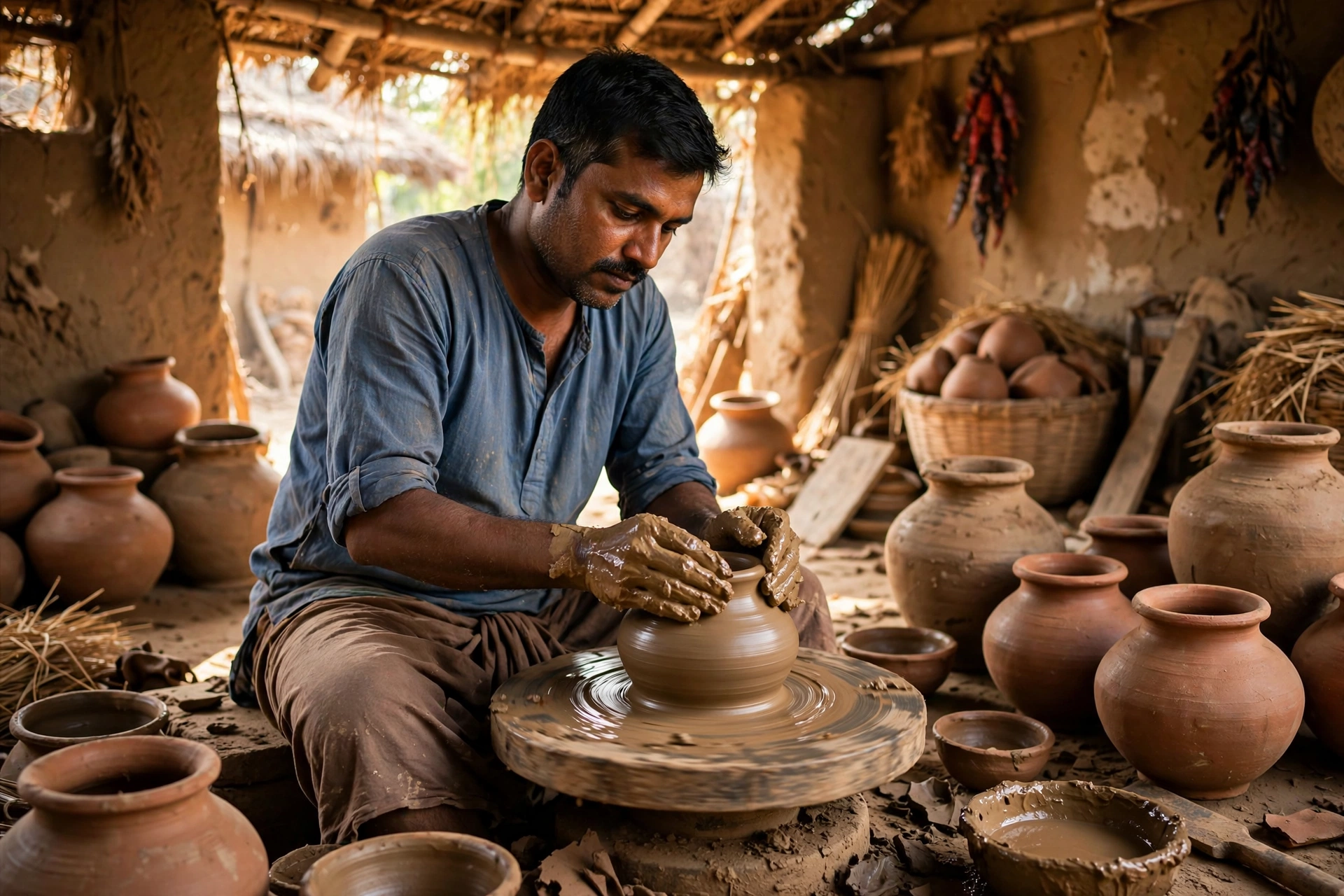
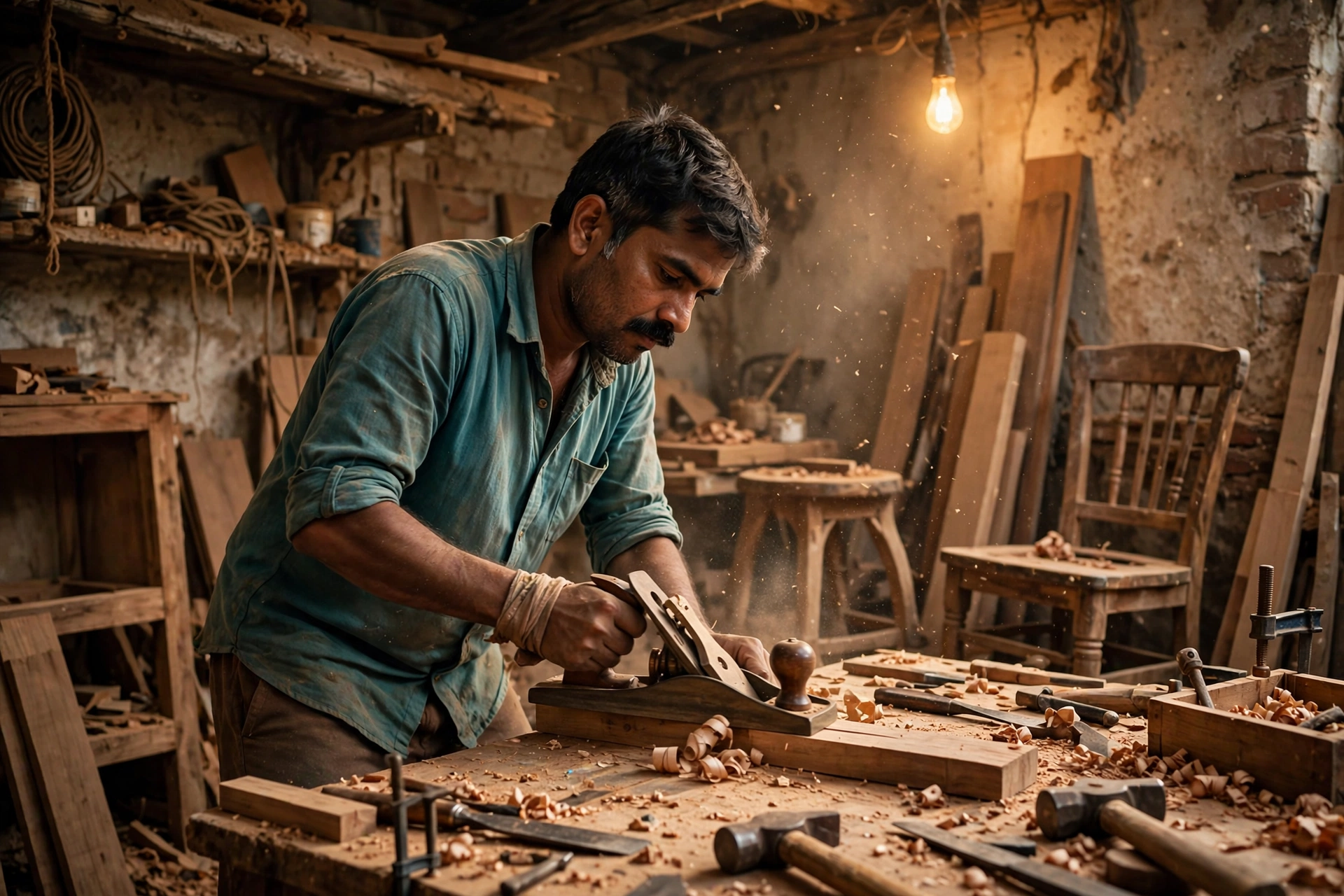
India’s economy runs on the skilled hands of crores of traditional artisans — carpenters shaping wood, blacksmiths forging iron, goldsmiths crafting jewellery, potters moulding clay, barbers, tailors, cobblers, masons, basket weavers and toy makers. For generations these workers have earned their livelihood with hand tools and inherited knowledge, yet most of them remain invisible to the formal economy: no recognition, no modern training, no quality tools and no access to affordable credit.
The PM Vishwakarma Yojana was launched to change exactly this. It is a central-sector scheme of the Ministry of Micro, Small and Medium Enterprises (MSME), Government of India, formally launched on 17 September 2023 — Vishwakarma Jayanti — with a financial outlay of ₹13,000 crore for five years (FY 2023-24 to FY 2027-28). The scheme covers 18 traditional trades and offers a complete package: a government certificate and ID card, free skill training with a stipend of ₹500 per day, a ₹15,000 e-voucher to buy modern tools, and collateral-free loans up to ₹3 lakh at only 5% interest. More than 30 lakh artisans have already registered, making it one of the largest artisan-support programmes in the world.
In this detailed guide we explain, in simple language, what the scheme is, the three pillars it stands on, which 18 trades are covered, every benefit you receive, who is eligible, how free registration works at CSC centres, how the two-stage loan process works, and why the scheme matters for Vocal for Local. At the end, 20 frequently asked questions are answered.
PM Vishwakarma Yojana: Key Facts at a Glance
| Point | Details |
|---|---|
| Scheme | PM Vishwakarma Yojana — Central Sector Scheme, Government of India |
| Nodal Ministry | Ministry of Micro, Small and Medium Enterprises (MSME) |
| Launched | 17 September 2023 (Vishwakarma Jayanti) |
| Total Budget | ₹13,000 crore (FY 2023-24 to FY 2027-28) |
| Artisans Registered | 30 lakh+ (initial enrolment target achieved) |
| Trades Covered | 18 traditional crafts |
| Key Benefits | Certificate + ID card, training with ₹500/day stipend, ₹15,000 toolkit e-voucher, loan up to ₹3 lakh at 5% interest |
| Eligibility | Indian citizen, age 18+, working with hands and tools in one of the 18 trades, unorganised sector, self-employed |
| Registration | Free at Common Service Centres (CSC) with Aadhaar biometric e-KYC; details on pmvishwakarma.gov.in |
| Helpline | 1800 267 7777 (toll-free) |
What Is the PM Vishwakarma Scheme?
PM Vishwakarma is the Government of India’s flagship programme to recognise traditional artisans and craftspeople — called Vishwakarmas — and connect their skills with modern tools, affordable credit and new markets. It is a central pillar of the Vocal for Local vision and the Aatmanirbhar Bharat mission: the idea that India’s traditional crafts should not just survive but thrive in a modern economy.
This is not a one-time grant and not a plain loan scheme either. It is a complete journey built around the artisan: recognition, skill training, modern tools, cheap credit, digital payments and market access. The scheme stands on three pillars, whose Sanskrit names capture its philosophy:
1. Samman — Recognition and Respect
Every enrolled artisan receives a PM Vishwakarma certificate and a photo ID card. For workers who have spent their lives in the informal economy, this government identity is transformative: it formally recognises their skill, gives them dignity and proof of profession, and — most practically — it is the key that unlocks every other benefit of the scheme. Without the certificate and ID, there is no training, no toolkit and no loan. Applications therefore pass a three-level verification (CSC, then Gram Panchayat or Urban Local Body, then the District Implementation Committee) so that only genuine artisans receive this identity.
2. Samarthya — Capability Through Training
Skill upgradation is at the heart of the scheme. Artisans receive basic training of 5 to 7 days, and selected artisans can proceed to advanced training of 15 days or more. Training covers modern techniques for the craft, operation of new tools and machines, quality standards, workplace safety, and even business skills such as bookkeeping, pricing and dealing with customers. For every training day, the artisan receives a stipend of ₹500, paid through DBT into the bank account after training completion — so that learning does not mean losing a day’s earnings. Training is conducted at government ITIs, skill development centres and authorised training partners.
3. Samriddhi — Prosperity Through Finance and Markets
The third pillar puts money and markets into the artisan’s hands: a ₹15,000 e-voucher to buy a modern toolkit, collateral-free loans up to ₹3 lakh at 5% interest, incentives for digital transactions, and marketing support — onboarding onto the Government e-Marketplace (GeM), participation in trade fairs and exhibitions, and help with branding, packaging and quality certification.
Scheme Achievements So Far
Since its launch in September 2023, PM Vishwakarma has scaled rapidly across states and union territories:
- 30 lakh+ artisans registered across the country — the scheme’s initial enrolment target has been achieved.
- 24.5 lakh artisans enrolled in skill training programmes.
- 18.15 lakh toolkit e-vouchers issued to trained artisans.
- 6.18 lakh loans disbursed, with a total loan amount of ₹5,297 crore reaching artisans’ bank accounts.
These figures show a scheme that has moved from announcement to large-scale delivery — with recognition, training, toolkits and credit all flowing to the grassroots.
The 18 Traditional Trades Covered
Eligibility is strictly limited to artisans who work with their hands and tools in one of these 18 traditional trades:
- Carpenter (Suthar / Sutar)
- Boat Maker
- Armourer
- Blacksmith (Lohar)
- Hammer and Tool Kit Maker
- Locksmith
- Goldsmith (Sonar / Swarnakar)
- Potter (Kumhaar)
- Sculptor (Moortikar), Stone Carver and Stone Breaker
- Cobbler (Charmkar) / Shoesmith / Footwear Artisan
- Mason (Rajmistri)
- Basket Maker, Mat Maker, Broom Maker and Coir Weaver
- Doll and Toy Maker (Traditional)
- Barber (Naai)
- Garland Maker (Malakaar)
- Washerman (Dhobi)
- Tailor (Darzi)
- Fishing Net Maker
If your craft is not in this list, you cannot apply — choosing the wrong trade is one of the most common reasons applications are rejected.
Benefits of PM Vishwakarma Yojana in Detail
1. Recognition: PM Vishwakarma Certificate and ID Card
After successful enrolment and the three-level verification, every artisan receives a PM Vishwakarma certificate and photo ID card. This is your government-recognised professional identity. Keep it safe — you will need it for training admission, the toolkit voucher, the loan application and GeM seller registration. For workers who have never had any official proof of their profession, this identity alone is a major gain in dignity and bargaining power.
2. Skill Training with ₹500-per-Day Stipend
Training is completely free and happens in two stages:
- Basic training (5–7 days): modern techniques for your craft — operating new tools, improving work quality, safety rules — plus business skills such as bookkeeping, pricing and customer handling.
- Advanced training (15 days or more): intensive upskilling for selected artisans — design improvement, new machines and preparation for online selling.
For every training day you receive a stipend of ₹500, paid through DBT after training completion. Important: the toolkit voucher and the loan are available only after you complete basic training — skipping training blocks everything else.
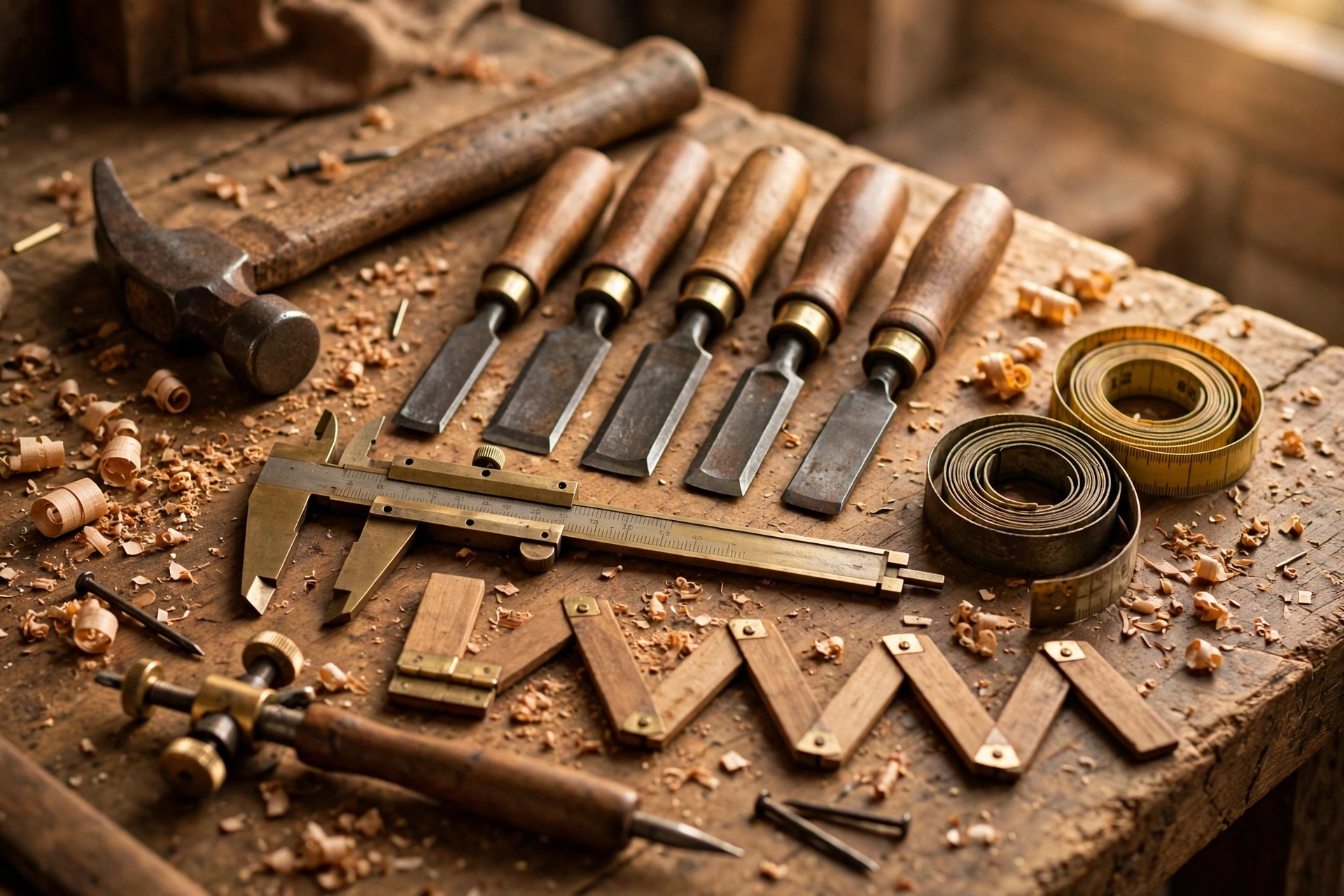
3. ₹15,000 Toolkit E-Voucher
After completing basic training, artisans receive an e-voucher worth ₹15,000 to buy modern tools for their trade. Note carefully: this is not cash. The voucher can be redeemed only at authorised vendors for trade-specific tools. Typical examples:
- Carpenter: electric drill, power saw, measuring tools
- Tailor: motorised sewing machine, interlock machine
- Goldsmith: modern weighing scale, polishing tools
- Barber: professional trimmer, steriliser
- Potter: electric potter’s wheel, kiln equipment
The voucher has limited validity — redeem it in time, or it lapses. Better tools mean faster work, finer finish and higher earnings: this is often the most immediately visible benefit of the scheme.
4. Collateral-Free Loan up to ₹3 Lakh at 5% Interest
The credit component works in two stages, rewarding honest repayment:
- First loan: ₹1 lakh, repayable over 18 months, at 5% interest — no collateral, no guarantor.
- Second loan: ₹2 lakh, repayable over 30 months, at 5% interest — available only to artisans who repay the first loan on time.
The real subsidy is hidden in the interest rate. A loan like this would cost 12–14% in the open market, but the government pays the remaining interest (about 8%) as interest subvention directly to the lending institution. You pay only 5%. Indicative EMIs: about ₹5,780 per month for the ₹1 lakh loan (18 months) and about ₹7,100 per month for the ₹2 lakh loan (30 months).
5. Incentives for Digital Transactions
Artisans are encouraged to accept UPI and other digital payments. The scheme provides incentives on digital transactions as per scheme rules — a double benefit: you build a transaction history that strengthens your credit profile for future borrowing, and you earn incentive money on top of your sales. For artisans who have always dealt only in cash, this is the first step into the formal financial system.
6. Marketing Support
Skill without a market does not pay. The scheme therefore provides:
- GeM onboarding: register as a seller on the Government e-Marketplace (GeM), where government departments and large buyers can purchase directly from you.
- Trade fairs and exhibitions: display and sell products at fairs and exhibitions organised under the scheme.
- Branding and packaging support: help with logos, packaging design, quality certification and online listings so that your products command better prices instead of being sold cheap to middlemen.
Who Is Eligible? (Eligibility Criteria)
You can apply if you meet all of the following conditions:
- Age: 18 years or above on the date of application.
- Citizenship: Indian citizen.
- Occupation: engaged in one of the 18 traditional trades, working with hands and tools, in the unorganised sector on a self-employment basis.
- No similar loan in 5 years: you must not have taken loans under PMEGP, PM Mudra Yojana or PM SVANidhi in the last 5 years.
- One per family: only one member per family (husband, wife and unmarried children counted as one family) can avail the benefits.
- No government employees: you — and your family members — must not be in government service.
Failing even one of these conditions leads to rejection, so check carefully before applying.
How to Register (Free Enrolment Process)
Registration under PM Vishwakarma is completely free. If anyone demands money for enrolment, it is fraud — report it. The process is:
- Visit the nearest Common Service Centre (CSC) with your Aadhaar card and Aadhaar-linked mobile number.
- Biometric e-KYC: your identity is verified at the CSC through fingerprint or iris scan.
- Fill the application form: family details, ration card details and bank account details; select your trade from the list of 18.
- Three-level verification: the application is checked first at the CSC, then by the Gram Panchayat or Urban Local Body, and finally by the District Implementation Committee.
- Certificate and ID card issued: after approval, you receive the PM Vishwakarma certificate and ID card — and become eligible for training, the toolkit voucher and the loan.
Note: the scheme’s initial enrolment target of 30 lakh artisans has already been achieved. New applications are still accepted at CSCs, but budgets and training slots are finite — applying early is advisable. The full journey from application to training to toolkit to loan typically takes 3 to 4 months, so keep your application number safe and follow up at the CSC.
How the Loan Process Works (Step by Step)
- Complete your basic skill training and receive the training certificate.
- Apply for the first loan of ₹1 lakh through the scheme’s lending process — no collateral or guarantor is required.
- Repay in 18 monthly EMIs (about ₹5,780 per month) at 5% interest; the government pays the rest of the interest as subvention to the lender.
- Repay on time and on schedule — your repayment record is tracked and reported.
- Become eligible for the second loan of ₹2 lakh over 30 months (about ₹7,100 per month EMI), again at 5% interest.
The two-stage design is deliberate: the first small loan builds your credit history, and disciplined repayment unlocks the bigger second loan. Defaulting on the first loan closes the door to the second. Use the loan only for your trade — working capital, raw material, shop improvement — never for consumption.
Why This Scheme Matters: Vocal for Local
India’s traditional artisans compete against factory-made, mass-produced goods — often imported — that undercut them on price. PM Vishwakarma attacks this problem from every side at once: better skills raise product quality, modern tools raise productivity, cheap credit frees artisans from the moneylender’s trap, digital payments bring them into the formal economy, and GeM and trade fairs connect them directly to buyers willing to pay for authentic handmade products.
This is the economic logic of Vocal for Local: when a potter, weaver or goldsmith can produce better goods at lower cost and sell them directly to customers and government buyers, traditional crafts stop being a story of decline and become a source of rural and urban prosperity. The philosophy also connects to India’s heritage — Lord Vishwakarma is worshipped as the divine architect and patron of craftsmen, and the scheme consciously honours that tradition. With 30 lakh artisans enrolled and over ₹5,297 crore in loans disbursed, PM Vishwakarma is one of the largest experiments in the world in formalising artisanal work.
Frequently Asked Questions (FAQs)
Q1. When was the PM Vishwakarma Yojana launched?
A. The scheme was launched on 17 September 2023 (Vishwakarma Jayanti).
Q2. Which ministry runs the scheme?
A. The Ministry of Micro, Small and Medium Enterprises (MSME), Government of India.
Q3. What is the total budget of the scheme?
A. ₹13,000 crore for the period FY 2023-24 to FY 2027-28.
Q4. How many trades are covered?
A. 18 traditional trades — carpenter, blacksmith, goldsmith, potter, tailor, barber, mason, cobbler and others listed above.
Q5. How much loan can I get?
A. Up to ₹3 lakh in total — ₹1 lakh first (18 months) and ₹2 lakh second (30 months) — at 5% interest, with no collateral.
Q6. How much is the toolkit support?
A. An e-voucher worth ₹15,000 for buying modern tools — it is not cash.
Q7. What do I get during training?
A. Free basic training (5–7 days); advanced training (15+ days) for selected artisans; a stipend of ₹500 per day.
Q8. Where do I apply?
A. Free enrolment at your nearest Common Service Centre (CSC) with Aadhaar biometric e-KYC. You can also check details on pmvishwakarma.gov.in.
Q9. Is there any application fee?
A. No. Enrolment is completely free. Anyone demanding money is committing fraud.
Q10. Are government employees eligible?
A. No. If you or your family members are in government service, you are not eligible.
Q11. I took a Mudra loan 3 years ago. Can I apply?
A. No — beneficiaries of PMEGP, PM Mudra Yojana or PM SVANidhi in the last 5 years are excluded.
Q12. Can two members of my family apply?
A. No. Only one member per family (husband, wife and unmarried children) can avail the benefits.
Q13. What is the benefit of the Vishwakarma ID card?
A. It is your government-recognised professional identity and the key to all scheme benefits — training, toolkit, loan and GeM seller registration.
Q14. Is the toolkit given as cash?
A. No. It is a ₹15,000 e-voucher redeemable only at authorised vendors for trade tools, with limited validity.
Q15. What will my EMI be?
A. Indicatively, about ₹5,780 per month for the ₹1 lakh loan (18 months) and about ₹7,100 per month for the ₹2 lakh loan (30 months).
Q16. Is the second loan guaranteed?
A. No. The ₹2 lakh second loan is available only to artisans who repay the first loan on time.
Q17. How do I sell my products on GeM?
A. After receiving your Vishwakarma ID, register separately as a seller on the Government e-Marketplace (GeM) — government departments can then buy directly from you.
Q18. What is the helpline number?
A. 1800 267 7777 (toll-free).
Q19. How long does the whole process take?
A. Typically 3–4 months from application at the CSC to training, toolkit and loan — verification alone takes 2–4 weeks across three levels.
Q20. Can I apply if I work in a city?
A. Yes. Unorganised-sector artisans from both villages and cities are eligible, as long as they work in one of the 18 trades.
Important Links
- Official PM Vishwakarma portal: pmvishwakarma.gov.in
- Toll-free helpline: 1800 267 7777
- Enrolment: your nearest Common Service Centre (CSC)
Disclaimer: GramSuvidha is a private information portal and not a government website. The information in this article is based on publicly available scheme guidelines and is for general awareness only. Scheme rules, budgets and figures may change — always verify current details on the official portal pmvishwakarma.gov.in or by calling the helpline before applying.