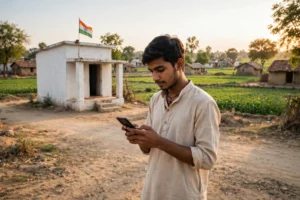
If you hold an ESIC card, or you work in a factory, shop, warehouse, hotel or company, this news is directly connected to your pocket. The Employees’ State Insurance Corporation (ESIC) has made a major change to its rules, so that money for sickness and maternity will no longer need a long claim form and repeated visits to offices.
But one thing must be made clear right at the start — this facility will not start on its own. Three conditions must be met, and the new rule has not even come into force yet. In this article we explain what the new rule is, how the money will reach you, who can benefit from it, and what a worker should do today. We also cover the other big ESIC changes announced in November 2026.
ESIC New Rules 2026: At a Glance
| Detail | Information |
|---|---|
| New rules | Employees’ State Insurance (General) Regulations, 2026 |
| Notification number | N-12011/1/2026-P&D |
| Notification date | 20 November 2026 |
| Published in Gazette | 21 November 2026 |
| Replaces | Employees’ State Insurance (General) Regulations, 1950 |
| Under the law | Code on Social Security, 2020 |
| Workers affected | About 4 crore insured workers, around 15 crore beneficiaries including families |
| Biggest change | Sickness and maternity benefits now automatic via DBT, without a separate application |
| Official website | esic.gov.in |
What Are the ESIC New Rules 2026?
The Employees’ State Insurance Corporation (ESIC) works under the Ministry of Labour and Employment. It gives social security to workers in factories, shops and companies. Under it, a worker and his or her family get free medical treatment, cash for sickness, maternity benefit, compensation for injury at work, and pension for the family, among other benefits.
ESIC has now completely replaced its old rules. The Employees’ State Insurance (General) Regulations, 1950 have been replaced by the new Employees’ State Insurance (General) Regulations, 2026. The draft of these rules was published in the Gazette on 22 July 2026, and objections and suggestions were invited from the public. After considering all of them, the final notification was issued on 20 November 2026 and published in the Gazette of India on 21 November 2026. The news reached the public on 22-23 November 2026.
These new rules are made under the Code on Social Security, 2020, one of the four Labour Codes of the country.
The Biggest Change: Money Straight to Your Bank Account, Without a Form
Until now, a worker had to fill a separate claim form for sickness or maternity money, submit documents and wait for approval. The new rules change this process.
Now sickness benefit and maternity benefit will be processed automatically, without a separate application, and paid through Direct Benefit Transfer (DBT) straight into the worker’s bank account. This is being called a “deemed claim” or automatic claim.
But this facility will be available only when three conditions are met:
| Condition | What is required |
|---|---|
| 1. Medical certificate | The medical certificate for sickness or maternity must be issued through ESIC’s own IT system |
| 2. Employer’s return | The employer must have filed the new monthly Form 8B return on the employers’ portal |
| 3. Aadhaar linking | The worker’s bank account must be Aadhaar-linked, and the insurance number must also be linked to Aadhaar |
If all three conditions are met, the worker will not have to fill any separate form. ESIC itself will start the payment process.
There is one more relief: if the employer does not file the return on time, the worker’s payment will still not be withheld. The new rules clearly say that a worker must not lose or face delays in benefits because of the employer’s failure or delay.
Keep in mind: if a DBT payment fails because of a technical problem or a bank account issue, ESIC can use another mode of payment, recording the reasons. And a worker who wishes can still file a claim himself or herself — electronically or otherwise — even if he or she qualifies for automatic processing.
What Changes If You Are Injured at Work?
There is also big relief for employment injury cases. Until now, a separate claim had to be filed after an injury at work. Under the new rules, once ESIC recognises an injury as employment-related, the employer’s accident report itself will be treated as the claim.
This means no separate forms will be needed for temporary disablement, permanent disablement and dependants’ benefits (the benefit paid to the family if a worker dies). On the basis of the employer’s report, ESIC can start payments on its own.
What Is New in Maternity Benefit?
There is also an important change in maternity benefit. The period before the expected date of delivery during which maternity benefit can be claimed has been extended from 50 days to 56 days. For insured women with two or more surviving children, the period will be up to 42 days.
The amount of maternity benefit remains the same as before — 100% of wages for 26 weeks. This benefit is paid by ESIC, not by the employer. For it, the woman must have contributions for at least 70 days in the last two contribution periods.
How Many Days Will the Money Take?
The new rules also fix payment timelines:
- Sickness benefit: ESIC will have to pay within 7 days of receiving a complete claim and the required supporting documents.
- Maternity benefit: The first instalment must be paid within 14 days of receiving a complete claim and the required supporting documents.
These timelines were largely the same earlier too, but with the automatic process they are expected to work faster in practice.
What Happens If the Employer Pays Contributions Late?
The new rules are also strict with employers. If an employer pays contributions late, a flat penalty of 1% per month will now apply. This penalty can be reduced or waived only under a resolution plan approved under the Insolvency and Bankruptcy Code (IBC).
Other Big Changes in November 2026
Apart from the new regulations, two more important ESIC decisions came in November 2026, which every insured worker should know about.
1. Funeral and Confinement Expenses Increased
ESIC has increased the amount of two allowances through a circular dated 3 November 2026 (No. N-12015/2/2026-Benefit-II). The increase applies to cases on or after 8 May 2026:
| Allowance | Earlier | Now |
|---|---|---|
| Funeral expenses | Rs 15,000 | Rs 20,000 |
| Confinement expenses | Rs 7,500 | Rs 15,000 |
Funeral expenses are paid on the death of an insured person from any cause, to the eldest surviving family member, or to the person who paid the expenses where there is no family. Confinement expenses are paid where the delivery takes place at a place without ESIC facilities. Along with this, the monthly contribution to keep medical benefit has been raised from Rs 10 to Rs 50.
2. Amnesty Scheme Extended Till 31 December 2026
The last date of ESIC’s New Amnesty Scheme, 2025 has been extended from 30 September 2026 to 31 December 2026. This scheme gives employers and insured persons a chance to settle old disputes and pending cases without damages being levied. Court cases filed up to 31 March 2025 can now be settled by 31 December 2026.
ESIC’s 6 Benefits at a Glance
Under the ESIC scheme, an insured worker and his or her family get six kinds of benefits:
| Benefit | What you get |
|---|---|
| Medical benefit | Free treatment for the worker and family from the first day |
| Sickness benefit | 70% of wages in cash during sickness |
| Maternity benefit | 100% of wages for 26 weeks |
| Disablement benefit | Up to 90% of wages for injury at work |
| Dependants’ benefit | Up to 90% of wages every month to the family if the worker dies |
| Unemployment relief | Relief under Atal Beemit Vyakti Kalyan Yojana (ABVKY) and Rajiv Gandhi Shramik Kalyan Yojana |
There is also extended sickness benefit for long illness — 80% of wages, up to two years, for 34 specified long-term diseases.
Who Is Covered Under ESIC?
The ESIC scheme applies to establishments where 10 or more workers are employed. Whether an employee is covered depends on his or her wages:
- General employees: Monthly wages up to Rs 21,000
- Employees with disabilities: Monthly wages up to Rs 25,000
From 21 November 2026, this Rs 21,000 ceiling applies under the Code on Social Security, 2020 — the figure is the same, the law is new.
What Should a Worker Do Right Now? (Step-by-Step)
To get the new automatic benefit, a worker should complete these steps today:
Step 1 — Get your bank account linked with Aadhaar. If it is not linked, visit your bank branch or do it online.
Step 2 — Get your ESIC insurance number also linked with Aadhaar. This can be done through the ESIC portal or at the nearest ESIC branch office.
Step 3 — Ask your employer whether he is filing the monthly Form 8B return every month. This is not your responsibility, but it is useful to know.
Step 4 — In case of sickness or maternity, take treatment at an ESIC hospital or an ESIC-linked hospital, so that the medical certificate is issued through ESIC’s IT system.
Step 5 — Keep your ESIC card, Aadhaar card and bank passbook safe. Keep your bank account details correct and active.
One Important Point: The New Rule Is Not in Force Immediately
This is very important to understand — the notification being issued does not mean automatic payments will start tomorrow. The new rules say that the date from which the deemed-claim (automatic claim) and employment-injury provisions will take effect will be specified by the ESIC Director General, Ashok Kumar Singh.
So workers will still have to claim through the old process until ESIC announces the start date. As soon as the date is announced, we will update this article.
ESIC New Rules 2026: Frequently Asked Questions (FAQ)
Q1. What are the ESIC New Rules 2026?
ESIC has notified the Employees’ State Insurance (General) Regulations, 2026, replacing the 1950 rules. Under them, sickness and maternity benefits will be paid automatically via DBT straight to the bank account without a separate application, and for injury at work the employer’s accident report itself will be treated as the claim.
Q2. What are the conditions for getting money without a form?
Three conditions: (1) the medical certificate must be generated through ESIC’s IT system, (2) the employer must have filed the monthly Form 8B return, and (3) the worker’s bank account and insurance number must be linked to Aadhaar.
Q3. When will automatic payments start?
The date has not been fixed yet. The notification was issued on 20 November 2026 and published in the Gazette on 21 November 2026, but the date from which the automatic-claim and employment-injury provisions take effect will be specified by the ESIC Director General.
Q4. Who is eligible under ESIC?
Employees in establishments with 10 or more workers, whose monthly wages are up to Rs 21,000 (Rs 25,000 for persons with disabilities).
Q5. What are the new funeral and confinement expense amounts?
Funeral expenses have been raised from Rs 15,000 to Rs 20,000 and confinement expenses from Rs 7,500 to Rs 15,000. This applies to cases on or after 8 May 2026 (ESIC circular, 3 November 2026).
Q6. What is the last date of the ESIC Amnesty Scheme?
The New Amnesty Scheme, 2025 now runs till 31 December 2026. Under it, old disputes can be settled without damages.
Q7. In how many days will sickness and maternity money be paid?
After a complete claim and supporting documents are received, sickness benefit must be paid within 7 days and the first instalment of maternity benefit within 14 days.
Official Links
- ESIC official website — esic.gov.in
- Ministry of Labour and Employment — labour.gov.in
- Gazette notification — Employees’ State Insurance (General) Regulations, 2026, Notification No. N-12011/1/2026-P&D, 20 November 2026 (Gazette of India, 21 November 2026)
- ESIC circular — N-12015/2/2026-Benefit-II, 3 November 2026 (funeral and confinement expenses)
Disclaimer: GramSuvidha is a private information portal, not a government website. The information in this article is based on the ESIC notification, the Gazette and news reports, and is updated as of 23 November 2026. The final decision on any benefit rests with ESIC and the concerned office. Please verify the information on the official website esic.gov.in before applying or filing a claim.
Last Updated: 23 November 2026