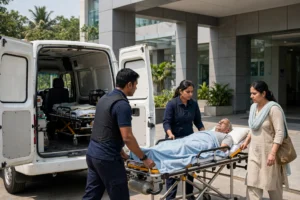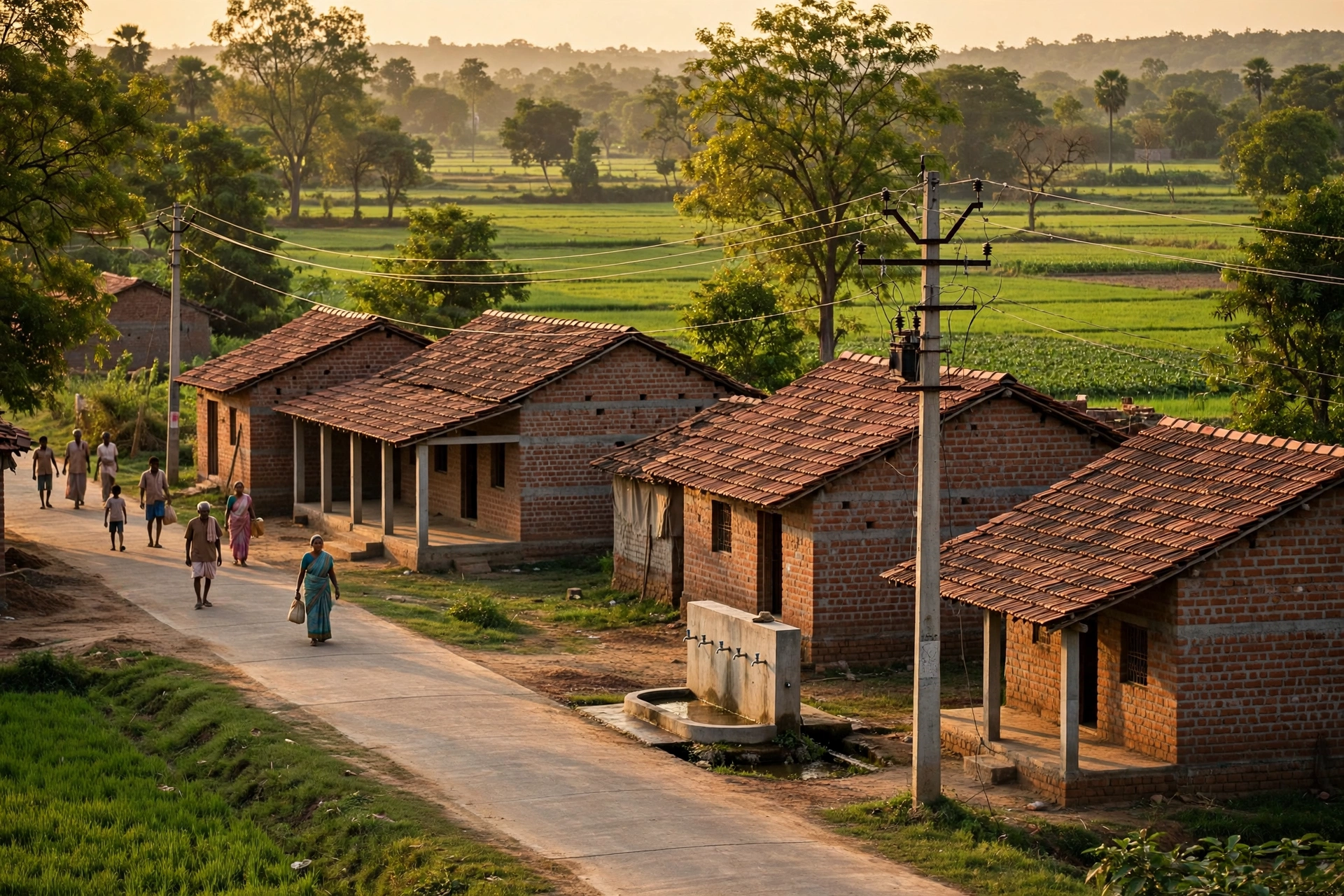
Picture a small habitation deep inside a forest, where the pucca road ends kilometres away, where drinking water still comes from a distant source, and where a sick child may wait days for a doctor to visit. For the families living there, government schemes often exist only on paper, because no officer ever reached their doorstep with a form, a survey, or a straight answer.
This guide has one simple purpose: to explain what PM JANMAN Yojana really is, who it is for, how its benefits actually reach a village or hamlet, and what a PVTG family should really do, step by step. And first, one important truth: there is no separate “PM JANMAN apply online” form. Any website or agent that asks you for money in the name of filling such a form should be treated with caution. Read on, and the whole picture will become clear.
What Is PM JANMAN Yojana?
PM JANMAN stands for Pradhan Mantri Janjati Adivasi Nyaya Maha Abhiyan. It is a mission created for communities known as Particularly Vulnerable Tribal Groups, or PVTGs. PVTGs are the most backward among India’s Scheduled Tribes – communities where literacy is very low, where population is declining or stagnant, where farming and ways of life are still very traditional, and where government facilities have always arrived last.
The most important thing to understand is that PM JANMAN is not a single scheme that hands cash to an individual. It is a “saturation mission”. Its goal is that basic facilities should reach 100 percent of PVTG habitations – no house, no hamlet left out. To achieve this, eleven critical interventions from nine different ministries have been joined together, so that housing, water, roads, electricity, health, education and livelihood all reach the same habitation together. The Ministry of Tribal Affairs is the nodal ministry, but the actual work is done by each department through its own existing programmes.
PM JANMAN Yojana Quick Facts Table
| Detail | Information |
|---|---|
| Full name | Pradhan Mantri Janjati Adivasi Nyaya Maha Abhiyan (PM JANMAN) |
| Launched | 15 November 2023, on Janjatiya Gaurav Diwas |
| Total outlay | Rs 24,104 crore (Centre: Rs 15,336 crore, States: Rs 8,768 crore) |
| Goal | 100 percent saturation of basic facilities in PVTG habitations within 3 years |
| Who is covered | 75 Particularly Vulnerable Tribal Groups (PVTGs) |
| Where | 18 states and 1 Union Territory (Andaman and Nicobar Islands) |
| Scale | 11 interventions implemented by 9 ministries |
| Nodal ministry | Ministry of Tribal Affairs |
| Online application | No separate PM JANMAN apply online portal exists; benefits come through habitation-level survey and state machinery |
| Housing route | Through Pradhan Mantri Awas Yojana – Gramin (PMAY-G), sanctioned on the AwaasSoft portal |
Who Is Covered: 75 PVTGs, 18 States and 1 UT
Across India, 75 PVTG communities have been identified, living in 18 states and the Andaman and Nicobar Islands. Some well-known names include the Dongria Khond and Bondo of Odisha, the Chenchu of Andhra Pradesh and Telangana, the Maria Gond of Madhya Pradesh, and the Jarawa and Onge of the Andaman Islands. The Siddi community of Gujarat is also covered as a PVTG community.
Here, one point must be understood clearly. PM JANMAN is centred on the habitation, not on an individual applicant. First, the government identifies which habitations are home to PVTG communities. Then it surveys what each habitation lacks – houses, water, roads, electricity, schools, health services. Only after that does each gap get addressed by the concerned department. So if your family belongs to a PVTG community but your habitation is not on the identified list, the first step is to find out whether your habitation is included, and whether its survey has been done. The most direct way is to ask your District Tribal Welfare Office or your Gram Panchayat.
The 11 Interventions Across 9 Ministries
Under PM JANMAN, eleven works have been fixed. Each one has a responsible ministry and an existing scheme behind it. The full list is given below, so that you can find everything in one place.
| No. | Intervention | Responsible Ministry / Scheme | What the family gets |
|---|---|---|---|
| 1 | Pucca houses | Ministry of Rural Development – PMAY-G | A permanent, safe home in place of a temporary hut |
| 2 | Connecting roads | Ministry of Rural Development – PMGSY | An all-weather road connecting the habitation to the main road |
| 3 | Piped water supply | Ministry of Jal Shakti – Jal Jeevan Mission | Tap connection for the household or community water supply |
| 4 | Mobile Medical Units | Ministry of Health and Family Welfare – National Health Mission | A travelling health van with medicines, reaching the habitation |
| 5 | Hostels | Ministry of Education – Samagra Shiksha | Residential facilities for tribal students to live and study |
| 6 | Anganwadi Centres | Ministry of Women and Child Development – Anganwadi Services | Nutrition, care and early education for small children |
| 7 | Van Dhan Vikas Kendras | Ministry of Tribal Affairs and Ministry of Skill Development and Entrepreneurship – PM Janjatiya Vikas Mission | Value addition for forest produce and better prices |
| 8 | Multipurpose Centres | Ministry of Tribal Affairs | One place for community, training and service facilities |
| 9 | Household electrification and solar street lighting | Ministry of Power / Ministry of New and Renewable Energy | Electrification of unelectrified homes, solar lighting |
| 10 | Mobile towers | Ministry of Communications – USOF | 4G mobile connectivity, connecting the habitation to the world |
| 11 | Vocational education and skilling | Department of School Education and Literacy and Ministry of Skill Development – Samagra Shiksha / PM Kaushal Vikas | Job-ready skills and training |
Each of these eleven works has its own initial target. For example, the housing target was about 4.90 lakh houses, roads about 8,000 kilometres, mobile medical units about 1,000, hostels about 500, anganwadi centres about 2,500, multipurpose centres about 1,000, and mobile towers for about 3,000 villages. These are the mission’s starting targets; actual progress may differ, which is why the progress section below gives the government’s own updated figures.
How Benefits Actually Reach People: From Survey to Sanction
This is the part where most guides go vague and readers are left confused. The truth is that benefits under PM JANMAN do not arrive through a “fill a form and get money” method. The process works roughly like this.
The first step is habitation-level data collection. Through state governments, the Ministry of Tribal Affairs carried out a survey of every PVTG habitation using the PM GatiShakti mobile app, to record how many people live there and what is missing – how many houses are kutcha, where water is absent, where roads do not reach. Everything starts from this data.
The second step is cross-verification. The gaps captured through the app are checked by the concerned ministries and state line departments against their own records. Only after this check is any work sanctioned. So if your habitation has not been surveyed yet, or your name has been missed, this is exactly the point where follow-up is needed – by asking at the Gram Panchayat, Block office or District Tribal Welfare Office whether your habitation’s data has been recorded.
The third step is sanction and implementation, which happens through a different portal and department for each work. Housing deserves special attention here. Earlier, housing data entry happened on the PM GatiShakti portal, and delays were reported. The government then changed the arrangement: PMAY-G houses under the mission are now sanctioned on the AwaasSoft portal of the Ministry of Rural Development, and the entire chain – beneficiary identification, sanction, release of instalments, reporting of completion – runs on AwaasSoft and the AwaasApp. After approval, the data is updated and integrated on PM GatiShakti for monitoring sanctions against the gaps. In short, housing now runs directly through the PMAY-G system, with PVTG households given priority within it.
The fourth step is awareness camps and documents. In camps organised with state governments, tribal people are helped to obtain essential documents such as Aadhaar cards, caste certificates and Jan Dhan bank accounts, so that families can also connect with other schemes like PMAY, Ayushman Bharat and MNREGA. Without correct documents, the benefit of any scheme can get stuck, so this step is not a small one.
What a PVTG Family Should Actually Do: Step by Step
Step 1: Find out your habitation’s status
Visit your Gram Panchayat or District Tribal Welfare Office and ask whether your habitation is included among the identified PVTG habitations under PM JANMAN, and whether its survey has been completed. If the survey has not happened, it is better to submit a written request to get it recorded.
Step 2: For housing, follow the PMAY-G process
There is no separate PM JANMAN form to fill for a house. Your name should come through the normal PMAY-G process, in which PVTG households are prioritised. Check your name on the PMAY-G list, and if it is missing, ask the Gram Panchayat for the reason. After sanction, instalments come through AwaasSoft, and the PMAY-G grievance mechanism exists at Gram Panchayat, Block, District and State levels.
Step 3: Raise water, road and electricity gaps through the Panchayat
These works happen at habitation level, not through one person’s form. If your habitation lacks piped water, a pucca road or electricity, raise the matter in the Gram Sabha or through the Gram Panchayat so that it reaches the concerned department. A joint demand from the whole habitation carries more weight than one person’s voice.
Step 4: For health, ask about the Mobile Medical Unit schedule
Mobile Medical Units visit habitations on fixed days. Ask your ASHA worker or ANM when the MMU visits your area, and use that day for children’s immunisation, check-ups for pregnant women and general treatment.
Step 5: Use Anganwadi and hostel facilities
If an Anganwadi centre has been built in your village, enrol your small children there – nutrition and early education come from there. For older children, ask the school or Block Education Officer about hostel facilities.
Step 6: Join a Van Dhan Vikas Kendra
If your family collects forest produce – such as tendu leaves, mahua, tamarind or honey – ask about membership of a Van Dhan Vikas Kendra. It helps with value addition of the produce and reduces dependence on middlemen. Information about skill training can also be obtained from the same centre.
Documents Usually Needed
These documents are generally useful: Aadhaar card, caste certificate (of the PVTG community), ration card, bank account (a Jan Dhan account also works), residence proof, and for housing, papers related to land or the existing house. The list of documents can differ slightly by state and by work, so confirm once with the concerned office. If any officer or agent demands a large sum of money in the name of making documents, complain at the Block or District level.
Beware of Agents: No Fee, No Form
This section is necessary because this is where the most fraud happens. Many fake forms and “apply online” links in the name of PM JANMAN circulate on the internet. The truth is: this mission has no individual online application portal, it has no last date for you as an individual applicant, and no government officer will ask you for money to add your name to this scheme. If someone says “pay Rs 500 and I will get your name written” or “fill the online form and the house is guaranteed”, understand that it is fraud. The real route always passes through the Gram Panchayat, Block office, District Tribal Welfare Office or the concerned department, and it is completely free.
An Important Clarification on the Per-House Amount
On the internet, different figures circulate for the per-house amount – some places say Rs 2 lakh, some say Rs 2.39 lakh per house, and the general PMAY-G rates of Rs 1.20 lakh (plain areas) and Rs 1.30 lakh (hilly and difficult areas) are also quoted. The difference exists because the mission’s cost norms and PMAY-G’s general norms are written differently in different documents. This guide therefore does not present any single figure as confirmed. The amount you actually receive will depend on your state, your area and the PMAY-G rules in force at that time. For the correct figure, ask the AwaasSoft portal or your Block’s PMAY-G officer; do not take a decision based on a figure quoted on any blog.
Progress So Far: What the Government Told Parliament (Up to 30 June 2025)
In July 2025, the government told Parliament that as of 30 June 2025, 4,62,159 houses had been sanctioned for housing, of which 1,36,112 had been completed. For roads, 637 kilometres of work had been done against a sanctioned target of 6,506 kilometres. For piped water, 7,406 villages had been reached out of a target of 18,385 villages. All 694 sanctioned Mobile Medical Units were functional. Among anganwadi centres, 2,027 out of a target of 2,500 were operational. For hostels, work had started on 99 out of a target of 492. For electrification, 1,20,227 households had been electrified out of a target of 1,43,194. For mobile towers, 2,516 habitations had been covered out of a target of 3,894 habitations. These figures show that work is progressing, but has not yet fully reached every habitation – which is why checking your own habitation’s status is the most important step.
FAQ: Common Questions About PM JANMAN Yojana
1. How do I apply online for PM JANMAN Yojana?
The direct answer is: there is no separate online application. You do not have to fill a PM JANMAN form on any website. Benefits come through habitation-level survey and state machinery, and for housing, the PMAY-G process is followed. Any site showing a “PM JANMAN apply online” form is not official.
2. Who is eligible for PM JANMAN Yojana?
This mission is only for the 75 identified PVTG communities living in 18 states and the Andaman and Nicobar Islands. If your community is not on the PVTG list, you will not get benefits directly from this mission, but you may get benefits from other tribal welfare schemes.
3. How will I get a house under PM JANMAN Yojana?
Houses come through PMAY-G. Your kutcha house gap should be recorded in your habitation’s survey, then your name comes on the PMAY-G list, and sanction happens on the AwaasSoft portal. Instalments are released directly to your bank account.
4. What is the last date for PM JANMAN Yojana?
There is no individual application last date, because there is no individual application. The mission’s goal was saturation within 3 years, starting from November 2023. For the timeline of works in your habitation, ask the District Tribal Welfare Office.
5. How much money do I get under PM JANMAN Yojana?
The mission’s total outlay of Rs 24,104 crore is not paid to any one family. It is spent across the whole mission – houses, roads, water, electricity, health and more. For the per-house figure, different numbers are in circulation, so read the clarification section above.
6. What should I do if my habitation has not been surveyed?
Visit the Gram Panchayat or District Tribal Welfare Office and ask in writing why your habitation has not been surveyed and when it will be done. Raising the demand together with other people from your community is more effective.
7. What is the PM JANMAN Yojana helpline number?
This guide does not give a single helpline number, because we could not verify one official single helpline for this mission. For the correct contact, take the number of your state’s Tribal Welfare Department or District Tribal Welfare Office from your district’s official website. Never share money or an OTP on a number given on any blog.
Official Links
- Ministry of Tribal Affairs: tribal.gov.in
- PIB Press Release – PM JANMAN housing sanction shift (PRID 2115300): pib.gov.in
- PIB – PM JANMAN progress in Parliament (PRID 2150193): pib.gov.in
- PIB – PM JANMAN Rajya Sabha reply on 75 PVTGs (PRID 2147317): pib.gov.in
- Pradhan Mantri Awas Yojana – Gramin (PMAY-G): pmayg.nic.in
Disclaimer: This website is a private information portal, not a government website. The information given here is based on government press releases and ministry replies in Parliament, but before taking any step, please confirm with the concerned government office. We are not connected with any government department, and no fee or application is taken through us.
One last point, repeated because it matters: PM JANMAN is a very large mission on paper, but its real meaning is only when the road, water, electricity and house actually reach your habitation. If you belong to a PVTG family, visit your panchayat or Tribal Welfare Office today and ask about your habitation’s status. Information is the first step, and that first step is the real purpose of this guide.