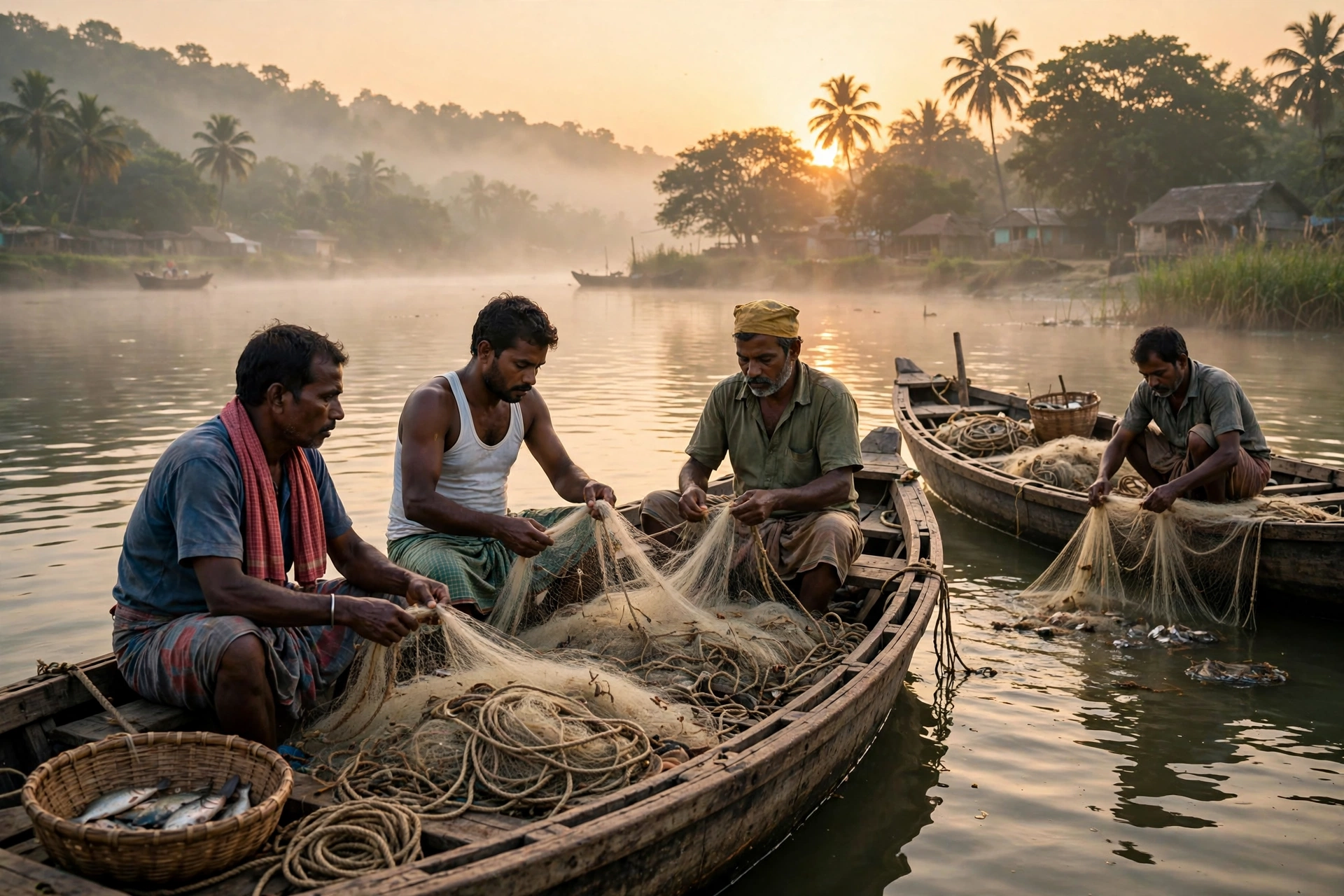
Up to 60% subsidy on fish farming! Ponds, hatcheries, cold storage, fish markets — a ₹20,050 crore scheme. That is PM Matsya Sampada Yojana — the mission to double fishers’ incomes.
Launched on 10 September 2020, the scheme is extended to FY 2025-26 — with ₹2,500 crore in Budget 2026-27. In this detailed guide, we explain in simple language — what PMMSY is, how much subsidy, for whom (40% vs 60%), who is eligible, which activities get funded, how to apply, and the 5 mistakes that stall subsidies. At the end, 29 essential questions are answered.
PM Matsya Sampada Yojana: Key Facts at a Glance
| Point | Details |
|---|---|
| Scheme | Pradhan Mantri Matsya Sampada Yojana (PMMSY) — Fisheries Ministry |
| Launched | 10 September 2020; ₹20,050 crore investment |
| Duration | Extended to FY 2025-26; ₹2,500 crore in Budget 2026-27 |
| Subsidy | 40% general; 60% SC/ST/women |
| Goal | Raise fish production, double fishers’ incomes |
| Eligibility | Fishers, fish farmers, SHGs, cooperatives, entrepreneurs |
| Apply | pmmsy.dof.gov.in; District Fisheries Office |
Scheme Launch: The 2020 Story
10 September 2020 — the Prime Minister launched PMMSY — a ₹20,050 crore investment, for 5 years (2020-21 to 2024-25).
Goal: Make India top in the world in fish production, double fishers’ incomes, create jobs.
By 2026: The scheme is extended to FY 2025-26 — ₹2,500 crore allocated in Budget 2026-27.
What Is PMMSY?
PMMSY — the biggest scheme for sustainable, inclusive growth of the fisheries sector. Raising fish production, modernising the value chain (production-processing-marketing), creating jobs, and giving fishers social-economic security.
40% vs 60%: The Full Math
| Project | General (40%) | SC/ST/Women (60%) |
|---|---|---|
| ₹5 lakh pond | ₹2 lakh subsidy | ₹3 lakh subsidy |
| ₹10 lakh hatchery | ₹4 lakh subsidy | ₹6 lakh subsidy |
| ₹20 lakh cold storage | ₹8 lakh subsidy | ₹12 lakh subsidy |
Rest of the money: Own funds or bank loan (Mudra, KCC) — subsidy via DBT in 2-3 installments.
Note: Subsidy is on the unit cost — not on land purchase.
Pond to Market: The Value Chain
PMMSY funds not just ponds — the entire value chain:
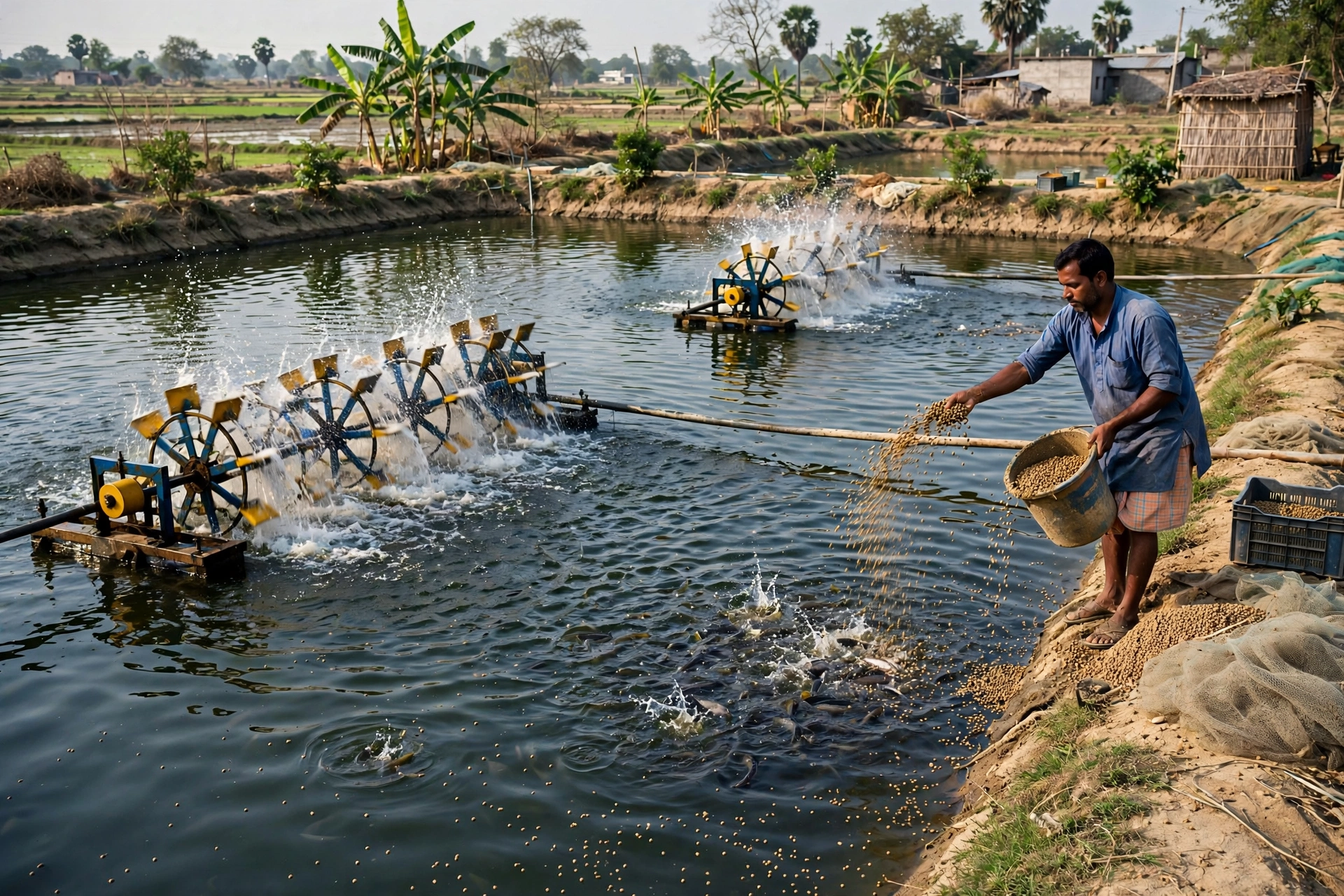
- Production: Ponds, cages, biofloc, RAS (modern tech)
- Seed: Hatcheries, nurseries — quality fish seed
- Feed: Feed plants — cheap, nutritious feed
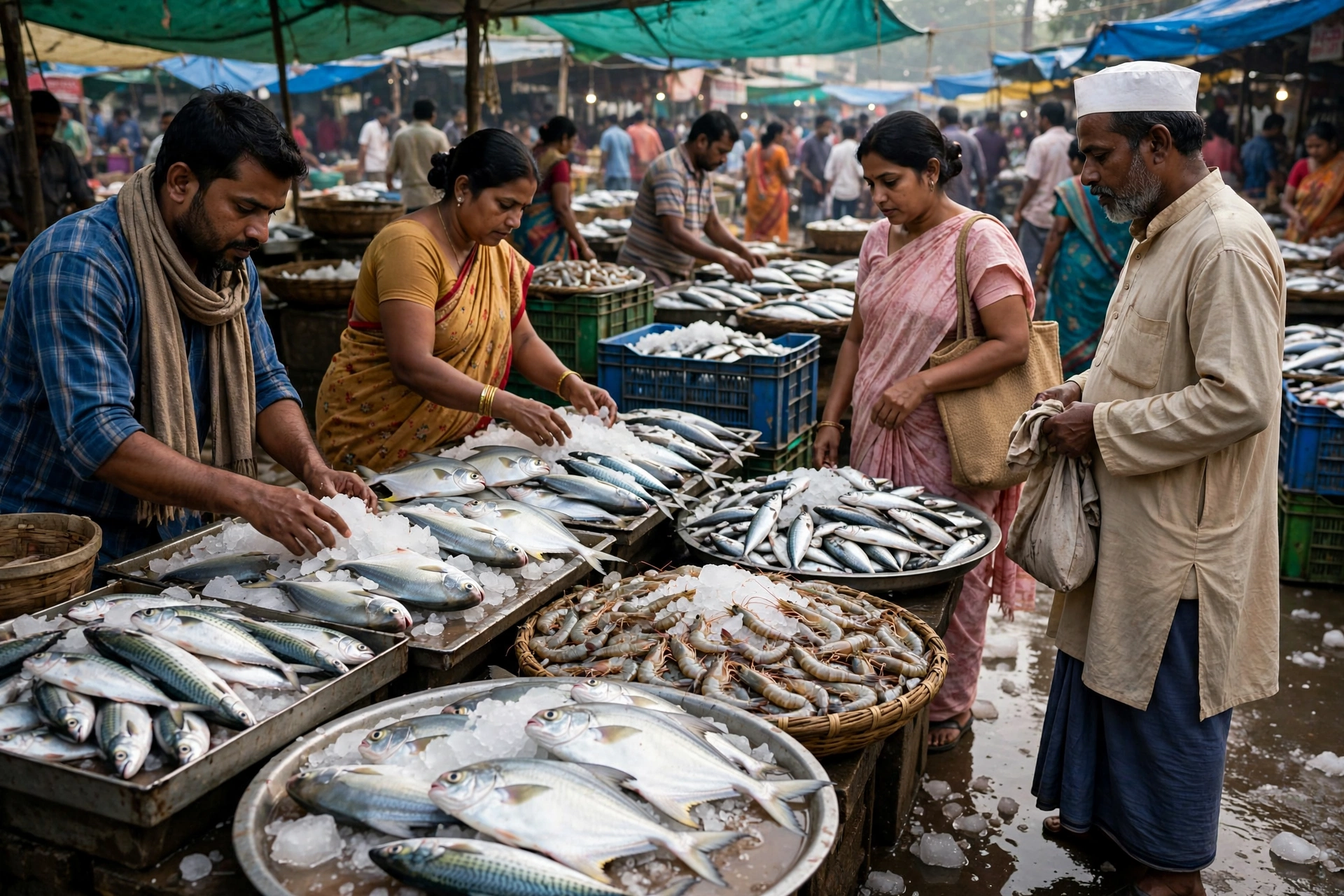
- Storage: Cold storage, ice plants — stop wastage
- Processing: Cutting, packaging — value addition
- Marketing: Fish markets, online sales, exports
Benefit: Work on the whole chain — double the profit.
How Much Subsidy, For Whom?
| Category | Subsidy |
|---|---|
| General | 40% of unit cost |
| SC/ST/Women | 60% of unit cost |
Example: On a ₹10 lakh pond project, an SC woman gets ₹6 lakh subsidy — the rest from own funds/bank loan. Subsidy via DBT in 2-3 installments.
Which Activities Get Funded?
- Pond construction, cages, hatcheries, nurseries
- Cold storage, ice plants, processing units
- Fish markets, landing centres, harbours
- Feed plants, seed farms, equipment
- Modern tech like biofloc
Who Is Eligible?
- Fishers, fish farmers, fish workers
- Fish vendors, traders
- SHGs, cooperatives, FFPOs
- Entrepreneurs, private companies
- Land/water body owned or leased
How to Apply?
Step 1: Register on pmmsy.dof.gov.in (mobile + details).
Step 2: Choose the component — fill the application form (with project details).
Step 3: Upload documents — Aadhaar, bank details, land/lease papers, photo.
Step 4: District Fisheries Officer scrutiny → State Nodal Agency approval → subsidy.
Note: You can also apply through a CSC.
How to Make a DPR? (Project Report Guide)
DPR (Detailed Project Report) — the most important document for subsidy:
- Project details: What you will build — pond/hatchery/cold storage — size, capacity
- Cost breakup: Amount for each item — construction, equipment, feed
- Land documents: Khatauni/lease — ownership proof
- Income estimate: Annual production and sales calculation
- Bank details: Account number, IFSC — for DBT
Help: The District Fisheries Officer gives free help in making the DPR — don’t pay agents.
Profit in Fish Farming: The Math
| Item | Amount (1-acre pond) |
|---|---|
| Cost (seed, feed, care) | ₹1–1.5 lakh/year |
| Production | 3–5 tonnes fish |
| Sales (₹100/kg) | ₹3–5 lakh |
| Net profit | ₹2–3.5 lakh/year |
Note: This is an estimated calculation — it changes with fish species and market price.
2 Success Stories
Rameshwar (Bihar): 2-acre pond — 60% subsidy from PMMSY — ₹5 lakh annual profit — earlier did labour work.
Meena (Odisha): 10 women of an SHG — biofloc unit — started with subsidy — now ₹15,000 per woman per month.
Lesson: Right technique + subsidy = fish farming as a profitable business.
Fish Species: Which to Farm?
| Species | Speciality |
|---|---|
| Rohu | Most popular — fast-growing, good price |
| Katla | Large fish — surface feeder |
| Mrigal | Bottom feeder — in mixed culture |
| Tilapia | Fast growth — low cost, high output |
| Pangasius | Export demand — big market |
Advice: Mixed culture (rohu + katla + mrigal) — triple output from one pond.
Exports: Sell Abroad
- India is world No.1 in shrimp exports — USA, Europe are big markets
- PMMSY subsidises processing units — export-grade quality
- Register with MPEDA (Marine Products Export Authority)
- Export prices are 2-3x — but quality standards are strict
Start: First the local market — then the city — then exports.
Insurance and Safety: For Fishers
- Fisher insurance: Up to ₹5 lakh on accident (Centre + State)
- Boat insurance: Compensation for boat/net damage
- Weather alerts: Early warning of storms via the fisher app
- Safety gear: Subsidy on life jackets, GPS
Remember: Safety first at sea — never ignore warnings.
Pond Management: Daily Care
- Water quality: Keep pH 7–8 — test every week
- Oxygen: If fish come to the surface in the morning, oxygen is low — run the aerator
- Feed: Twice a day — 3–5% of the fish’s weight
- Cleaning: Remove dead fish immediately — disease spreads
- Lime: Add lime every month — water stays clean
Rule: Watch the pond 30 minutes daily — catch small problems before they become big.
Preventing Fish Diseases
Prevention is the best medicine: buy quality seed from government-approved hatcheries, quarantine new seed for a few days before adding it to the pond, keep water quality stable with monthly liming and a pH of 7-8, and avoid overcrowding – stressed fish fall sick easily. Remove dead fish immediately, clean nets and equipment regularly, and watch fish behaviour every morning. If many fish look sick at once, contact your District Fisheries Officer or nearest fisheries extension office for official guidance instead of trying home remedies.
Cooperatives: Do It Together
- Form an FFPO/cooperative — 10+ fishers together — bigger subsidy made easy
- Collective purchase — feed, seed cheaper
- Collective sales — better prices — middlemen out
- Shared cold storage — cost split
- Bank loans easier — groups get more trust
Advice: Alone is small — together is big — cooperatives are the future.
5 Big Mistakes — Subsidy Gets Stuck
- No land papers — ownership/lease is required.
- Choosing the wrong component — pick from the approved list.
- Incomplete DPR — give a detailed project report.
- Same benefit from another scheme — not eligible.
- Paying an agent — the application is free.
Beware of Fraud
If anyone demands fees or OTP for PMMSY, it is fraud. Apply only on pmmsy.dof.gov.in or at the District Fisheries Office.
Frequently Asked Questions (FAQs)
Q1: How much subsidy do I get?
A: 40% general; 60% SC/ST/women.
Q2: When was it launched?
A: 10 September 2020.
Q3: Who is eligible?
A: Fishers, fish farmers, SHGs, cooperatives, entrepreneurs.
Q4: Which activities?
A: Ponds, hatcheries, cold storage, markets, processing.
Q5: Where do I apply?
A: On pmmsy.dof.gov.in or at the District Fisheries Office.
Q6: Money for buying land?
A: No — no subsidy for land purchase.
Q7: How is subsidy paid?
A: Via DBT in 2-3 installments.
Q8: Is the scheme still running?
A: Yes — extended to FY 2025-26.
Q9: Can I apply via CSC?
A: Yes.
Q10: Is this site governmental?
A: No — GramSuvidha is a private information portal. Verify on pmmsy.dof.gov.in.
Q11: What’s the difference between 40% and 60%?
A: General gets 40%, SC/ST/women get 60% subsidy.
Q12: What is a DPR?
A: Detailed Project Report — the most important document for subsidy.
Q13: Is there subsidy for buying land?
A: No — only on construction and equipment.
Q14: What is biofloc?
A: A modern technique to raise more fish in less space.
Q15: How much profit from a 1-acre pond?
A: Estimated ₹2–3.5 lakh/year (depends on species and price).
Q16: Can women apply?
A: Yes — women get 60% subsidy.
Q17: When will I get the subsidy?
A: Via DBT in 2-3 installments — as the project completes.
Q18: Is the scheme still running in 2026?
A: Yes — extended to FY 2025-26, ₹2,500 crore in Budget 2026-27.
Q19: Which fish is best to farm?
A: Rohu is most popular — mixed culture (rohu+katla+mrigal) is most profitable.
Q20: Can I export?
A: Yes — register with MPEDA; India leads in shrimp exports.
Q21: How do I keep pond water clean?
A: Add lime monthly, keep pH 7–8, remove dead fish immediately.
Q22: What is an FFPO?
A: Fish Farmer Producer Organisation — a cooperative of fishers for collective benefit.
Q23: Is pond farming profitable?
A: Yes — an estimated ₹2–3.5 lakh net profit per acre per year.
Q24: Can women’s SHG groups apply?
A: Yes — SHGs, FPOs and cooperatives can apply for collective units.
Q25: Does the scheme also provide training?
A: Yes — state fisheries departments and NFDB run free/subsidised training camps.
Q26: Is there subsidy for marine fish farming?
A: Yes — PMMSY subsidy also applies to sea cage culture and deep-sea fishing.
Q27: When is the subsidy released?
A: In installments after verification of unit setup — timing varies by state.
Q28: Is PMMSY still running in 2026?
A: Yes — extended to FY 2025-26, with ₹2,500 crore in Budget 2026-27.
Q29: Can I get a bank loan with PMMSY subsidy?
A: Yes — banks give loans for the non-subsidy part; KCC and Mudra also work.
Important Links
- PMMSY portal: pmmsy.dof.gov.in
Disclaimer: GramSuvidha is a private information portal (not a government website). The information above is based on official sources — rules can change, so please confirm on the official portal.