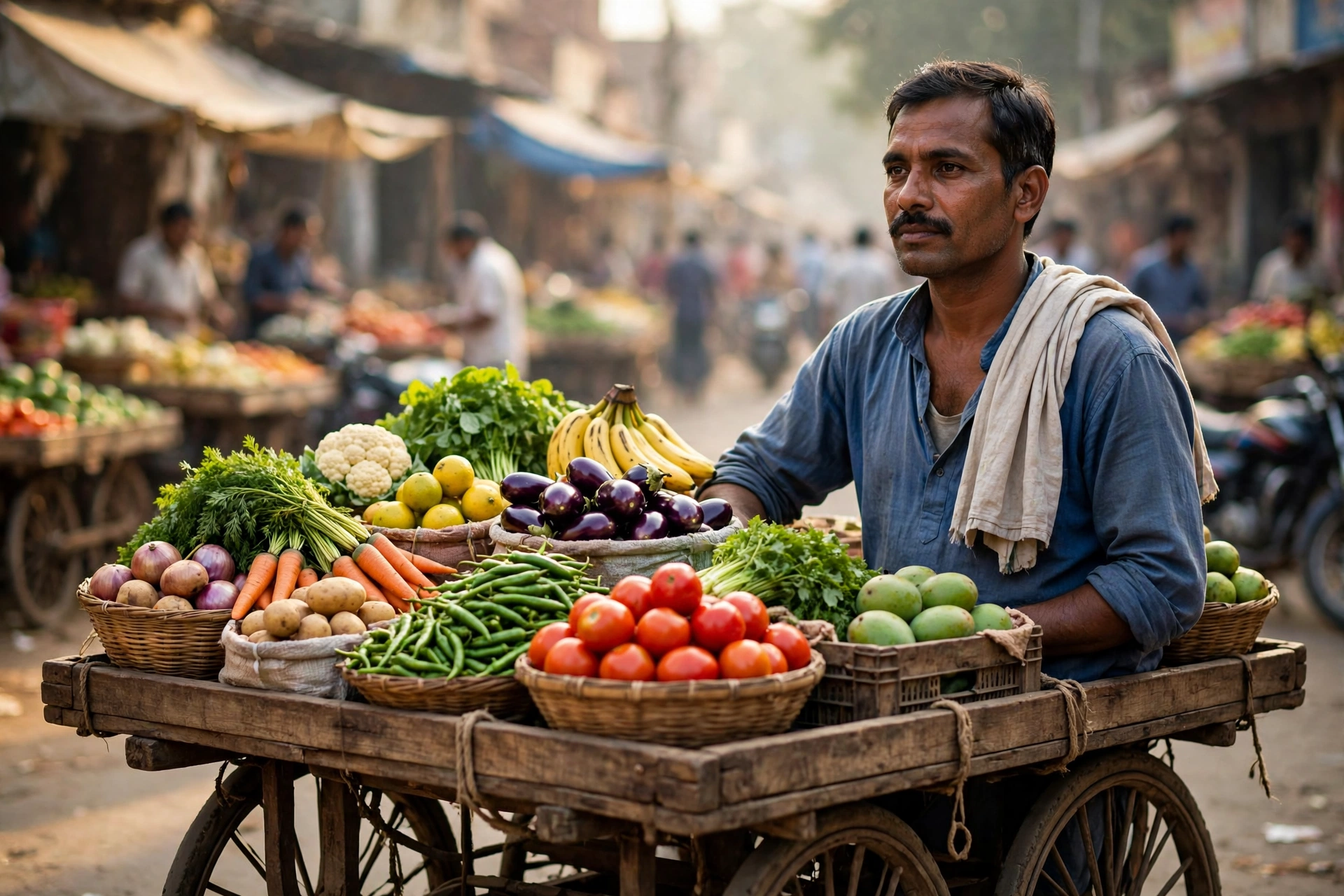
If you earn your living selling goods from a cart, rehdi, roadside stall or a small shop, this news is for you. A well-known government scheme has been given a complete makeover, and this time the benefits are bigger than ever before. You may have heard of PM SVANidhi Yojana earlier, but its rules have changed in 2026.
In this article, we explain what has changed in the new scheme, who gets how much benefit, how to apply, and what to watch out for. Read till the end, because we have also answered the questions readers ask most often.
Update — 20 November 2026: SVANidhi Samman Awards and 50 Street Food Hubs
The SVANidhi Samman Awards 2026 were given in New Delhi on 20 November 2026 — 52 awards and 5 special recognitions (27 to States/UTs, 21 to urban local bodies, 4 to lending institutions). Housing and Urban Affairs Minister Manohar Lal conferred the awards. Under the scheme so far, about 81 lakh vendors have received over 1.21 crore loans worth nearly Rs 20,000 crore. The government is also developing 50 Street Food Hubs, with food-safety and hygiene training for vendors.
PM SVANidhi Yojana 2026: Key Facts at a Glance
| Detail | Information |
|---|---|
| Scheme name | Pradhan Mantri Street Vendor’s Atmanirbhar Nidhi (PM SVANidhi Yojana) |
| Launched | 1 June 2020, by the Ministry of Housing and Urban Affairs (MoHUA) |
| Restructured | Union Cabinet approved restructuring on 27 August 2025 |
| Lending period | Extended till 31 March 2030 (earlier it ended 31 December 2024) |
| Total outlay | Rs 7,332 crore |
| Target | 1.15 crore street vendors, including 50 lakh new beneficiaries |
| Loan tranches | Rs 15,000, Rs 25,000 and Rs 50,000 (collateral-free) |
| Interest subsidy | 7% per annum on timely repayment |
| Digital cashback | Up to Rs 1,600 per year |
| How to apply | Online (pmsvanidhi.mohua.gov.in) and via banks / CSCs |
| Official website | pmsvanidhi.mohua.gov.in |
What Is New in the Scheme in 2026
On 27 August 2025, the Union Cabinet chaired by Prime Minister Narendra Modi approved the restructuring of this scheme. The old scheme’s lending period was ending on 31 December 2024; it has now been extended till 31 March 2030. The government has set aside a total budget of Rs 7,332 crore for this phase.
The biggest change is in the loan amounts. The first tranche has been raised from Rs 10,000 to Rs 15,000, and the second tranche from Rs 20,000 to Rs 25,000. The third tranche stays at Rs 50,000, as before. That means a vendor who repays on time can now borrow up to Rs 90,000 in total.
Two completely new benefits have been added: a UPI-linked RuPay Credit Card and higher digital cashback. The scheme’s coverage has also been expanded beyond statutory towns to census towns and peri-urban areas.
How Much Loan in Each Tranche, and Repayment Time
Loans come in three stages. The next tranche opens only after the previous one is repaid on time or early. There is no penalty for early prepayment.
| Tranche | New amount | Old amount | Repayment period |
|---|---|---|---|
| First tranche | Rs 15,000 | Rs 10,000 | 12 months |
| Second tranche | Rs 25,000 | Rs 20,000 | 18 months |
| Third tranche | Rs 50,000 | Rs 50,000 (unchanged) | 36 months |
Across all three tranches, total borrowing can reach Rs 90,000. Every loan is collateral-free, which means you do not have to pledge any property or arrange a guarantor.
How the 7% Interest Subsidy Works
This is one of the best features of the scheme. If you repay your loan instalments on time or early, the government gives you an interest subsidy of 7% per annum. The subsidy is credited every quarter straight into your bank account through DBT.
In simple words: the government pays a part of the interest the bank charges you, as long as you repay on time. If you miss instalments, you can lose the subsidy benefit. So repaying on time is always the most rewarding option.
UPI-Linked RuPay Credit Card: The New Facility
Vendors who have repaid the second tranche on time get a special new benefit: a UPI-linked RuPay Credit Card. The card limit starts at Rs 10,000 and can grow to Rs 30,000 based on your card usage and repayment record.
You can link the card to UPI apps like BHIM, PhonePe or Paytm and use it for business purchases or daily needs. It gives instant access to credit for the shop. Remember: apply for the card only through the “Apply Credit Card” option on the portal, and always confirm the current card terms on the official portal or with your bank.
Digital Cashback Math: Up to Rs 1,600 a Year
The government rewards you for accepting digital payments from customers. The cashback is credited to your linked bank account. Here is the complete calculation:
- Retail digital sales: cashback of up to Rs 100 per month, which means up to Rs 1,200 per year.
- Wholesale digital purchases: Rs 20 per transaction on digital purchases of Rs 2,000 or more, up to Rs 100 per quarter, which means up to Rs 400 per year.
Added together, you can earn up to Rs 1,200 + Rs 400 = Rs 1,600 in cashback per year. The money does not come as cash in hand; it is credited directly to your bank account. More digital transactions mean more benefit — and they also build your formal banking record, which helps when you need bigger loans later.
Who Can Apply: 4 Vendor Categories Explained Simply
The scheme places vendors into 4 categories. If you fall into any of them, you can apply:
- Category 1: vendors holding a Certificate of Vending (CoV) or identity card issued by the Urban Local Body (ULB).
- Category 2: vendors identified in the ULB survey but not yet issued a CoV or identity card.
- Category 3: vendors left out of the survey or who started vending after the survey — they need a Letter of Recommendation (LoR) from the ULB or Town Vending Committee.
- Category 4: peri-urban or rural vendors who vend within ULB limits — they also apply through an LoR from the ULB or Town Vending Committee.
Which trades are eligible? Vendors selling vegetables, fruits, ready-to-eat street food, tea, pakodas, bread, eggs, textiles, artisan products, books and stationery. Service providers like barbershops, cobblers, pan shops and laundry services can also apply.
What Is an LoR and How to Get One
If you do not have a vending certificate, there is no need to worry. A Letter of Recommendation (LoR) is a document issued by the Urban Local Body or Town Vending Committee confirming that you are a genuine street vendor.
Online method: on the official portal pmsvanidhi.mohua.gov.in, choose the “Apply LoR cum Loan” option. Log in with the OTP sent to your Aadhaar-linked mobile number, fill the form and submit it.
Offline method: you can write an application on plain white paper and submit it at your ULB office. As per the rules, the ULB must dispose of the LoR request within 15 days. The vending certificate or identity card is issued within 30 days of the LoR.
For census towns and peri-urban areas, the LoR is issued by Block Development Offices after verification.
Step-by-Step Online Application Process
Applying is very simple. Follow these steps carefully:
- Step 1: open the official website pmsvanidhi.mohua.gov.in and click “Apply for Loan” on the homepage.
- Step 2: choose your tranche — Apply 15K, Apply 25K or Apply 50K. Vendors who have repaid the second tranche can choose “Apply Credit Card” instead.
- Step 3: log in with OTP on your mobile number. Make sure the mobile number is linked with Aadhaar.
- Step 4: enter your Aadhaar number and complete verification with the Aadhaar OTP.
- Step 5: fill in your name, address, vending location, business type and bank account details.
- Step 6: upload documents like your Aadhaar card and vending certificate or LoR issued by the Urban Local Body.
- Step 7: review all details carefully and submit the form. The application then goes to banks or lending institutions for verification and loan approval.
If you face trouble applying online, you can also apply at your nearest bank branch or Common Service Centre (CSC), where operators will help you.
Documents Required
- Aadhaar card — the most important document; your mobile number must be linked with Aadhaar.
- Vending certificate / identity card or an LoR from the Urban Local Body.
- Bank account details — the loan amount and subsidy will come to this account.
- Address proof — if your address differs from the one on Aadhaar.
- PAN card, voter ID, driving licence or MGNREGA card can also be used for KYC.
If there is any error in your Aadhaar-linked details, get it corrected first — our Aadhaar Card Guide 2026 explains the full process for changing name, mobile number and address.
Coverage Now Reaches Small Towns and Peri-Urban Areas
Earlier, the scheme was limited to statutory towns and big cities. After restructuring, coverage has been expanded to census towns and peri-urban areas in a phased manner.
This means vendors running carts and stalls in small towns and city outskirts can now also benefit from the scheme. In these areas, the LoR process runs through Block Development Offices, as explained above.
Training and the SVANidhi se Samriddhi Programme
The scheme is not only about loans — the government is also building vendors’ skills. Training is provided in entrepreneurship, financial literacy, digital skills and marketing. Food vendors get food-safety training through FSSAI.
Alongside this, the “SVANidhi se Samriddhi” programme carries out socio-economic profiling of vendors and their families and links them with 8 central welfare schemes covering insurance, pension and similar support.
October 2026 Update: Banks Told to Speed Up Loan Processing
In October 2026, the Finance Ministry asked banks to increase their participation in PM SVANidhi and speed up loan processing. This came ahead of the Financial Inclusion Saturation Campaign running from 21 October to 31 December 2026, during which banking camps are being held across the country offering Jan Dhan accounts, insurance and pension facilities.
If you have not applied yet, this is the best time. You can visit a nearby bank camp and ask about the SVANidhi loan. Full details of these camps are in our Bank Camp 2026 Guide.
November 2026 Update: Street Food Hubs and National Progress
In April 2026, the Ministry of Housing and Urban Affairs launched a street food hubs initiative under PM SVANidhi — up to 50 organised street food hubs will be developed across the country, so that street food vendors get clean and organised vending spaces. Each hub will receive financial assistance of Rs 4 crore (30% as the first installment, 50% as the second, and the remaining 20% after completion). In October 2026, at the National Urban Conclave 2026 in Bhubaneswar, Union Minister Manohar Lal released the first tranche of funds for 18 cities in the first phase — including Ayodhya, Prayagraj, Bhubaneswar, Puri, Indore, Ujjain, Madurai and Mysuru.
National progress: according to the Ministry, by June 2026 more than 75.5 lakh street vendors had benefited under PM SVANidhi, over 1.12 crore loans had been given, and more than Rs 17,800 crore had been disbursed. More than 55 lakh beneficiaries have been onboarded digitally.
Beware of Fraud: Important Warning
Fraudsters are very active around government schemes. Always remember:
- No officer or agent ever calls asking for your OTP or money for a PM SVANidhi loan. If you get such a call, hang up immediately.
- You never have to pay any fee, processing charge or bribe for the loan. Anyone asking for money is a fraudster.
- Apply only through pmsvanidhi.mohua.gov.in, a bank branch or an authorised CSC centre.
- Never click unknown links or share your bank or Aadhaar details with strangers.
Official Links
- Official portal: pmsvanidhi.mohua.gov.in
- Search your name in the vendor survey: pmsvanidhi.mohua.gov.in/Schemes/SearchVendor
- List of lending institutions: pmsvanidhi.mohua.gov.in/Schemes/LenderList
- Scheme dashboard: pmsvanidhi.mohua.gov.in/Home/PMSDashboard
Note: the portal links above are the official website addresses. If any link does not open directly, go to the main portal pmsvanidhi.mohua.gov.in and choose the relevant option there.
PM SVANidhi Yojana: Frequently Asked Questions
1. What is the maximum loan available under PM SVANidhi Yojana?
Up to Rs 90,000 in total across three tranches — Rs 15,000 first, Rs 25,000 second and Rs 50,000 third. Each next tranche requires timely repayment of the previous one.
2. Is any collateral or guarantor needed for the loan?
No. This is a completely collateral-free loan. You do not have to pledge any property, and no guarantor is needed.
3. How do I get the 7% interest subsidy?
If you repay your loan instalments on time or early, the government credits an interest subsidy of 7% per annum every quarter directly into your bank account through DBT.
4. I do not have a vending certificate. Can I still apply?
Yes. You can apply with a Letter of Recommendation (LoR) from the Urban Local Body or Town Vending Committee. The portal also has an “Apply LoR cum Loan” option for online application.
5. How long does it take to get an LoR?
As per the rules, the ULB must dispose of the LoR request within 15 days, and the vending certificate or identity card is issued within 30 days of the LoR.
6. Who gets the RuPay credit card?
Vendors who have repaid the second tranche (Rs 25,000) on time become eligible for the UPI-linked RuPay credit card. The limit starts at Rs 10,000 and can grow to Rs 30,000.
7. How much digital cashback can I earn?
Up to Rs 1,600 per year — up to Rs 100 per month on retail digital sales (Rs 1,200 a year) and up to Rs 400 a year on wholesale digital purchases. The amount is credited to your bank account.
8. Can vendors in small towns apply?
Yes. The restructured scheme covers census towns and peri-urban areas too. In these areas, the LoR is issued through Block Development Offices.
9. What is the last date of the scheme?
Lending under the restructured scheme continues till 31 March 2030. If you are eligible, you can apply any time before that date.
10. Where should I apply — online or offline?
Both options are available. Apply online at pmsvanidhi.mohua.gov.in through “Apply for Loan”, or visit your nearest bank branch or CSC centre. The bank camps running from October to December 2026 can also help.
Disclaimer: This is a private information portal, not a government website. The information here is based on official sources and is meant as general guidance. Please verify the latest details on the official portal pmsvanidhi.mohua.gov.in before applying.
Last Updated: 23 November 2026