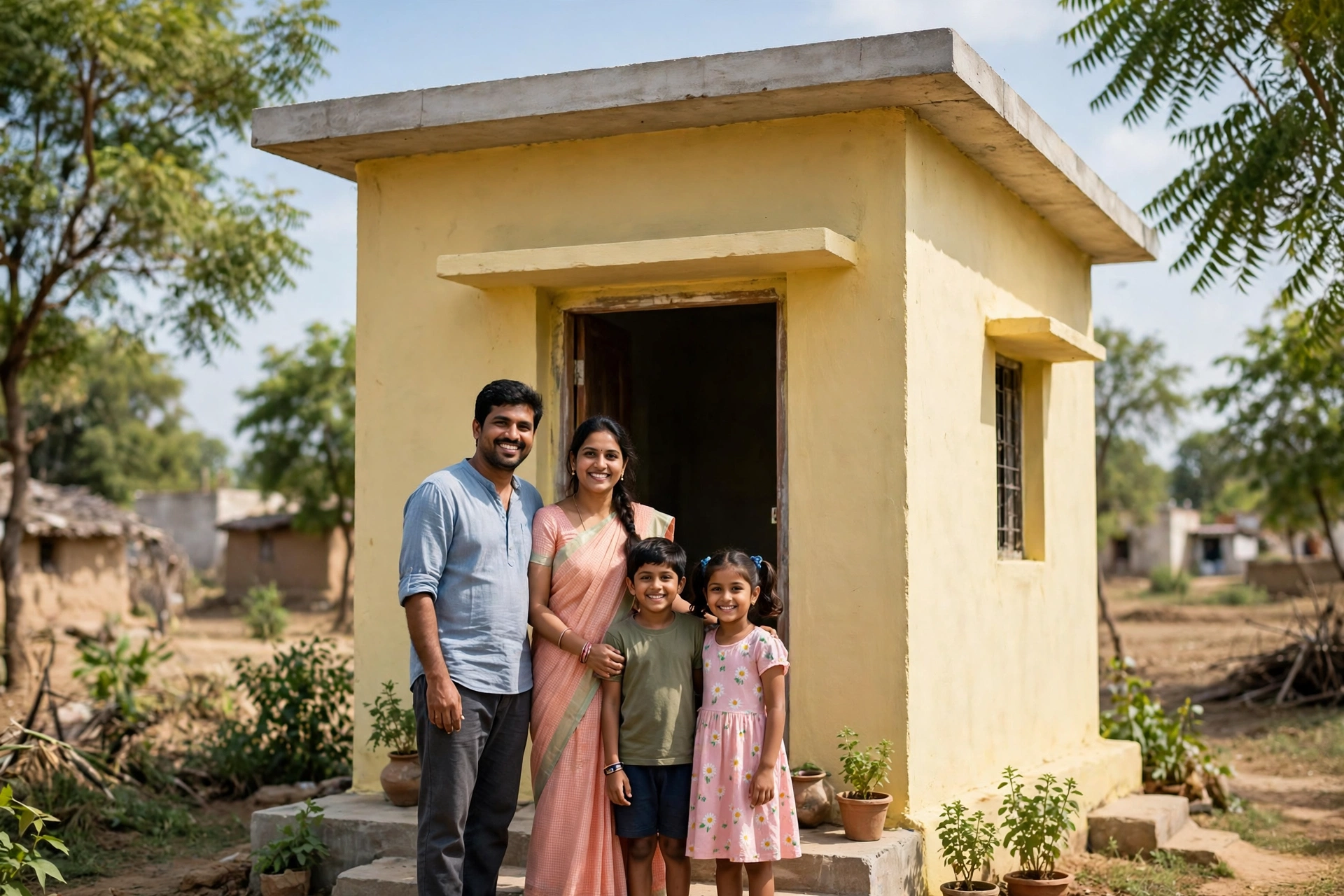
If you live in a rented mud house in some Telangana village or small town, or you own a small plot of land but don’t have the money to build a pucca house on it, there is probably one question circling in your head these days — did my name make it into the Indiramma Illu list? You are not alone in asking. Searches for “indiramma illu” have surged by more than 200% on Google Trends, and thousands of families right now want to know the same three things: how to check whether their name is on the list, when the money will arrive, and what those L1-L2-L3 labels actually mean.
The good news is that this one article answers all of those questions — in plain, simple English, with no beating around the bush. We will explain what the Indiramma Illu scheme really is, who gets how much money, how to check the beneficiary list and payment status online, what the L1-L2-L3 categories mean, and what to do if your name was rejected. Let’s get started.
Note: this is a private information portal (not a government website). For the latest and final information about the scheme, always check the official portal indirammaindlu.telangana.gov.in.
What Is Indiramma Illu? — At a Glance
Indiramma Illu (इंदिरम्मा इल्लु — “illu” means “house” in Telugu) is a major housing scheme of the Telangana government, launched by Chief Minister A. Revanth Reddy in December 2024. You will also see it spelled Indiramma Indlu in many places — both spellings refer to the same scheme, so don’t let that confuse you. The goal is simple and ambitious: give pucca (permanent) houses to the poor families of the state who do not have a home of their own.
The scheme is modelled on the central government’s Pradhan Mantri Awas Yojana (PMAY), but with one big difference — the Telangana government pays for it itself. In the first phase, the target is 4.5 lakh houses across 119 assembly constituencies, with a total budget of ₹22,000 crore. And that is just the beginning: the government’s larger goal is to get 20 lakh houses built within three and a half years. Few state housing schemes in India have ever set a target this large.
Indiramma Illu 2026: Quick Facts Table
| Detail | Information |
|---|---|
| Scheme name | Indiramma Illu / Indiramma Indlu |
| Run by | Telangana government — CM A. Revanth Reddy |
| Launched | December 2024 |
| Assistance amount | ₹5 lakh (General/OBC/BC) • ₹6 lakh (SC/ST) |
| Landless families | Free 250 sq. yard plot + construction assistance |
| Phase 1 target | 4.5 lakh houses (119 assembly constituencies) |
| Total budget | ₹22,000 crore |
| How money is paid | DBT to bank account, in installments across 4 construction stages |
| Official portal | indirammaindlu.telangana.gov.in |
| Helpline | 1800-599-4599 • 040-29390057 |
Who Gets How Much Money?
The assistance amount depends on the family’s social category. General, OBC and BC families receive ₹5 lakh, while SC/ST families receive ₹6 lakh. This is not a single lump-sum payment. The money is released in 4 installments, sent directly to the bank account (DBT), as the house construction progresses through its stages. Before every installment, the construction progress is physically verified, and geo-tagged photographs are taken through a government app so that no one can fudge the records.
Here is what makes this scheme genuinely special. Families that do not even own land get more than just money — they also receive a free 250 sq. yard plot on which they can build their house. So the scheme takes care of both the homeless and the landless in one sweep. If you have neither a house nor a plot, the government gives you both the ground to stand on and the money to build on it.
One important practical point: because each installment is tied to a construction stage, you cannot simply take the money and use it for something else. The system is designed so that the first installment helps you start the foundation, the next ones follow as walls, roof and finishing are completed, and each step is verified on the ground before the next payment is released.
What Do L1, L2 and L3 Mean? — Priority Categories
With lakhs of applications pouring in, the government needed a fair way to make sure the neediest families get help first. So it created three priority categories. Your list entry will show L1, L2 or L3 next to your name — here is what each one means:
- L1 — First priority: Families that have neither land nor a house. They are completely homeless and landless. They receive the free plot along with the construction assistance.
- L2 — Second priority: Families that own land, but have not built a pucca house on it. They receive the money to construct the house.
- L3 — Third priority: Families that have a house, but it is so dilapidated that it needs major repairs.
Within the selection, Dalit, Adivasi, widows and the poorest families get preference. And the verification is strict: officers physically visit the field to inspect the applicant’s situation, and approval is taken from the local body. A name written on paper alone is not enough — the ground reality is checked before anyone is confirmed.
Eligibility Conditions
- The applicant must be a permanent resident of Telangana.
- The family must not own a pucca house anywhere in India.
- The family must belong to the economically weaker section (EWS) or low-income group.
- The applicant must not already be a beneficiary of any other government housing scheme (state or central).
- The details in the application must match the Aadhaar and ration card.
- Field verification and local body approval are mandatory before selection.
Read that last point carefully — it is the one that trips up most people. Even if you applied correctly and your documents look fine, your name will not be confirmed until an officer has visited and verified your situation and the local body has signed off. If your application is stuck at “under verification,” this is usually the stage it is waiting on.
Documents You Will Need
- Aadhaar card
- Ration card or Family Survey Card (FSC)
- Income certificate from the Mandal Revenue Officer
- “No property” certificate from the local revenue office
- Caste certificate (for SC/ST/BC applicants)
- Aadhaar-linked bank passbook
Keep all of these ready before you check your status or visit any office. The most common reason applications get delayed or rejected is a mismatch between the name or address on the Aadhaar and the ration card. If the two don’t match, get them corrected first — it will save you months of back-and-forth later.
How to Check Your Name in the Indiramma Illu List (Beneficiary List)
The fresh 2026 beneficiary lists have been released on the official portal. There are two ways to check your name — online and offline:
- Open indirammaindlu.telangana.gov.in.
- On the homepage, choose the “Application Search” or “Beneficiary List” option.
- Enter your Aadhaar number, mobile number, application ID or ration card number.
- Press Submit/Go — your application status and list details will appear on the screen.
- You can also download the district-wise PDF list and search your name in it.
For those without internet: after the gram sabha meeting, the lists are also pinned on the notice boards of the gram panchayat office and the Mandal Revenue Officer’s office — you can go there and check your name in person. Don’t feel shy about visiting; the staff there deal with these queries every day.
How to Check Your Payment Status
If your name is on the list and your house construction has started, there are two places to find out whether the installment money has arrived:
- On the official portal (indirammaindlu.telangana.gov.in), the status-check section shows the progress of your payments.
- On the PFMS portal, the “Know Your Payment” option lets you enter your bank account number and see the DBT payment status.
Remember — the money is released only when a construction stage is completed. So if your installment seems stuck, the first thing to check is whether the geo-tag verification of the previous stage has been completed. In most “payment pending” cases, it is the verification — not the money — that is holding things up.
What to Do If Your Name Was Rejected
If the list shows your name as “rejected,” don’t panic. Rejection is often fixable. Go to the “Grievance” section on the portal and file a complaint with your application ID to find out the exact reason for rejection. Then contact your Mandal Revenue Officer (MRO) — in many cases, the name gets held up because of a small error in the documents or incomplete verification, both of which can be corrected. You can also call the helpline at 1800-599-4599 for help. Small document mistakes are the number one cause of rejections, and most of them get resolved once corrected and re-verified.
A Different System for Hyderabad City (Urban: Indiramma Indlu Towers)
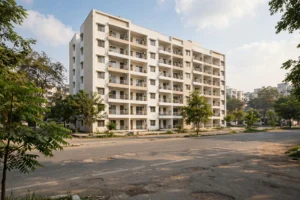
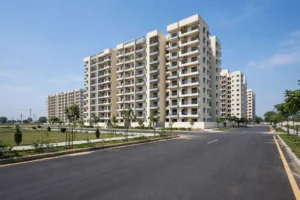
Inside Hyderabad’s Outer Ring Road (ORR), the scheme works differently — instead of individual plots, the government allots G+3 multi-storey flats (Indiramma Indlu Towers), managed by the Telangana Housing Board. The latest update: a four-day lottery concluded on 31 August 2026, in which 7,340 flats across 16 assembly constituencies were allotted (out of 60,720 applications received). The selected names can be seen on tghb.telangana.gov.in, and objections can be filed online.
Please note — these flats are not free. Each 528 sq. ft. flat costs about ₹11 lakh: the state government contributes ₹5 lakh, and the family pays the remaining ₹6 lakh in installments (₹10,000 is deposited at the time of application). The conditions: the family’s annual income must be below ₹6 lakh, the family must own no house or plot inside the ORR, the flat is registered in the woman’s name of the household, and it cannot be sold or rented out for 10 years. Applications are still open in four more areas, so if you missed this round, keep an eye on tghb.telangana.gov.in for the next one.
Beware of Fraud
Wherever there is a big housing scheme, fraudsters follow. Remember these rules: applications happen only through the official portal or Praja Palana — there is no fee. If anyone asks for money in exchange for getting your name on the list, that is fraud — report it on the helpline immediately. Never share your OTP, Aadhaar number or bank details with any stranger, no matter how official they sound. Genuine government officers will never ask for these over the phone.
Frequently Asked Questions (FAQs)
1. How much money do you get under Indiramma Illu?
Eligible General, OBC and BC families receive ₹5 lakh, and SC/ST families receive ₹6 lakh. The money comes via DBT to the bank account, in installments across the 4 stages of house construction.
2. What is the difference between Indiramma Illu and Indiramma Indlu?
There is no difference — they are two spellings/pronunciations of the same scheme. “Illu/Indlu” means “house” in Telugu. The official portal is named indirammaindlu.telangana.gov.in.
3. What do L1, L2 and L3 mean?
L1 = landless and houseless families (first priority, includes the free plot), L2 = owns land but has no pucca house, L3 = has a house that needs major repairs. Priority is given in this order.
4. How do I check my name in the list?
On indirammaindlu.telangana.gov.in, use “Application Search” and enter your Aadhaar, mobile number, application ID or ration card number. You can also download the district-wise PDF list, or check the notice board at your gram panchayat office.
5. Is the same scheme available in Hyderabad city?
Inside Hyderabad’s ORR, the scheme works differently — flats in the Indiramma Indlu Towers are allotted by lottery (tghb.telangana.gov.in). In the 31 August 2026 lottery, 7,340 flats were allotted. These flats are not free — out of the ₹11 lakh cost, the government pays ₹5 lakh and the beneficiary pays ₹6 lakh in installments.
6. What do landless families get?
Families with no land receive a free 250 sq. yard plot plus the ₹5 lakh/₹6 lakh construction assistance to build a house on it.
7. What should I do if my name was rejected?
File a grievance on the portal’s Grievance section with your application ID, contact your MRO, or call the helpline 1800-599-4599. Often a small document error is the cause, and the matter gets resolved once it is corrected.
Also read about the central government’s housing scheme — ₹2.5 lakh assistance for a house under PMAY 2.0 — and for ration-card related help, see how to check your name in the ration card list. Women readers may also find our Ladli Behna Yojana 41st installment 2026 update useful.
GramSuvidha is a private information portal (not a government website). Amounts, dates and procedures can change over time; for final information always check the official portal indirammaindlu.telangana.gov.in.