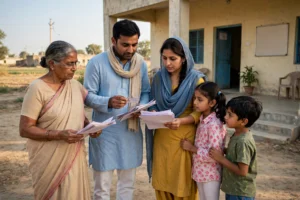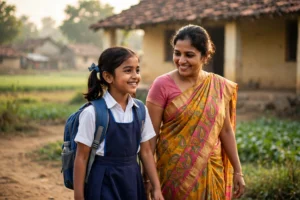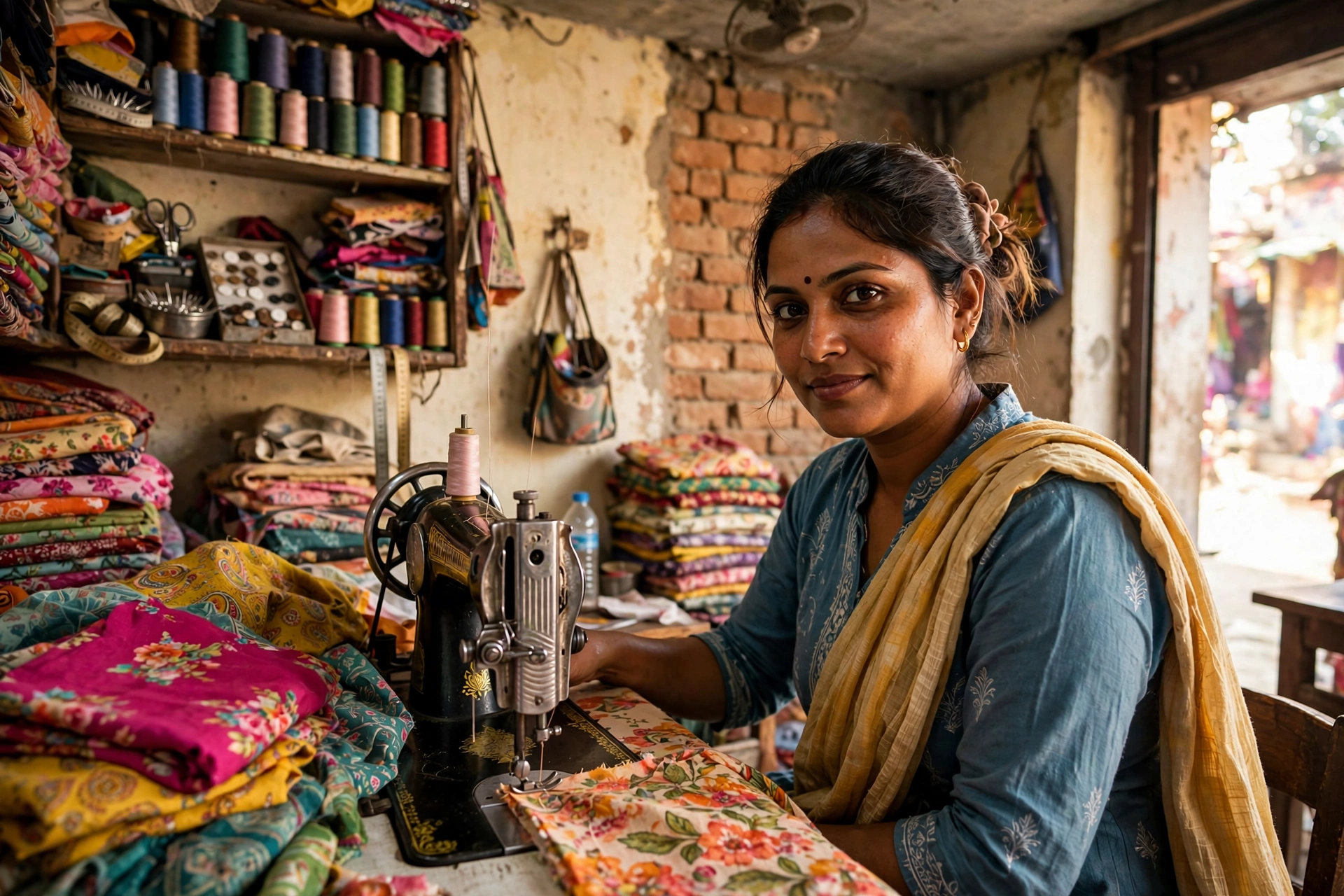
Something big has changed in Bihar over the last year. Women who earlier only managed their homes are now starting small work of their own — one has taken up tailoring, another runs a small grocery shop, a third keeps dairy animals or poultry. Behind this change is a major scheme of the Bihar government called the mukhyamantri mahila rojgar yojana. In this guide, we explain the scheme in full — what it is, who can get the benefit, how much assistance is given, how to apply, how the money reaches you, and what to do if your money has not arrived yet.
One thing must be said clearly at the start. A lot of information about this scheme is floating around on the internet, and some of it contradicts other reports. Some sites talk about a ₹20,000 second instalment; others publish a neat table splitting the ₹2 lakh support into stages. In this guide, we will tell you with every fact whether it is officially confirmed or only reported in the news. What has not been announced yet, we will not present as announced. That honesty is what makes this guide different from the rest.
What is mukhyamantri mahila rojgar yojana?
The mukhyamantri mahila rojgar yojana is a women's empowerment scheme of the Government of Bihar. Its aim is simple — to give one woman from every family in Bihar the financial support to start her own employment or small business, so that she can become self-reliant and her family's income can grow. The scheme is run through the Rural Development Department, and on the ground it is implemented through JEEViKA (BRLPS) self-help groups. In urban areas, the Urban Development and Housing Department supports implementation.
The most important feature of the scheme is that it is a grant, not a loan. The initial amount is given as assistance that does not have to be repaid. The money reaches the beneficiary woman's bank account directly through DBT (Direct Benefit Transfer), so there is no middleman in between. In addition, community resource persons connected with self-help groups give women training in choosing, running and managing a business, so that the money is used well and the work lasts for a long time.
The scheme is community-driven. That means the woman is not left alone — she joins a JEEViKA group, takes part in group meetings, and gets guidance from there. There is also a plan to develop Gramin Haat-Bazaars at village and town level, so that women get places to sell their products.
Latest update — what has happened up to October 2026
Here is the position as of October 2026. The scheme was launched on 26 September 2025, when Prime Minister Narendra Modi inaugurated it through video conferencing and ₹10,000 each was sent to the accounts of 75 lakh women on the same day. This is recorded in the official PIB press release.
After that, according to news reports, 25 lakh more women received the first instalment on 3 October 2025, and 21 lakh more on 6 October 2025. If all three phases are added together, about 1.21 crore women received the ₹10,000 assistance. This figure appears consistently across several sources, but the PIB release mentions only the first day's 75 lakh, so we call the second and third phases "as reported".
Then comes a conflicting claim. One major scheme website says that in February 2026, ₹2,500 crore was transferred to 25 lakh women. Another detailed website says that after October 2025, the next official transfer happened on 27 August 2026, when, as per the Chief Minister's Office press release (cm-555), ₹600 crore was transferred through DBT to the accounts of 5 lakh women beneficiaries. These two claims conflict, so we are not treating either as settled truth. The most reliable method is to check your own DBT credit in your passbook.
There are also reports about a ₹20,000 second instalment. According to some newspaper reports, the August 2026 transfer included a ₹20,000 second instalment for 1 lakh JEEViKA didis and ₹10,000 for 4 lakh new women. But this split is not given in the CMO press release. So we place the ₹20,000 second instalment in the "reported in the press, not officially confirmed" category. No official date for the next instalment has been announced yet.
Scheme at a glance — Quick Facts Table
| Detail | Information |
|---|---|
| Scheme name | Mukhyamantri Mahila Rojgar Yojana (MMRY) |
| State | Bihar |
| Launched by | Government of Bihar |
| Nodal department | Rural Development Department |
| Implementing agency | BRLPS / JEEViKA |
| Urban support | Urban Development and Housing Department |
| Beneficiaries | One woman from every eligible family |
| First assistance | ₹10,000 (directly to bank account via DBT, confirmed by PIB) |
| Further assistance | Possibility of up to ₹2 lakh in subsequent phases (confirmed by PIB; stage-wise table NOT officially confirmed) |
| Launched | 26 September 2025 (confirmed by PIB) |
| Application mode | Rural — through JEEViKA groups; Urban — online portal |
| Official portal | mmry.brlps.in |
| Application fee | Completely free — no fee |
How much assistance is given — the truth about ₹10,000 and ₹2 lakh
Understand the assistance in two parts. The first part is fully confirmed. Every eligible woman gets ₹10,000 as one-time initial assistance, sent directly to her bank account through DBT. The PIB release states this amount, and on launch day this exact amount was sent to 75 lakh women.
The second part is "additional support of up to ₹2 lakh". The PIB release says there is scope for additional financial support of up to ₹2 lakh in subsequent phases. So the ₹2 lakh ceiling is official — but no official stage-wise table saying when, in how many stages, and on what conditions it will be given has been made public as of the time of writing.
Some websites have published the ₹2 lakh split into four stages — for example ₹20,000, ₹40,000, ₹80,000 and ₹60,000, with the woman contributing her own share in some stages. That table looks trustworthy, but it is not official. Do not treat it as an official announcement. Similarly, the claim of "₹2.10 lakh in five instalments" is some websites' own calculation, not an official announcement.
The real rule is this — the additional support of up to ₹2 lakh will be based on performance. That means the business must have run for at least six months, the first instalment must genuinely have been invested in the business, and verification must find everything in order. This support is not automatic. There will be an assessment at every stage, and only then will the next amount be considered.
Who can apply — eligibility
The eligibility conditions of the scheme are stated as follows:
- The applicant must be a woman — the scheme is only for women.
- Age between 18 and 60 years.
- Permanent resident of Bihar.
- Only one woman from each family will get the benefit.
- Neither the applicant nor her husband should be an income tax assessee.
- Neither the applicant nor her husband should be in government service (regular or contractual).
- Membership of a JEEViKA self-help group (SHG) is required — women who are not yet members are connected to a group during registration.
- Training must be attended — business-related training is stated to be mandatory.
About the definition of "family", scheme websites state that a family includes husband, wife and unmarried children. If a married son lives in the same house, his family is treated as separate. This interpretation is given with reference to the scheme guidelines — for final confirmation, ask your Gram Sangathan or JEEViKA didi.
Who is NOT eligible — check this first
Before applying, check these points so that you are not disappointed later:
- If any member of the family is in a government job (regular or contractual), the family will not be eligible.
- If the applicant or her husband pays income tax, eligibility will not be established.
- Two women from the same family cannot take the benefit — only one woman will be selected.
- Women who are permanent residents outside Bihar cannot apply under this scheme.
- If the age is below 18 or above 60, the application will not be accepted.
If you have any doubt about your eligibility, ask at your Gram Sangathan or nearest JEEViKA office before applying. Applying with wrong information can lead to rejection of the application.
What work can the money be used for
According to the PIB release, the assistance can be used for work of the beneficiary's choice, including agriculture, animal husbandry, handicrafts, tailoring, weaving and other small-scale enterprises. Around these categories, women have commonly started the following work:
- Tailoring and embroidery, boutique or tailoring shop
- Grocery shop, fruit and vegetable shop, stationery or photocopy shop
- Beauty parlour, cosmetics or artificial jewellery shop
- Dairy, goat rearing, poultry farming or animal husbandry
- Pickle, papad, food items or home-made products
- Handicrafts, bamboo products or home-made goods
- Mobile recharge, repair or small electronics shop
- E-rickshaw or auto-rickshaw related work
Some scheme websites also list 18 types of work, but that list is not in the official release. The real rule is simple — the work should be legal, of your choice, and possible to start with ₹10,000. When choosing work, do think about whether there is demand for it in your village or neighbourhood.
How rural women apply — through JEEViKA groups
Women living in villages do not need to fill an online form. Their application goes through the JEEViKA group. The process is as follows:
- Contact your Village Organization (Gram Sangathan). This is your area's JEEViKA centre.
- Take part in the self-help group meeting. In the group meeting, applications of all members are taken together in consolidated form.
- Carry a copy of your Aadhaar card. Payment is made only to an Aadhaar-linked bank account, so the Aadhaar details must be correct.
- If you are not yet a group member, first give a self-declaration at the Village Organization to join a group. Only after joining the group will your scheme application move forward. According to reports, joining a group can take 3 to 10 days.
- Take the training. After joining the group, business-related training is given.
- After verification, the money comes to the account via DBT. If verification is delayed, contact your JEEViKA didi or CRP.
The most important thing in a rural application is that your bank account is Aadhaar-seeded and active for DBT. If the account is not linked to Aadhaar, the money can get stuck.
How urban women apply online — step by step
Urban women who are not yet part of any self-help group can register themselves on the official portal. Women who are already members of an urban SHG do not need to fill this online form — they should contact their Area Level Organisation (ALO) or CRP, who will take the group's application together.
Steps for online application:
- Open the official portal — go to mmry.brlps.in. For urban registration, mmryurban.brlps.in is also this scheme's portal. Trust only these addresses.
- "Are you a member of a self-help group?" — answer this question correctly. If you are not a group member, select "No" and proceed.
- Register with Aadhaar and mobile — enter your Aadhaar number, name as written on Aadhaar, father's or husband's name, and the Aadhaar-linked mobile number.
- Verify the OTP — click "Send OTP" and enter the OTP received on your mobile.
- Fill the remaining details — fill personal details, bank details and business information carefully.
- Upload documents — upload the requested documents clearly.
- Submit the form and note down the application number — the application number received after submission must be kept safely. It is your identity.
- Group joining and verification — after application, the community resource person (CRW) of the area will contact you and help you join a JEEViKA group. The application is approved only after becoming a member of the group.
One practical warning: the scheme portal often gives a technical error (502 error). If the portal does not open, do not panic — the problem is not with your phone. Try again after some time, or visit your nearest JEEViKA office / municipal body office and ask.
Documents required — keep these ready before applying
These documents are useful at the time of application:
- Aadhaar card (linked with mobile number)
- Copy of bank passbook (with IFSC code and account number)
- Passport-size photograph
- Signature on plain paper (for scanning)
- Proof of permanent residence in Bihar
- Family identification card / ration card (for family details)
- SHG membership proof (if already a member)
- Brief details of the business — what work you want to start
Please note: the documents asked for can differ slightly from place to place. The list shown by the Village Organization or the portal will be treated as final.
How the money arrives — the role of DBT and your bank account
The scheme's money comes directly to the bank account through DBT. For this, three things must be correct:
- The bank account must be in your name and active.
- The account must be Aadhaar-seeded — meaning your Aadhaar is linked in the bank and the account is active for DBT in the NPCI mapping.
- The mobile number must be linked to both Aadhaar and the bank, so that OTPs and SMS alerts reach you.
If even one of these is incomplete, the money can get stuck. So before applying, definitely visit your bank branch and ask whether your account is active for DBT or not.
Status check — how to know whether the money has arrived
After applying, the biggest question is — has the money arrived or not? There are three reliable ways:
Method 1 — MMRY portal: A payment-status option is reported on mmry.brlps.in, where the status can be seen with Aadhaar/mobile and OTP. But this option does not always work properly, because the portal often has technical problems.
Method 2 — PFMS portal: On pfms.nic.in, go to the "Know Your Payment" option and enter your bank name and account number. Here, information about payments received through DBT is shown. This method runs separately from the scheme portal, so it is more reliable.
Method 3 — Bank passbook: Get your passbook updated. A DBT entry usually shows a reference like "MMRY" or "MAHILA ROJGAR". Also check SMS alerts — when money arrives, the bank sends an SMS.
Never enter your Aadhaar number or OTP on any unknown website or WhatsApp link to check status.
Money not received? Follow this complete checklist
If women around you have received the money and you have not, instead of panicking, check in this order:
- Check the bank account — Is the account active? Is Aadhaar linked to the bank? Has DBT/NPCI seeding been done? Visit the bank branch and ask. This is the most common reason.
- Check e-KYC — Is your e-KYC complete? Ask your JEEViKA didi or at the group meeting.
- Ask about the application status — Ask your Village Organization / ALO / CRP whether your application has been approved or whether some document is missing.
- Check payment on PFMS — On pfms.nic.in, use "Know Your Payment" to see whether the payment has been sent or not.
- Get the passbook updated — Sometimes the money has arrived, but the SMS has not. The passbook is the final proof.
- Contact the helpline — BRLPS contact details are given below. Keep your application number ready when complaining.
Remember, payments are sent in phases (waves). Your name not appearing in one phase does not mean the application has been cancelled. But if a long time has passed and no information is coming, do get it checked through the steps above.
Phase 2 — how the support of up to ₹2 lakh will work
About the additional support of up to ₹2 lakh, the points reported in the news and on scheme websites are as follows — but remember, the stage-wise table among them is NOT officially confirmed:
- The first instalment of ₹10,000 must genuinely have been invested in the business.
- The business must have been running for at least six months.
- A utilization certificate must be submitted.
- Government physical verification must be passed.
- Attendance at SHG meetings must be regular.
- Income and expense records must be maintained.
- e-KYC must be complete.
There is also talk of government help with marketing — such as linkage with mandis, retail and district fairs, so that women's products can sell. But to repeat — the stage-wise table for ₹2 lakh has not been officially published yet. If anyone says "this much money will definitely come on this date", do not trust it.
Save yourself from fraud — always remember these points
Fraud is also happening in the name of this scheme. Keep these points in mind:
- Application is completely free. If anyone asks for ₹1,000–₹2,000 or any amount in the name of the form, approval or instalment, that person is a fraud.
- Never share OTP, Aadhaar number, bank details or PIN with anyone. Government staff never ask for OTP on the phone.
- Use only the official portal — mmry.brlps.in and mmryurban.brlps.in. Stay away from "approved" links on WhatsApp or unknown websites.
- Claims like "Give ₹5,000, I will get you Phase 2" or "guaranteed approval" are 100% fraud.
- Beware of fake JEEViKA didis. If anyone claims to get your application done for money, complain at your Village Organization or district JEEViKA office.
- Agents or middlemen have no role. The government has not authorised any middleman for applications.
If someone has asked you for money or tried to cheat you, inform your Village Organization, district JEEViKA office or nearest municipal body office.
Frequently asked questions (FAQ)
Question: Who gets the benefit of mukhyamantri mahila rojgar yojana? Answer: One woman from every eligible family in Bihar gets the benefit. The woman must be between 18 and 60 years old, be a permanent resident of Bihar, and no family member should be in a government job or pay income tax.
Question: How much money is given in the first instalment? Answer: In the first instalment, ₹10,000 comes directly to the bank account through DBT. This is confirmed by the official PIB release.
Question: When and how will the ₹2 lakh be given? Answer: Additional support of up to ₹2 lakh may be given in later phases based on performance. But no official stage-wise table has been published yet. Conditions like six months of running the business, utilization certificate, physical verification and e-KYC have been reported in the news.
Question: What is the ₹20,000 second instalment? Answer: The ₹20,000 second instalment has been reported in the news, but its split is not given in the CMO press release. So it cannot be treated as officially confirmed. No official date for the next instalment has been announced yet.
Question: What is the difference between rural and urban applications? Answer: Rural women apply through JEEViKA groups and the Village Organization. Urban women who are not in an SHG can apply online on mmry.brlps.in / mmryurban.brlps.in. Urban women already in an SHG apply through their ALO/CRP.
Question: Is there any fee for applying? Answer: No, application is completely free. If anyone asks for money, it is fraud. Complain at the JEEViKA office or municipal body office.
Question: Is SHG membership necessary? Answer: Yes, membership of a JEEViKA self-help group is stated to be necessary to take the benefit of the scheme. Women who are not yet members are connected to a group during registration.
Question: If the money has not arrived, what should I do first? Answer: First, visit the bank and check whether the account is active for DBT and linked to Aadhaar or not. Then ask your Village Organization / ALO about your e-KYC and application status, and check the payment status on PFMS under "Know Your Payment".
Question: Is this scheme a loan? Will the money have to be repaid? Answer: No, this is a grant, not a loan. The initial ₹10,000 and further assistance do not have to be repaid.
Question: If the husband is in a government job, can the wife apply? Answer: No. As per the eligibility conditions, if the applicant or her husband is in government service (regular or contractual), the family will not be eligible.
Contact and helpline
For questions related to the scheme, the contact details of BRLPS / JEEViKA are stated as follows (as per published contact details; also verify on the portal before applying):
- Address: Vidyut Bhawan, Annexe-II, Bailey Road, Patna – 800 021, Bihar
- Phone: +91-612-2504980/60, 9771478320
- Email: info@brlps.in
- Official portal: mmry.brlps.in
When complaining or asking a question, keep your application number and Aadhaar-linked mobile number ready. Do not tell your account number to any unknown person.
Also see other Bihar schemes
If you are a woman from Bihar, these schemes may also be useful for you:
- Bihar Udyami Yojana — information on up to ₹10 lakh support to start your own business: https://gramsuvidha.co.in/en/bihar-udyami-yojana-2026-%e2%82%b910-lakh-support-eligibility-and-application-process/
- Mukhyamantri Kanya Utthan Yojana — support for daughters and status check: https://gramsuvidha.co.in/en/mukhyamantri-kanya-utthan-yojana-2026-status-check-benefits-and-application/
- SSPMIS Bihar pension status check — how to check your pension status: https://gramsuvidha.co.in/en/sspmis-bihar-2026-pension-status-check/
- Is there a Ladli Behna Yojana in Bihar? The truth and the real scheme: https://gramsuvidha.co.in/en/ladli-behna-yojana-bihar-2026-is-there-a-ladli-behna-scheme-in-bihar-the-truth-and-the-real-scheme/
Conclusion
The mukhyamantri mahila rojgar yojana is a big opportunity for the women of Bihar — ₹10,000 initial assistance, the possibility of up to ₹2 lakh further, free training and the support of a group. But you will get the full benefit of this opportunity only if you proceed on the basis of correct information. Trust only the official portal, apply for free, keep your bank account and e-KYC in order beforehand, and do not give money or OTP to anyone.
Remember — what has not been officially announced yet is not announced. Whether it is the date of the next instalment or the stage-wise table of ₹2 lakh, until an official announcement comes from the government, treat it as news only. Bookmark this page — it will be updated as soon as new official information arrives.
Disclaimer: This article is written for information purposes by a private information portal, not a government website. For the final and official information about the scheme, always confirm on the official portal (mmry.brlps.in) or at your nearest JEEViKA office.