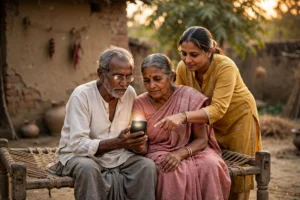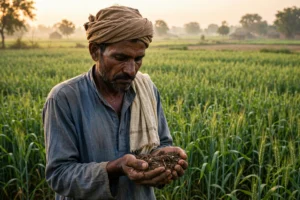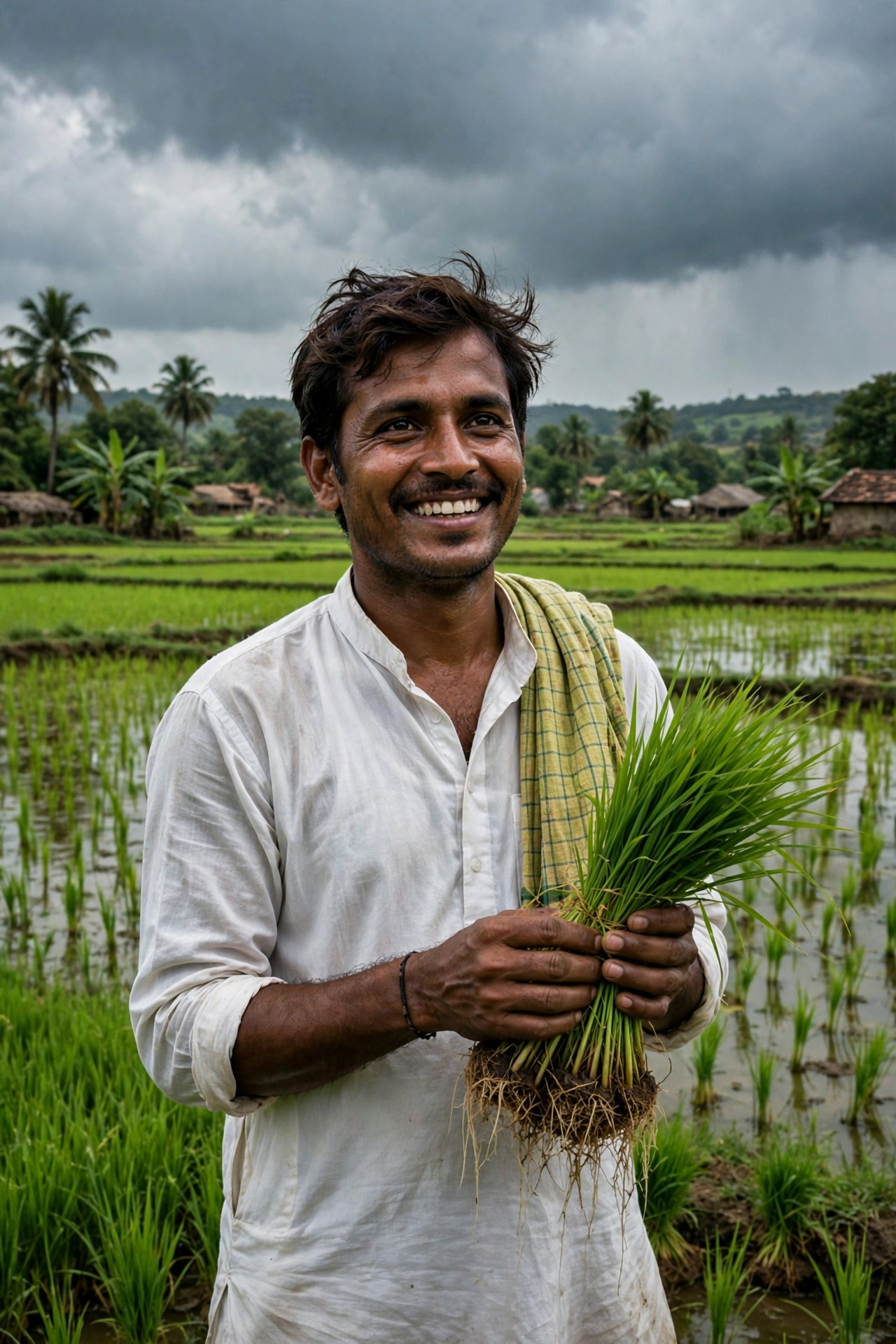
No rain means drought, too much means flood — a farmer’s hard work can be wiped out by one bad season. Pradhan Mantri Fasal Bima Yojana (PMFBY) is the government’s answer: crop insurance where the farmer pays only 2% (Kharif), 1.5% (Rabi) or 5% (horticulture) as premium, and the government pays the rest. Launched on 18 February 2016, it has covered over 78 crore farmer applications so far.
This guide covers — what the scheme is, who can enrol, how much premium, what is covered, how claims work, and how to apply. 30 questions answered at the end. All information from pmfby.gov.in and the Ministry of Agriculture’s official sources.
PM Fasal Bima Yojana: At a Glance
| Point | Information |
|---|---|
| Scheme | Pradhan Mantri Fasal Bima Yojana (PMFBY) — Central Govt |
| Launched | 18 February 2016 |
| Ministry | Ministry of Agriculture & Farmers Welfare |
| Farmer premium | Kharif 2%, Rabi 1.5%, commercial/horticulture 5% (of sum insured, max) |
| Rest of premium | Paid by government (Centre + State) |
| Eligibility | All farmers growing notified crops (owners, tenants, sharecroppers) |
| Apply at | pmfby.gov.in, banks, CSCs |
| Helpline | 14447 |
| Budget (2021-26) | ₹69,515.71 crore |
What Is PMFBY?
Pradhan Mantri Fasal Bima Yojana is the central government’s crop insurance scheme, launched on 18 February 2016. Its purpose — give farmers financial support when crops are damaged by natural calamity, pests or disease, so they don’t fall into debt traps and can continue farming.
It was introduced under “One Nation, One Scheme”, replacing two older schemes (National Agricultural Insurance Scheme and Modified NAIS). Insurance is available for notified crops in notified areas — crops and areas notified by the state government.
The scale is large: 78.41 crore farmer applications insured, and 22.67 crore farmers received claims worth ₹1.83 lakh crore.
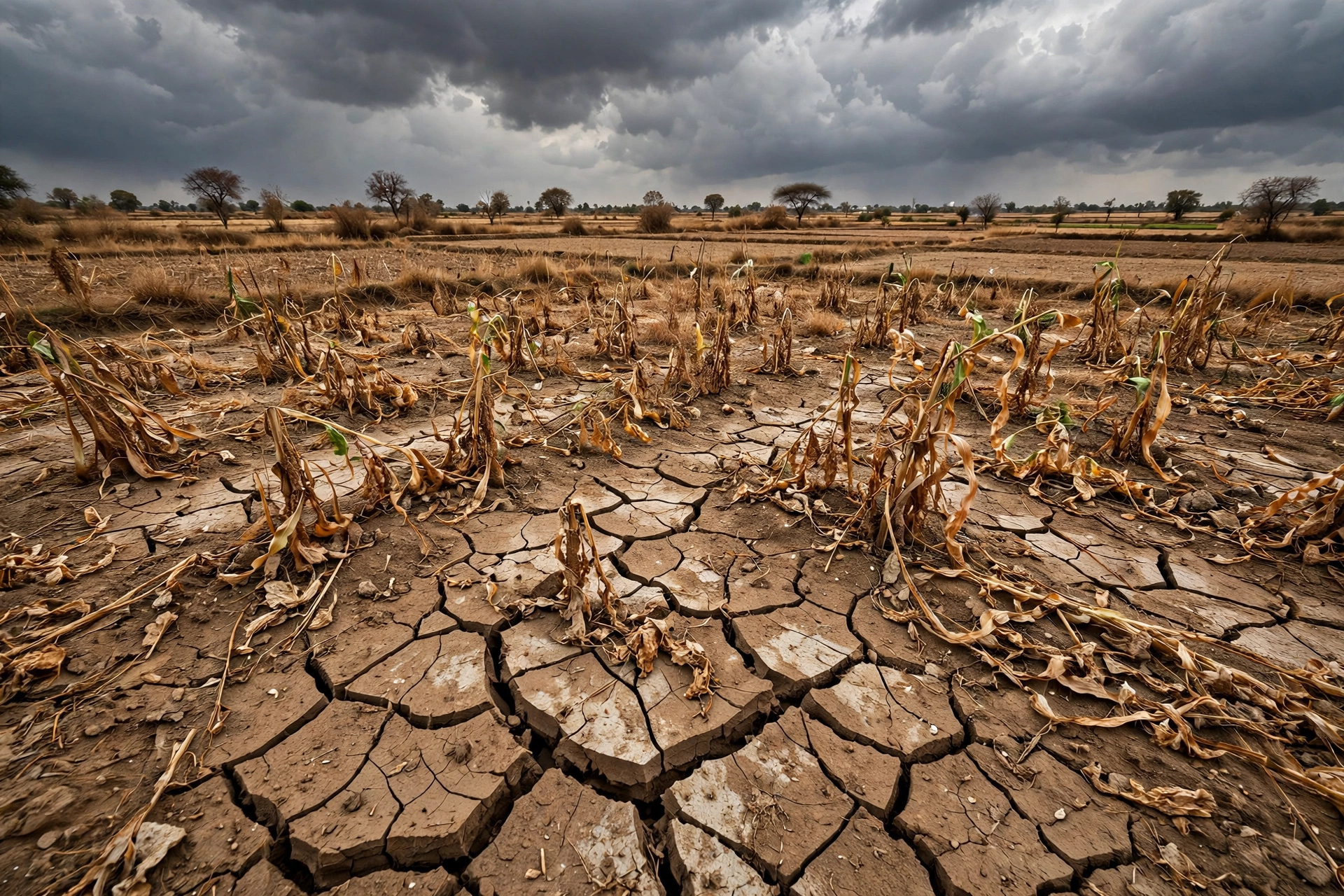
Objectives of PMFBY in Detail
The scheme has four core objectives per the Ministry’s guidelines:
- Financial support: help farmers suffering crop loss so families survive the season
- Income stability: ensure a farmer’s income doesn’t drop to zero after a calamity
- Modern farming: with risk covered, farmers adopt new technology and better seeds without fear
- Credit flow: banks lend more easily against insured crops, reducing default fear
Why PMFBY Is Special for Farmers
Earlier insurance schemes had higher premiums and delayed claims. PMFBY brought three big improvements:
1. Low premium, full cover: the farmer pays only 1.5% to 5% of the sum insured — the government bears the entire balance with no cap.
2. Tech-driven fast claims: satellite imagery, drone surveys and mobile apps assess loss in weeks. Earlier, farmers waited months for manual reports.
3. Individual farm assessment: for localised calamities like hailstorm or landslide, there is no wait for the village average — claims are based on your farm’s loss.
Premium: How Much Does the Farmer Pay?
- Kharif (paddy, maize, jowar, bajra, tur, moong, urad, cotton, jute, groundnut, soybean): maximum 2% of sum insured
- Rabi (wheat, barley, peas, gram, mustard): maximum 1.5% of sum insured
- Annual commercial/horticultural crops: maximum 5% of sum insured
The entire balance premium is paid by the government — Centre and State together, with no upper limit on subsidy. For North-Eastern states, J&K and Himachal Pradesh, the government pays the full premium.
Premium Calculator: Know the Exact Amount First
Before paying, check the Insurance Premium Calculator on pmfby.gov.in:
- Step 1: Open pmfby.gov.in
- Step 2: Click “Insurance Premium Calculator” on the homepage
- Step 3: Fill season, year, scheme, state, district and crop
- Step 4: Click “Calculate” — the exact premium appears
This lets you match what the bank or CSC asks for — protection against fraud.
What Is Covered?
1. Standing crop loss: drought, flood, cyclone, storm, hailstorm, landslide, pest and disease attacks
2. Prevented sowing: up to 25% of sum insured if adverse weather prevents sowing
3. Post-harvest loss: crops in “cut and spread” condition damaged within 14 days by cyclonic/unseasonal rain
4. Localised calamities: hailstorm, landslide, inundation — assessed on individual farm basis
What Is NOT Covered?
- Loss from war, nuclear risks, malicious damage
- Preventable risks (negligence)
- Non-notified areas or crops
Who Can Apply?
- Landowner, sharecropper and tenant farmers
- Notified crop in a notified area
- Loanee and non-loanee both — scheme is voluntary
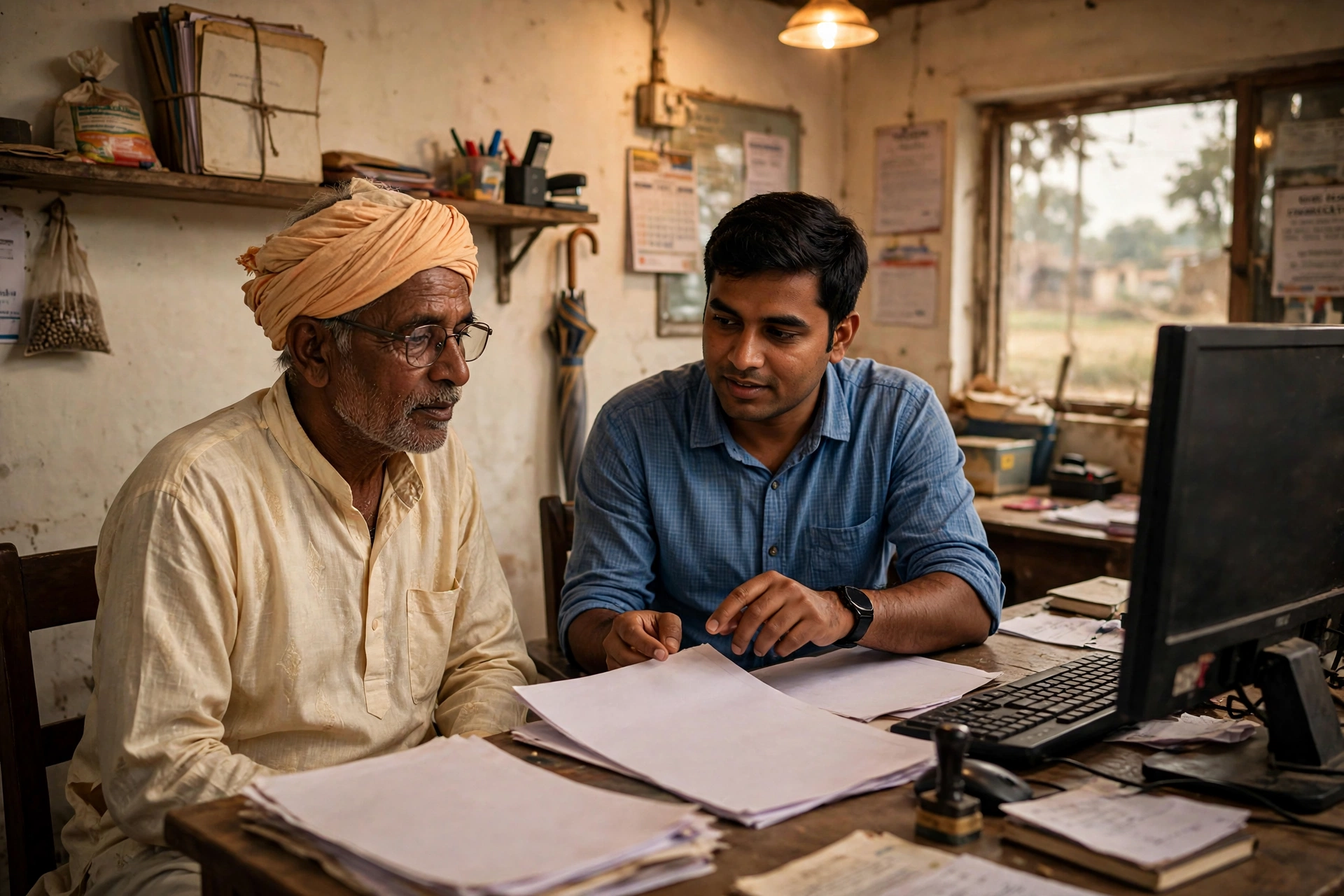
Documents Required
- Aadhaar card, bank passbook, land records (Khatauni/Khasra), sowing certificate
Cut-off Dates Matter
Each state sets a cut-off date per season — no applications after it. Typically:
- Kharif: around 31 July
- Rabi: around 31 December
Dates vary by year and state — check pmfby.gov.in or your nearest CSC for your district’s date. There is no late-application provision.
How to Apply
- Online: register on pmfby.gov.in, select crop, check the premium calculator, submit before cut-off
- Offline: fill the form at the nearest bank or CSC
- Farmers with crop loans are enrolled by the bank at disbursal
How Claims Work: Step by Step
Step 1 — Report loss: within 72 hours of damage — via pmfby.gov.in, Crop Insurance App, 14447 or WhatsApp 7065514447.
Step 2 — Survey: insurer and agriculture department assess the loss — now also via satellite and drones.
Step 3 — Approval: claim decided on state data and technical assessment.
Step 4 — Direct payment: amount goes to the farmer’s bank account via DBT — no middlemen.
Krishi Rakshak: Grievance Platform
If your application is stuck or claim not received — file a complaint on the Krishi Rakshak Portal. Helpline 14447 also helps. You can:
- Check application status
- Track claim progress
- Get corrections made (wrong premium, name errors)
Technology for Transparency
- YES-TECH — satellite + AI yield estimation
- WINDS — block-level weather stations
- CROPIC — geotagged photo verification
- NCIP — one portal for farmer, insurer, bank
50+ Crops Covered
PMFBY covers 50+ crops — cereals, pulses, oilseeds, commercial and horticultural crops. But your state and district’s notified list is what matters — check it before applying. From Kharif 2026, wild animal attacks and paddy inundation covers were also added.
For Small and Marginal Farmers
The scheme is designed for small and marginal farmers — the low premium means even a 1-2 acre farmer can afford insurance. Budget allocation must reflect SC/ST and women farmers’ landholding proportions.
Frequently Asked Questions
Q1: When was PMFBY launched?
A: 18 February 2016.
Q2: How much premium does the farmer pay?
A: Kharif 2%, Rabi 1.5%, horticulture 5% (maximum).
Q3: Who pays the rest?
A: Central and state governments.
Q4: Can sharecroppers apply?
A: Yes.
Q5: Is post-harvest loss covered?
A: Yes, up to 14 days.
Q6: How is premium calculated?
A: Sum insured × rate. Check the calculator on pmfby.gov.in.
Q7: What if the claim is not received?
A: Complain on Krishi Rakshak Portal or 14447.
Q8: Are fruits and vegetables covered?
A: Yes, horticulture crops at 5% premium (must be notified).
Q9: Is Aadhaar mandatory?
A: Yes, for identity and DBT.
Q10: What is the helpline?
A: 14447.
Q11: Is application free?
A: Yes — only the premium is paid. No agent needed.
Q12: Can two insurances be taken on one crop?
A: No — no double compensation for the same loss.
Q13: Is this a government website?
A: No — GramSuvidha is a private information portal.
Q14: Where is the most accurate info?
A: pmfby.gov.in or your nearest CSC/bank.
Q15: What if sowing is prevented?
A: Up to 25% of sum insured.
Understanding the Seasons: Kharif vs Rabi
PMFBY runs in two seasons each year, and the premium rate depends on which season your crop belongs to:
Kharif season (sown June–July, harvested September–October): paddy, maize, jowar, bajra, tur (arhar), moong, urad, cotton, jute, groundnut, soybean. Hot and humid conditions, highly dependent on monsoon rain. Farmer premium: 2%.
Rabi season (sown October–December, harvested April–June): wheat, barley, peas, gram, mustard, chickpeas. Cooler temperatures, irrigation-dependent. Farmer premium: 1.5%.
Knowing your season matters because the cut-off date and premium rate are season-specific. Apply in the right window for your crop.
Deep Dive: How Technology Settles Claims
PMFBY’s claim system uses four technology pillars that make it faster and fairer than the old manual system:
YES-TECH (Yield Estimation System Based on Technology): uses remote sensing and AI to estimate crop yields accurately. Instead of waiting for manual crop-cutting experiments across thousands of villages, satellite data gives faster, more objective yield figures — which means quicker claim calculation.
WINDS (Weather Information and Network Data Systems): a network of Automatic Weather Stations and rain gauges at the block level captures real-time weather data. This helps verify whether a claimed weather event (like deficient rainfall) actually occurred in that area.
CROPIC (Collection of Real-time Photos and Observations of Crops): uses geotagged photographs to verify the crop actually sown in the field. This prevents false claims and ensures genuine farmers get paid.
NCIP (National Crop Insurance Portal): the single digital platform at pmfby.gov.in where farmers enrol, insurers process, and banks disburse — all tracked transparently.
Common Mistakes to Avoid
- Missing the cut-off date: the most common reason applications are rejected. Mark your district’s date as soon as the season notification comes.
- Wrong crop declared: the sowing certificate must match the actual crop in the field — CROPIC photos can verify this.
- Not reporting loss in time: report within 72 hours of damage. Late reporting can lead to claim rejection.
- Bank account issues: ensure your Aadhaar is linked and the bank account is active — claims go via DBT only.
- Paying agents: application is free. Never pay any “agent” or “consultant” for PMFBY enrolment — use pmfby.gov.in, your bank, or CSC directly.
PMFBY vs Private Crop Insurance
Farmers sometimes ask why not just buy private crop insurance. The key differences:
- Premium cost: private insurers charge full commercial premium; under PMFBY the farmer pays only 1.5–5% and the government subsidises the rest with no cap.
- Government backing: PMFBY claims are backed by central and state governments, not just a company’s balance sheet.
- Standardised process: one portal, one helpline (14447), one grievance system (Krishi Rakshak) across India.
The trade-off: PMFBY covers only notified crops in notified areas, while private policies may offer customised covers at higher cost.
More Questions Answered
Q16: What is the sum insured based on?
A: The scale of finance or notional value decided by the state government for each crop — check your district’s notification.
Q17: Can I change my bank account later?
A: Yes — update it through the portal or your bank so DBT claims reach the right account.
Q18: What if my crop is damaged before sowing completes?
A: Prevented-sowing cover gives up to 25% of sum insured when adverse weather stops sowing.
Q19: Are organic farmers eligible?
A: Yes — eligibility depends on notified crop and area, not farming method.
Q20: How do I know my application was accepted?
A: Check status on pmfby.gov.in or call 14447 with your application number.
Q21: What is CROPIC?
A: A system using geotagged field photos to verify crops for accurate damage assessment.
Q22: Can I get PMFBY for leased land?
A: Yes — tenant and sharecropper farmers are eligible with tenancy proof.
Q23: What happens if I don’t pay the premium on time?
A: No cover without premium payment before the cut-off date.
Q24: Is there any subsidy limit?
A: No — there is no upper cap on the government’s premium subsidy.
Q25: Who are the insurance companies?
A: Empanelled public and private general insurers, allocated by state — shown on pmfby.gov.in.
Q26: Can I insure only part of my land?
A: The insured area should match the sown area declared — check with your bank or CSC.
Q27: What is WINDS?
A: Weather Information and Network Data Systems — block-level weather stations for accurate risk assessment.
Q28: How long has PMFBY been running?
A: Since 18 February 2016 — over a decade of operations.
Q29: What was the total budget?
A: ₹69,515.71 crore for 2021–26.
Q30: Where can I get help in my language?
A: Call 14447 or WhatsApp 7065514447 — support is available in major Indian languages.
Important Links
- Official portal: pmfby.gov.in
- Helpline: 14447
Disclaimer: GramSuvidha is a private information portal, not a government website. Information is based on pmfby.gov.in and Ministry of Agriculture official sources.