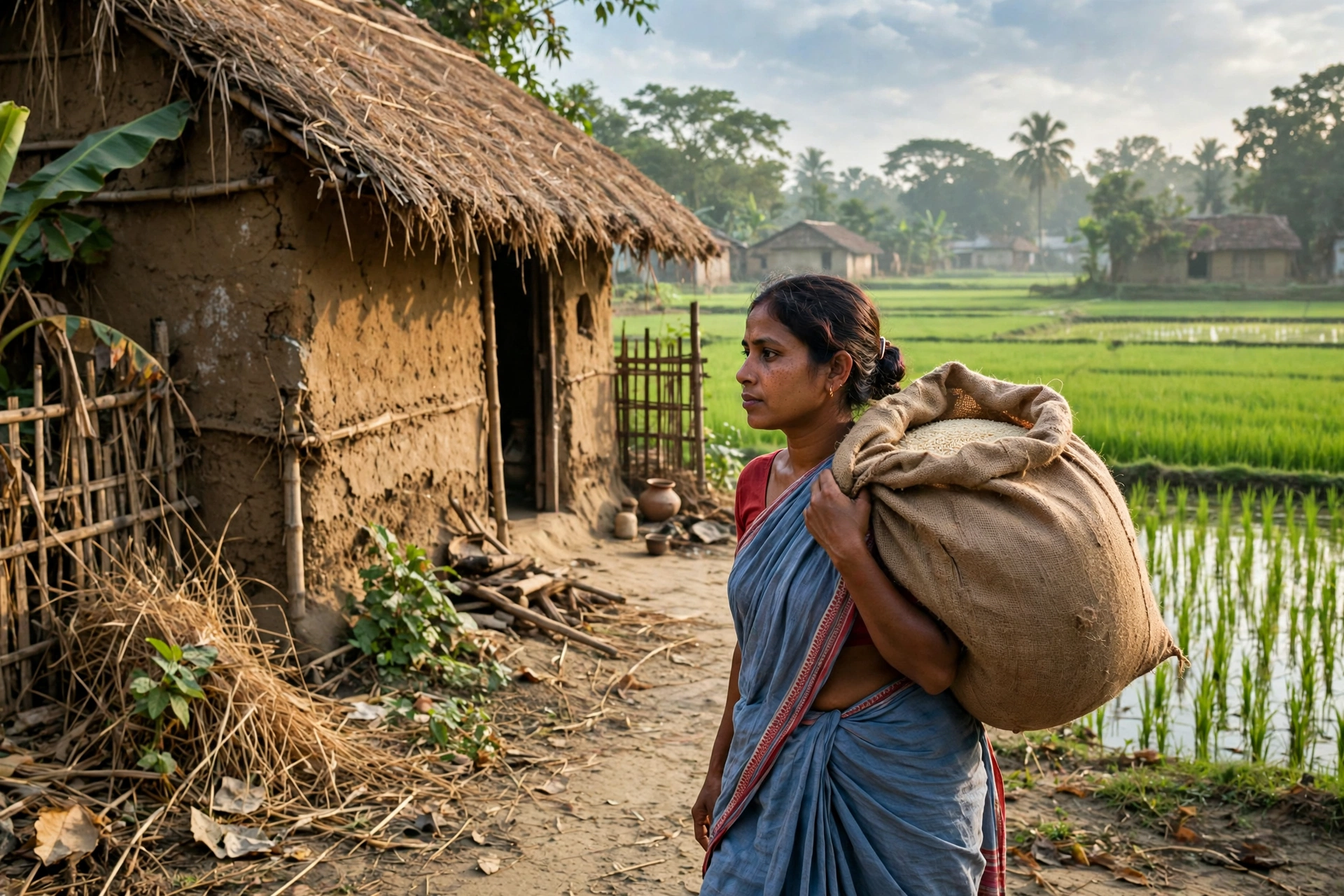
There is important news for tribal families in the forest areas of West Bengal, and it is news that touches the kitchen directly. A new nutrition support drive has been started for the families who need help the most, and this article explains the whole story in simple language, step by step. If you live in Jhargram or Paschim Medinipur, or if your family belongs to a Particularly Vulnerable Tribal Group, then this information is for you. Read the full article carefully, because some details are still not announced, and it is equally important to know what is not yet known as it is to know what has been announced.
In this article, you will first find a quick summary of the main points. After that, you will read who will benefit, what items families will get, and how families will be identified. You will also read a clear warning about what has not been announced yet, so that no one is misled by rumours or fake links. At the end, there is a separate section about other announcements made at the same event, a background section on Particularly Vulnerable Tribal Groups in West Bengal, and answers to common questions. Please do not skip the section on what is not announced, because that section can save you from fraud.
The drive was inaugurated on 23 October 2026 at Kalajharia in Jhargram district in West Bengal by the Chief Minister. It was started as part of a budget-announced nutrition support drive for Particularly Vulnerable Tribal Groups, which are known in short as PVTGs. The focus of this drive is on the Lodha-Sabar community, a community that has faced hardship for a long time. The aim is simple and human: no eligible family should go without extra nutrition support, and no eligible family should be left out because of paperwork.
One fact must be stated plainly right at the start, and it will be repeated in this article so that there is no confusion. No official scheme name has been announced in any report so far. That means this drive does not yet have a public name that families can search for, quote in a form, or use at an office. Any website, video, or message that gives this drive a fancy official-sounding name is adding its own words. Until the government announces a name officially, the correct way to describe it is simply as the West Bengal PVTG nutrition support drive that was inaugurated at Kalajharia on 23 October 2026.
Quick Facts Table
| Point | Detail |
|---|---|
| What started | Nutrition support drive for Particularly Vulnerable Tribal Groups (PVTGs) |
| When inaugurated | 23 October 2026 |
| Where inaugurated | Kalajharia, Jhargram district, West Bengal |
| Inaugurated by | The Chief Minister of West Bengal |
| Official scheme name | Not announced yet in any report |
| Community focus | Lodha-Sabar community, among PVTG families |
| Families covered in total | About 70,000 families |
| Families in Jhargram | About 25,000 families |
| Families in Paschim Medinipur | About 45,000 families |
| Items given | Rice, pulses, cooking oil and soya chunks |
| Relation to regular ration | Given in addition to the regular PM Annasurakhya ration |
| Application process | None. No form, no portal, no apply link |
| How families are identified | From existing PVTG lists, with biometric verification |
| Frequency of distribution | Disputed and not officially confirmed: PTI reports weekly distribution, IANS reports daily kits |
Who Will Benefit From This Drive
The benefit is meant for PVTG families, and the Lodha-Sabar community is the focus of this drive. PVTG is a short form for Particularly Vulnerable Tribal Groups. These are tribal communities that are considered the most vulnerable among tribal groups, because of their history, their living conditions, and their limited access to regular support systems. When a government talks about PVTGs, it is talking about the families who are often the hardest to reach and the easiest to miss in ordinary programmes.
In this drive, about 70,000 families are covered in total. About 25,000 of these families are in Jhargram district, and about 45,000 families are in Paschim Medinipur district. These two districts are in the western part of West Bengal, in the forest belt where many tribal families live. The numbers are given as approximate figures, which is why this article says about 70,000, about 25,000 and about 45,000. They give a clear picture of the scale of the drive: this is not a small pilot for a few villages, but a large effort covering tens of thousands of families across two districts.
It is important to understand what this coverage means and what it does not mean. It means that PVTG families in these two districts are the focus. It does not mean that every tribal family in West Bengal is covered by this particular drive, and it does not mean that families outside Jhargram and Paschim Medinipur are included in the figures given so far. If your family lives in another district, do not assume that you are included, and do not pay anyone who promises to add your name. Wait for an official announcement that clearly names your district.
Families should also understand that benefit here means nutrition support in the form of food items, not cash in this drive as reported. The reports about this drive speak of food items given to families. They do not speak of a monthly cash payment under this drive. Cash figures that you may read in other news from the same event belong to separate announcements, and those are explained in a separate section below. Mixing them up would create a wrong picture, so keep the food drive and the separate announcements apart in your mind.
What Families Will Get
Under this drive, families will get rice, pulses, cooking oil and soya chunks. These four items are the core of the nutrition support. Rice is the staple food in most homes in West Bengal. Pulses give protein, which is essential for children, for pregnant women, for elderly people, and for anyone doing hard physical work. Cooking oil is needed for daily cooking, and soya chunks are a useful and affordable source of protein that can be cooked in many simple ways.
These items are given in addition to the regular PM Annasurakhya ration. That point matters a great deal. It means that this drive does not replace the ration that families already get. It adds to it. A family that already receives its regular ration should still receive that ration, and this extra nutrition support comes on top of it. If anyone tells a family that they must give up their regular ration to get this extra support, that advice should be treated with suspicion, because it contradicts the reported design of the drive.
At this stage, the reports do not give the exact quantity of each item per family. This article therefore does not state a quantity for rice, pulses, oil or soya chunks. It would be wrong to invent a number, for example to say so many kilograms of rice or so many litres of oil, when no verified report has given that figure. Families should wait for the local distribution point or an official notice to confirm quantities, and should not trust a forwarded message that claims an exact quantity without an official source.
The choice of items also tells a story about nutrition. A diet of rice alone fills the stomach but does not give enough protein. Pulses and soya chunks add protein. Cooking oil adds energy and helps the body use some vitamins from food. Together, these items are meant to improve daily nutrition, especially for children and for families whose meals are often limited. This is why the drive is called a nutrition support drive, not just a ration drive. The purpose is health and strength, not only full plates.
How Families Are Identified: No Application Needed
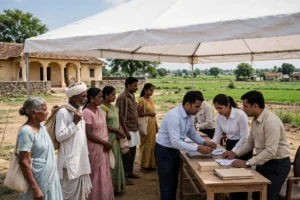
This is the most important practical section of this article, so read it slowly. There is no application process for this drive. Families are identified from existing PVTG lists, with biometric verification, so that no eligible family is missed. There is no form to fill. There is no portal to open. There is no apply link to click. If you see a link that claims to be the application link for this drive, do not click it and do not enter your personal details there, because no such official link exists as per the verified information available.
Biometric verification simply means checking identity with a fingerprint or a similar physical check, in the way that is already used in many ration and welfare systems. The purpose stated is a good one: to make sure that no eligible family is missed. In simple words, the system starts from lists that already exist, and then verifies the families on those lists, rather than asking families to come forward and prove themselves through a new application. This approach helps families who may not have easy access to the internet, who may not know how to fill an online form, or who live far from government offices.
What should a family do, then, in practical terms? First, stay in touch with your local ration point and local administration, and listen for official local announcements about distribution in your area. Second, keep your existing identity and ration documents ready, as you would for any ration-related work, but do not hand over original documents to strangers. Third, if someone comes to your village claiming to register you for this drive for a fee, refuse and inform local officials, because registration for a fee is not part of the reported process. Genuine identification from existing lists does not need a middleman.
Families who are on PVTG lists but who have not yet been reached should not panic. The drive has only just been inaugurated, and distribution across two districts with tens of thousands of families takes time. The stated aim is that no eligible family is missed, which suggests a process that works through lists and verification over time, not a one-day rush. Patience, combined with attention to official local announcements, is the safest approach.
What Is NOT Announced Yet: Please Read This Carefully
Good information is honest about its limits. Several important details about this drive have not been announced yet, and this article lists them openly so that readers are not misled. First, as stated above, no official scheme name has been announced in any report. Second, the frequency of distribution is disputed and not officially confirmed. Third, there is no application process, and therefore no form, no portal and no apply link. Fourth, the exact quantity of each food item per family has not been stated in the verified reports used here.
The dispute about frequency needs special attention. PTI reports weekly distribution, while IANS reports daily kits. These are two different pictures. Weekly distribution would mean families receive support once a week. Daily kits would mean a kit every day. Both cannot be settled by choosing one report and ignoring the other. The honest position, and the position this article takes, is that the frequency is not officially confirmed. Until the state government or the concerned department gives a clear official statement, readers should treat both versions as unconfirmed reports, not as settled fact. Any article that presents only weekly or only daily distribution as certain fact is going beyond the evidence.
Why does this matter? Because a family planning its monthly food budget needs to know whether support will come every day or every week. A wrong assumption can lead to a family running short of food or spending money it does not need to spend. It can also lead to arguments at distribution points, if families expect daily kits and receive weekly support, or the other way round. The responsible course is to wait for official confirmation and, in the meantime, to plan on the basis of the regular ration that is already certain, treating this extra support as an addition whose exact rhythm is still to be confirmed.
Readers should also be careful about other details that are sometimes added by rumour. No start date for distribution in every village has been given beyond the inauguration date. No list of distribution centres has been published in the verified information used here. No helpline number specific to this drive has been announced in the verified information used here. If a message gives you a helpline number or a distribution list for this drive, check it against an official source before acting on it. GramSuvidha will update this article when official details are announced, and will clearly mark what is new and what was already known.
Separate Announcements Made At The Same Event: Do Not Mix These Up
At the same event where this nutrition drive was inaugurated, some other announcements were also made. These announcements are separate from this nutrition drive. They are not facts of this drive, they are not part of its food items, and they should not be added to this drive when you describe it to others. This section lists them separately, exactly for that reason, so that the picture stays clean and accurate.
First, the ST old-age pension was raised to Rs 1,500 per month. This is a pension matter, separate from the food items in the nutrition drive. Second, 2 lakh Jhargram students are to get ST scholarships of Rs 800 each. This is an education support announcement for students, separate from the family nutrition support. Third, a Rs 342 crore special package for Jhargram was announced. This is a district package, separate from the food drive itself. Fourth, it was stated that Adivasi Mahila Samridhi Yojana will be launched soon. This is a separate upcoming scheme, and it is not the name of the PVTG nutrition drive described in this article. Do not use Adivasi Mahila Samridhi Yojana as the name of this nutrition drive, because that would be incorrect.
Keeping these announcements separate matters for a simple reason. If a family hears that Rs 1,500 per month or Rs 800 per student is part of the nutrition drive, they may expect cash from a food drive that gives food items. If a family hears that a Rs 342 crore package means direct money for every family, they may be disappointed or misled. Each announcement has its own purpose, its own beneficiaries, and its own process, which will be clarified by official notices in due course. This article reports them here only so that readers who heard news from the event can place each announcement in its correct box.
For students and parents, the scholarship announcement deserves a calm note. Two lakh students in Jhargram getting Rs 800 each is a large number, and details such as which classes are covered, how students are selected, and when payments begin will need official clarification. Do not pay anyone who offers to secure this scholarship for a fee, and do not assume that a student is automatically included only because they live in Jhargram. Wait for the official student-related notice, just as with the nutrition drive.
Background: PVTGs In West Bengal
To understand why this drive matters, it helps to understand who PVTGs are. PVTGs are the most vulnerable tribal groups. The term is used for tribal communities that face special challenges, including small and scattered populations in some cases, remote living areas, limited access to education and health services, and traditional livelihoods that are under pressure. The idea behind special attention to PVTGs is that a general programme, designed for everyone, may still miss the families who need help the most. Special identification, special outreach, and extra support are therefore needed.
In West Bengal, the PVTG communities include Lodha, Sabar, Toto, Birhor and others. The Lodha-Sabar community is the focus of the drive described here. Each community has its own history, language, customs and way of life, and each deserves respect for that identity. A nutrition drive that works through existing lists and biometric verification is, in principle, a way to reach families without forcing them to navigate a complicated new system. Whether it succeeds in practice will depend on how carefully the lists are checked and how respectfully the verification is done in villages.
At the national level, the central PM-JANMAN mission supports PVTG development across India. PM-JANMAN is a mission for the development of Particularly Vulnerable Tribal Groups, covering areas such as housing, water, roads, education and health, in broad terms. The West Bengal drive described here is a state-level nutrition support drive, inaugurated as part of a budget-announced effort. It should not be confused with PM-JANMAN itself, even though both concern PVTG welfare. They are different levels and different efforts, and this article keeps them distinct.
Nutrition is a sensible place to start for PVTG welfare, because food security is the foundation for everything else. A child who eats well can study better. An elderly person who eats well stays stronger. A working adult who eats well can work better and fall ill less often. That is why extra rice, pulses, oil and soya chunks, on top of the regular ration, can make a real difference in daily life, even before larger questions of housing, education or employment are addressed. At the same time, nutrition support alone does not solve every problem, and readers should not expect one food drive to change every aspect of life overnight.
For readers in villages, the most useful background point is this: PVTG status is about vulnerability and need, not about a label to be ashamed of. It is a recognition that some communities need extra care from the state. If your family is on a PVTG list, that list is the basis for identification in this drive. Keep your documents safe, stay in contact with local officials, and help neighbours who may not have heard the news, especially elderly people living alone and families in remote hamlets.
How To Stay Safe From Fake News And Fraud
Whenever a new benefit is announced, fake messages follow quickly. For this drive, the risk is higher than usual, because there is no official name and no application link to check against. Fraudsters can invent a name, create a fake form, and ask for money or personal details. The rules below will protect you. First, never pay anyone to add your name to this drive. Identification is from existing lists, not from paid registration. Second, never share your bank details, OTP, or full Aadhaar details with a stranger who claims to register you. Third, never click an apply link for this drive, because no official apply link exists. Fourth, always check news against an official source or a trusted local official before forwarding it in a village group.
If you receive a message that claims a scheme name, a quantity, a daily or weekly schedule, or a last date for this drive, pause before believing it. Ask a simple question: has the government announced this officially? If the message does not point to an official notice, treat it as unconfirmed. A last date is especially suspicious here, because there is no application process at all, so there cannot be a last date to apply. A message that invents a last date is trying to create urgency to make you act without thinking.
Local officials, ration dealers and panchayat representatives are the right people to ask, because distribution will happen locally. Ask them politely, in person if possible, and note what they say. If different officials give different answers about frequency, that itself is useful information: it confirms that official clarification is still awaited. GramSuvidha readers can also return to this article for updates, because this article will be corrected if official information changes, and the correction will be visible.
Frequently Asked Questions
What is the official name of this scheme?
No official scheme name has been announced in any report so far. Until a name is officially announced, it is correct to call it the West Bengal PVTG nutrition support drive inaugurated at Kalajharia on 23 October 2026. Do not use Adivasi Mahila Samridhi Yojana as its name, because that is a separate upcoming scheme.
How can I apply for this nutrition support?
You do not need to apply. There is no form, no portal and no apply link. Families are identified from existing PVTG lists, with biometric verification, so that no eligible family is missed. If anyone asks you to fill a form or pay a fee for this drive, that is not part of the reported process.
Which families will get this support?
PVTG families are covered, with a focus on the Lodha-Sabar community. About 70,000 families are covered in total, with about 25,000 families in Jhargram and about 45,000 families in Paschim Medinipur, as per the verified figures used here.
What items will families receive?
Families will receive rice, pulses, cooking oil and soya chunks. These items are given in addition to the regular PM Annasurakhya ration, not instead of it. The exact quantity of each item per family has not been stated in the verified reports used here.
Will families get this support every day or every week?
This is not officially confirmed. PTI reports weekly distribution, while IANS reports daily kits. Both reports are noted openly here, and neither is presented as settled fact. Wait for an official clarification before planning on a daily or weekly basis.
Is this support in addition to the regular ration?
Yes, as reported, these items are given in addition to the regular PM Annasurakhya ration. Your regular ration should continue as before. This extra support is on top of it.
What about the Rs 1,500 pension and Rs 800 scholarship heard in the news?
Those are separate announcements made at the same event. The ST old-age pension raised to Rs 1,500 per month and ST scholarships of Rs 800 each for 2 lakh Jhargram students are not part of the food items in this nutrition drive. They are listed separately in this article so that they are not mixed up with the drive.
What should I do if my family is on a PVTG list but has not received anything yet?
Do not panic and do not pay a middleman. The drive was inaugurated only recently, and covering about 70,000 families across two districts takes time. Stay in touch with your local ration point and local administration, keep your documents ready, and watch for official local announcements about distribution in your area.
Official Links And Related Reading
For general official information, readers can visit the West Bengal government homepage and the West Bengal food and ration portal homepage. These are general official homepages, not application portals for this drive, because this drive has no application portal. Use them to check official notices in general, and rely on local official announcements for distribution details in your area.
- West Bengal Government homepage – wb.gov.in
- West Bengal Food and Supplies Department homepage – food.wb.gov.in
For related reading on GramSuvidha, see the following verified posts. They are about ration and welfare support in general, and they are not application pages for this PVTG drive.
- PM Garib Kalyan Anna Yojana 2026: Free Ration, Eligibility and Benefits
- Laxmi Bhandar Status Check 2026: How to Check by Mobile Number
Final Note For Readers
This drive is good news, but good news deserves accurate reporting. The core facts are clear: a nutrition drive for PVTG families, focused on the Lodha-Sabar community, inaugurated at Kalajharia in Jhargram on 23 October 2026, covering about 70,000 families in Jhargram and Paschim Medinipur, giving rice, pulses, cooking oil and soya chunks in addition to the regular PM Annasurakhya ration, with identification from existing lists and biometric verification and no application process. The unclear points are equally clear: no official name yet, and a disputed frequency that is not officially confirmed. Hold both the clear facts and the unclear points together, share this article with families who need it, and do not fall for fake forms or fake links. GramSuvidha is a private information portal, not a government website, and this article is for information only. For final decisions about distribution in your village, always follow an official notice or a local official.