Every month, the electricity bill eats into the household budget. Fans and coolers in summer, lights and television at night — the meter keeps running and the bill keeps growing. But what if the solar panels on your own roof generated the electricity you need, and your bill dropped to nearly zero? That is exactly what the Pradhan Mantri Surya Ghar Muft Bijli Yojana promises.
If you searched for pm surya ghar yojana apply online in 2026, this guide has everything you need in one place: what the scheme is, how the ₹78,000 subsidy is calculated, who is eligible, which documents to keep ready, the complete step-by-step application process on the official portal, how to choose the right system capacity, state-level extra subsidies, the loan facility, how to protect yourself from fraud, and a detailed FAQ at the end. Read it fully, then apply in a single sitting.
Quick Facts: PM Surya Ghar Muft Bijli Yojana 2026
| Detail | Information |
|---|---|
| Scheme name | PM Surya Ghar Muft Bijli Yojana |
| Launched on | 13 February 2024 (Cabinet approval: 29 February 2024) |
| Implementing ministry | Ministry of New and Renewable Energy (MNRE) |
| Total outlay | ₹75,021 crore |
| Target | 1 crore households with rooftop solar |
| Free electricity | Up to 300 units per month |
| Maximum central subsidy | ₹78,000 (for 3 kW or higher capacity) |
| Official portal | pmsuryaghar.gov.in |
| Toll-free helpline | 15555 |
| Subsidy payment | Directly into bank account (DBT) |
This is considered the world’s largest domestic rooftop solar scheme. According to government data reported by PIB, more than 26 lakh installations were completed by March 2026 and over ₹17,967 crore of subsidy had already been transferred to beneficiaries’ bank accounts. The goal is to reach 1 crore homes by the end of FY 2026-27.
What Is PM Surya Ghar Muft Bijli Yojana?
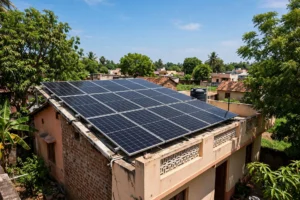
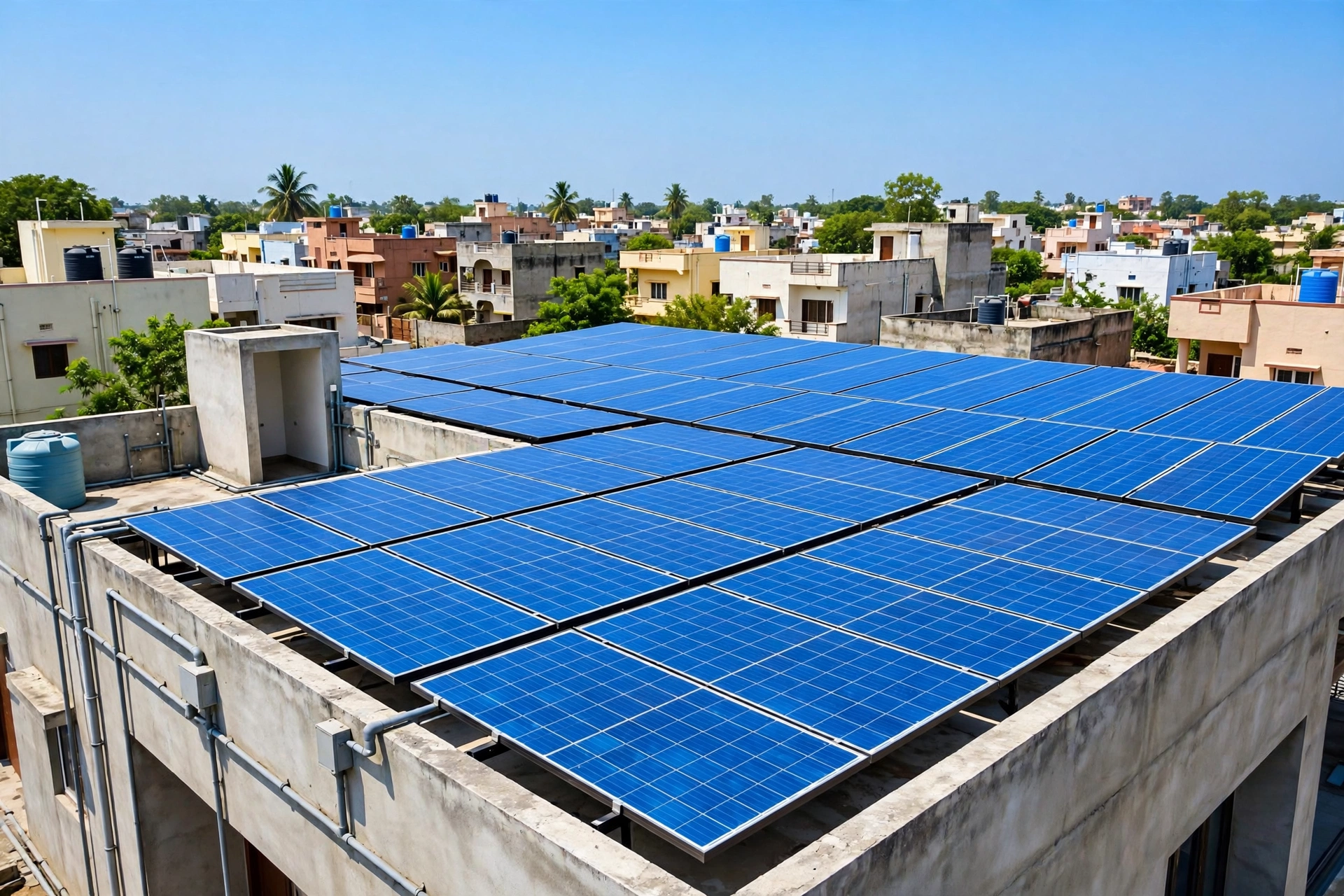
The PM Surya Ghar Muft Bijli Yojana is a central government rooftop solar scheme designed to free ordinary households from high electricity bills. Solar panels are installed on your roof and generate the electricity your home needs. Surplus electricity can be sold back to the grid, creating an extra source of income.
The biggest advantage is that the government transfers a large part of the installation cost directly into your bank account as a subsidy. A collateral-free loan facility at around 7% interest is also available, so you do not need a large upfront payment. Net metering records both the electricity your home consumes from the grid and the surplus it exports, and the difference becomes your bill.
PM Surya Ghar Subsidy 2026: The ₹78,000 Calculation Explained
The Central Financial Assistance (CFA) is fixed according to the capacity of the solar system. You receive ₹30,000 per kW for the first 2 kW, and ₹18,000 per kW for the additional capacity between 2 kW and 3 kW. Here is how it works out:
| System capacity | Approximate roof space needed | Central subsidy |
|---|---|---|
| 1 kW | 10 square metres | ₹30,000 |
| 2 kW | 20 square metres | ₹60,000 |
| 3 kW | 30 square metres | ₹78,000 |
| Above 3 kW (e.g. 4, 5 or 10 kW) | More than 40 square metres | ₹78,000 (capped) |
Note the cap: the subsidy stops at ₹78,000 whether you install 3 kW or 10 kW. That is why a 3 kW system is considered the sweet spot for most households. The subsidy is credited to your bank account after net metering and the DISCOM’s inspection are complete and the commissioning certificate is issued — generally within 30 working days.
Eligibility: Who Can Apply in 2026
Before applying, make sure you meet these conditions:
- You must be an Indian citizen.
- You must own a house with a roof suitable for solar panels — strong and shadow-free.
- Your home must have a valid electricity connection.
- You must not have availed any other central solar subsidy for the same premises earlier.
- The electricity connection and the bank account must be in the applicant’s name (a name mismatch is one of the most common reasons for rejection or delay).
- Tenants and commercial buildings are not covered under this scheme.
- Group Housing Societies and RWAs can apply for common areas up to 500 kW.
There is no strict income cap, but the scheme is primarily designed to benefit low and middle-income families. Only residential consumers are eligible.
Documents Required for PM Surya Ghar Yojana
Keep these documents and details ready before you begin, so you do not get stuck midway:
- Aadhaar card (for identity proof)
- Recent electricity bill — with the consumer number clearly visible
- Proof of property ownership (property documents)
- Bank account details — passbook or a cancelled cheque
- Passport-size photograph
- PAN card
- Mobile number and email ID — your own, not the vendor’s
- Details of the rooftop or proposed installation site
One important rule: always register on the portal with your own mobile number and email ID. Applications filed with a vendor’s contact details can be rejected, and such vendors can be blacklisted.
pm surya ghar yojana apply online: Step-by-Step Application on the Portal
The entire process happens digitally on the national portal pmsuryaghar.gov.in — no visits to government offices are needed.
- Open the portal: Go to pmsuryaghar.gov.in and click “Apply for Rooftop Solar” or “Apply Now”.
- Start registration: Select your state, district and electricity distribution company (DISCOM).
- Enter consumer details: Fill in your electricity consumer number, mobile number and email ID, complete the captcha and click “Next”.
- OTP verification: Enter the OTP sent to your mobile and verify it to create your login.
- Log in: Log in to the portal with your consumer number and mobile number.
- Fill the application form: Enter all required details in the rooftop solar form — consumer name, address, PIN code and so on — then submit.
- DISCOM feasibility approval: Your DISCOM will now carry out a technical check — roof area, shading, transformer capacity and so on. Approval usually takes 15 to 30 working days.
- Choose a registered vendor: After approval, select one of your DISCOM’s registered vendors from the portal’s list. Warning: if installation begins before approval, your subsidy claim can be rejected.
- Get the system installed: The vendor will visit your home and install the solar panels, inverter, wiring and mounting structure. Only India-made, ALMM-listed and BIS-certified panels qualify for the subsidy.
- Apply for a net meter: After installation, submit the plant details on the portal and apply for net meter installation.
- DISCOM inspection and commissioning: DISCOM officials will inspect the system. If everything is in order, the commissioning certificate is generated on the portal.
- Submit bank details: After receiving the commissioning report, upload your bank account details and cancelled cheque on the portal. The subsidy usually reaches your account within 30 working days.
Choosing the Right Capacity for Your Home
Picking the wrong capacity wastes money. As a general guide:
- 1 kW: For small families with low consumption (fans, lights, TV, refrigerator and other basic appliances).
- 2 kW: For families with moderate consumption — also a good choice for homes with limited roof space.
- 3 kW: For families with higher consumption — this is the capacity that unlocks the maximum ₹78,000 subsidy.
The portal also has a calculator that estimates the right capacity, cost, subsidy and savings based on your consumption. Remember, going above 3 kW does not increase the subsidy, so decide based on your actual household needs.
State-Level Extra Subsidies: More Than the Centre Alone
Beyond the central subsidy, several states offer their own additional support. According to media reports:
- Delhi: In September 2026, the “Delhi PM Surya Ghar” portal (solar.delhi.gov.in) was launched. Alongside the Centre’s ₹78,000, the Delhi government adds another ₹78,000 — a total of up to ₹1.56 lakh. Registrations are first-come, first-served, with a target of 2.30 lakh families. Homes using up to 400 units a month can get systems installed without upfront payment.
- Bihar: Media reports indicate that for a 3 kW system, the state adds up to ₹20,000 on top of the Centre’s ₹78,000 — total assistance of up to ₹98,000.
- Uttar Pradesh: Reports suggest a state top-up of around ₹30,000 for a 3 kW system.
State subsidies can change from time to time, so verify the latest figures on your state’s DISCOM or state portal before applying.
Loan Facility: Install Solar Without a Big Upfront Payment
Even if you cannot pay a large amount upfront, there is a way forward. The government has stated that collateral-free, low-interest loans at around 7% are available for residential systems up to 3 kW. The cost remaining after the subsidy can therefore be repaid in easy instalments. Several banks and NBFCs also offer digital loan options linked with the portal’s registered vendors.
Fraud Prevention: 6 Things to Remember
Fraud cases in the name of solar subsidies keep surfacing. Stay alert:
- Apply only on pmsuryaghar.gov.in — do not trust agents, WhatsApp messages or fake websites.
- No government officer or vendor asks for an application fee — if someone demands money, it is fraud.
- Get the installation done only through a portal-registered vendor — installations from outside vendors will not get the subsidy.
- Always register with your own mobile number and email ID — applications filed with a vendor’s contact details can be rejected.
- Keep the name identical on your electricity bill, Aadhaar and bank account — a name mismatch is the biggest cause of subsidy delays or rejection.
- The subsidy goes only to your bank account — stay away from anyone who says they will “get your subsidy released first”.
Official Links
- National portal: pmsuryaghar.gov.in
- Ministry of New and Renewable Energy (MNRE): mnre.gov.in
- Toll-free helpline: 15555
- Delhi state portal: solar.delhi.gov.in
Frequently Asked Questions (FAQ)
Q1: What is the last date to apply under pm surya ghar yojana apply online 2026? A: MNRE has not announced a last date for consumers. Reports indicate the scheme’s implementation period runs till 31 March 2027. State quotas can fill up, so applying early is the safer option.
Q2: How much subsidy will I get for a system larger than 3 kW? A: The subsidy is capped at ₹78,000 — whether you install 3, 4, 5 or 10 kW, the central subsidy remains ₹78,000.
Q3: Can people living in rented houses apply? A: No. Owning your home and roof is mandatory. Tenants are not eligible.
Q4: How many days does it take for the subsidy to reach the bank account? A: After the commissioning certificate is issued and bank details are submitted, the subsidy generally reaches your account via DBT within 30 working days.
Q5: Is there any option without an online application? A: The application process is fully digital and happens on pmsuryaghar.gov.in. If you face difficulty with the online form, call the toll-free helpline 15555 for help.
Q6: Will old solar panel owners get the subsidy again? A: No. If you have already availed a central solar subsidy for the same premises, you are not eligible.
Q7: What is net metering and why is it required? A: Net metering uses a two-way meter that records both the electricity drawn from the grid and the surplus exported to it. A net meter and the DISCOM inspection are mandatory for the subsidy.
This article is published by a private information portal, not a government website.
Also read: PM Awas Yojana 2026 Guide | How to Check the Ration Card List 2026 | Aadhaar-Linked Government Schemes