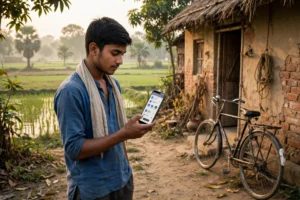
You want to expand your shop, buy a new machine or fill up stock, but the bank says the same thing every time – bring property papers, mortgage something, then we will talk about a loan. You have a shop, you have customers, your work is running, but you have no property to mortgage. What do you do then? Can a small trader never get a big loan? The answer to that question is CGTMSE.
In this article we will explain in simple words what CGTMSE is, how it is a government guarantee standing behind your bank loan and not a loan itself, who can get it, how to ask your bank for the cover, how much the fee costs, and how it is different from a Mudra loan and from the RBI collateral-free rule. At the end we will also bust the myths that almost every second trader believes about this scheme.
Last Updated: 16 November 2026
CGTMSE Scheme 2026 – At a Glance
| Detail | Information |
|---|---|
| Full name | Credit Guarantee Fund Trust for Micro and Small Enterprises (CGTMSE) |
| Set up by | Ministry of MSME and SIDBI together, in the year 2000 |
| What it is | A guarantee behind a bank loan, not a loan itself |
| Who can get it | Micro and Small Enterprises (with Udyam Registration) |
| Term loan and working capital | Both are covered, together |
| Maximum cover (large banks) | Rs 10 crore per borrower (from 1 April 2025) |
| Maximum cover (smaller banks) | Rs 2 crore from small finance banks, RRBs and co-operative banks; Rs 50 lakh from MFIs |
| Guarantee cover | 75% to 90% of the loan, depending on category and loan size |
| Annual Guarantee Fee | 0.37% to 1.20% per year + GST |
| Udyam Registration | Compulsory (since January 2023) |
| Retail and wholesale traders | Eligible |
| Medium enterprises | Not covered |
| Where to apply | Not to CGTMSE directly – to your bank (Member Lending Institution) |
| Official website | cgtmse.in |
What Is CGTMSE – Understand This First
CGTMSE stands for the Credit Guarantee Fund Trust for Micro and Small Enterprises. It was set up in the year 2000 by the Ministry of MSME and the Small Industries Development Bank of India (SIDBI). Its job is very simple, but people often misunderstand it, so let us make one thing clear first – CGTMSE does not give you a loan. It is not a bank and it is not a lending institution. It is a Trust that gives a guarantee to the bank.
Think of it like this. You ask the bank for a loan. The bank is afraid that if you cannot repay, its money will be lost, so it asks for property as security. Now CGTMSE steps in and tells the bank – you give the loan, and if the trader cannot repay, we will bear a large share of the loss. Because of this guarantee, the bank becomes ready to lend without collateral. The guarantee goes to the bank, not to you. The loan is still given by the bank, after its own rules and its own checks.
That is why this scheme is called a collateral-free loan scheme. Collateral means security – property, a plot, a house or any valuable thing that the bank keeps against the loan. In a CGTMSE-covered loan the bank does not need this security, because the Trust has given a guarantee in its place. But remember one thing – the bank can still take primary security, meaning the assets bought with the loan money, such as the machine or the stock. In simple words, the things bought with the loan stay as security with the bank, but your house or shop property does not need to be mortgaged.
This scheme runs under the name Credit Guarantee Scheme (CGS). For banks and large financial institutions it is called CGS-I. Its rules are written in the scheme document updated on 1 April 2026, and that document is the main source of the information in this article.
How big is this scheme? You can judge from this – according to an official reply given in the Lok Sabha, from the start of the scheme in the year 2000 up to 28 February 2026, a total of 1,39,39,040 guarantees were approved, worth Rs 13,16,741 crore. In the financial year 2025-26 alone, up to 31 December 2025, 19.41 lakh guarantees worth about Rs 3.04 lakh crore were approved. That is not a small number. Lakhs of traders have got loans because of this guarantee.
Who Can Get It – Eligibility
CGTMSE cover is not for everyone. There are two big rules – first, your business must be a Micro or Small Enterprise, and second, you must have Udyam Registration. A Medium Enterprise is not covered. Under the limits fixed in Budget 2025-26, a Micro Enterprise is one where investment in plant, machinery or equipment is up to Rs 2.5 crore and turnover is up to Rs 10 crore. A Small Enterprise is one where investment is up to Rs 25 crore and turnover is up to Rs 100 crore. A business above that is treated as Medium and falls outside CGTMSE cover.
New businesses and old businesses are both eligible. Whether you do manufacturing, provide a service, or run retail or wholesale trade – all three are covered. Shop owners, kirana store owners, cloth shop owners, wholesale traders, workshop owners, repair workers, food businesses – all of them come under this, as long as they have Udyam Registration. There used to be confusion about retail and wholesale trade, but now it is clear that traders are fully eligible and the same rules and the same limits apply to them.
Udyam Registration has been compulsory since January 2023. Without it, the bank cannot take CGTMSE cover on your loan. If you do not have it yet, that is the first job – it is free and done online at udyamregistration.gov.in. Your Udyam Registration should also carry the correct NIC code for your business activity, meaning the work you actually do should be the work written in the registration. Loans that are already covered under another government guarantee scheme are not eligible, and neither are loans where the bank has already taken full collateral – except under the hybrid model, which is explained below.
What can the loan be used for? A term loan, meaning buying a machine, building a shop or buying big equipment, and working capital, meaning daily stock, credit and running expenses – both are covered. Non-fund based facilities such as bank guarantees and letters of credit can also be covered. The ceiling applies to both together, not separately.
How Much of the Loan Is Covered
CGTMSE does not guarantee the whole loan. It covers a percentage, and that percentage depends on the size of the loan and on your category. These rates apply to guarantees approved from 1 April 2025.
| Category | Up to Rs 5 lakh | Above Rs 5 lakh to Rs 50 lakh | Above Rs 50 lakh to Rs 10 crore |
|---|---|---|---|
| Micro Enterprise | 85% | 75% | 75% |
| Women entrepreneurs and units promoted by Agniveers | 90% | 90% | 90% |
| SC/ST entrepreneurs, persons with disability, transgender entrepreneurs, units in aspirational districts, ZED-certified units | 85% | 85% | 85% |
| Units in the North-East (including Sikkim), Jammu-Kashmir and Ladakh | 80% | 80% (up to Rs 50 lakh) | 75% |
| All others | 75% | 75% | 75% |
Let us understand this table with an example. Suppose your loan is Rs 40 lakh and you fall in the general category, so the cover is 75%. If the loan goes bad and the bank loses Rs 40 lakh, CGTMSE will pay the bank Rs 30 lakh and the bank will bear the remaining Rs 10 lakh loss itself. But it is very important to understand that this money goes to the bank, not to you. Your debt does not end. Even if the loan fails, you still have to repay the full amount with interest. The guarantee protects the bank, not the borrower. People who think a CGTMSE loan does not have to be repaid are making a very big mistake.
One more thing – units in districts that RBI lists as credit-deficient get 5% extra cover, for example 80% instead of 75%. Women entrepreneurs and units promoted by Agniveers get the highest cover, 90%. A word of caution here – some secondary sources mention 85% for women entrepreneurs, while the table based on the scheme document shows 90%. So when you take the loan, ask your bank in writing what the exact cover for your category is. The cover is never 100% – the bank also keeps a share of the risk, so that it checks your loan properly before lending.
How Much Is the Fee – Annual Guarantee Fee (AGF)
The guarantee is not free. An Annual Guarantee Fee (AGF) is charged every year. The bank pays this fee to CGTMSE, but in practice the bank recovers it from you, so in the end you bear this cost. The fee is charged on the outstanding balance of the loan, so as you repay the loan, the fee keeps falling. GST is charged extra on the fee.
| Loan amount | Annual Guarantee Fee (standard rate) | Example – fee for one year |
|---|---|---|
| Up to Rs 10 lakh | 0.37% per year | Rs 3,700 on Rs 10 lakh |
| Rs 10 lakh to Rs 50 lakh | 0.55% per year | Rs 27,500 on Rs 50 lakh |
| Rs 50 lakh to Rs 1 crore | 0.60% per year | Rs 60,000 on Rs 1 crore |
| Rs 1 crore to Rs 2 crore | 0.85% per year | Rs 1,70,000 on Rs 2 crore |
| Rs 2 crore to Rs 5 crore | 1.00% per year | Rs 5,00,000 on Rs 5 crore |
| Rs 5 crore to Rs 8 crore | 1.10% per year | Rs 8,80,000 on Rs 8 crore |
| Rs 8 crore to Rs 10 crore | 1.20% per year | Rs 12,00,000 on Rs 10 crore |
Understand the examples above – on a Rs 10 lakh loan, 0.37% means only Rs 3,700 in a full year, about Rs 308 a month. The fee on a small loan is very low. But as the loan grows bigger, both the fee rate and the amount rise. On a Rs 1 crore loan the yearly fee is Rs 60,000. This fee is separate from interest – interest goes to the bank, the guarantee fee goes to CGTMSE. Women entrepreneurs, SC/ST entrepreneurs, persons with disability, units in the North-East and aspirational districts, and ZED-certified units get a 10% concession on the standard rate. The final fee depends on the demand advice raised by the bank, so before taking the loan, ask the bank how much the fee will be and when and how it will be collected.
How to Get CGTMSE Cover From Your Bank – Step by Step
This is the most important part, because this is where most people get stuck. Remember – you cannot apply to CGTMSE directly. You apply to the bank, and the bank itself takes the cover from CGTMSE. The bank’s decision is final. Follow the steps below one by one.
Step 1 – Get Udyam Registration. If you have not done it yet, first register at udyamregistration.gov.in. It is free. Fill in your correct business activity and NIC code. Keep the certificate safe after registration.
Step 2 – Keep your documents ready. The bank will ask for these – Udyam Registration certificate, Aadhaar card and PAN card, bank statements of the last 6 to 12 months, Income Tax Returns of 2 to 3 years (if you file them), GST returns (if applicable), address proof of the shop or business, and a short project report or business plan saying what the loan is for and how much it will earn.
Step 3 – Choose a bank that is a CGTMSE Member Lending Institution. Most large public sector and private banks are members of CGTMSE. Go to the bank where you have your account, or to the branch of a large bank. Tell the branch manager directly that you want a CGTMSE-covered loan.
Step 4 – Ask the bank for CGTMSE cover in clear words. This is the most important step. Sometimes the bank does not take the cover on its own, or it still asks you for collateral. You must say clearly – please cover my loan under CGTMSE, I want a loan without collateral. If the branch manager refuses, ask for the reason in writing.
Step 5 – After sanction, ask for the cover details. After the loan is sanctioned, get these things from the bank in writing – whether the loan is CGTMSE-covered or not, what percentage the cover is, how much the Annual Guarantee Fee will be and when it will be deducted, and what the loan terms are. Read the sanction letter carefully and understand every term before you sign it.
Step 6 – Pay your EMIs on time. Even after the guarantee, the loan is your responsibility. Pay EMIs on time, because if the loan goes bad, CGTMSE will pay the bank, but your debt will not end and your credit score will also suffer.
One special point – the Hybrid Security model. If you have some collateral, for example property worth Rs 50 lakh, and you need a loan of Rs 2 crore, the bank can take your property as security for the Rs 50 lakh part and take CGTMSE cover on the remaining Rs 1.5 crore. In this case the fee is charged only on the part covered by the guarantee. But be careful – under the scheme rules, if the bank took collateral or a third-party guarantee on the covered part, CGTMSE can reject the bank’s claim. So always take the details of a hybrid arrangement in writing.
CGTMSE vs CGFMU vs the RBI Rule – Keep All Three Separate
The biggest confusion in this scheme is about three different things – CGTMSE, CGFMU and the RBI collateral-free rule. All three are different, and mixing them up is wrong.
| Point | CGTMSE | CGFMU | RBI Collateral-Free Rule |
|---|---|---|---|
| Full name | Credit Guarantee Fund Trust for Micro and Small Enterprises | Credit Guarantee Fund for Micro Units | RBI Master Direction on lending to the MSME sector |
| What it is | A Trust that guarantees bank loans | A Fund that guarantees Mudra loans | A rule that stops banks from taking collateral |
| Applies to which loan | Loans to Micro and Small Enterprises | Loans under Pradhan Mantri Mudra Yojana (PMMY) | Loans to Micro and Small Enterprises |
| Maximum amount | Rs 10 crore (from a large bank) | Rs 20 lakh (up to Mudra Tarun Plus) | Bank cannot take collateral up to Rs 20 lakh |
| Run by | Ministry of MSME and SIDBI | National Credit Guarantee Trustee Company (NCGTC) | Reserve Bank of India (RBI) |
| Who pays the fee | The bank, which usually recovers it from you | The bank, which usually recovers it from you | This is not a fee, it is a restriction |
To put it simply – CGFMU is only for Mudra loans. If you took a Mudra loan, the guarantee behind it is from CGFMU, not CGTMSE. CGTMSE is for bigger MSE loans. And the RBI rule is different from both – it is an order that tells banks not to take collateral on MSE loans up to Rs 20 lakh sanctioned or renewed from 1 April 2026. RBI issued this amendment on 9 February 2026. Before that, this limit was Rs 10 lakh. A bank may, on its own, extend this limit to Rs 25 lakh for a unit with a good track record, but that is its choice, not a compulsion.
One more update – on 11 November 2026 the Union Cabinet approved the continuation of CGFMU up to 31 March 2031. According to PIB, a corpus of Rs 5,000 crore has been kept for it, which is expected to support about Rs 12.6 lakh crore of Mudra loans over the next five years, and the guarantee fee has been cut from 1% to 0.75% per year. That is good news for Mudra borrowers.
There is also a separate scheme for startups – the Credit Guarantee Scheme for Startups (CGSS). A DPIIT-recognised startup can get cover up to Rs 20 crore under it. This cover was raised from Rs 10 crore on 8 May 2025. CGSS runs through NCGTC, not through CGTMSE. If your startup is DPIIT-recognised, ask your bank about CGSS, not CGTMSE.
Mudra, PMEGP or CGTMSE – Which Route Is Right for You
Our site already carries detailed information on Mudra loans and PMEGP loans. All three schemes are for different needs. If you need a small loan, Mudra is right – Shishu up to Rs 50,000, Kishore up to Rs 5 lakh, Tarun up to Rs 10 lakh and Tarun Plus up to Rs 20 lakh, the last one only for those who took a Tarun loan and repaid it on time. If you want to start a new business and also want a subsidy, look at PMEGP, where the government gives a subsidy. But when your business is already running, you need more than Rs 20 lakh, you want to buy a machine or large stock, and you have no property to mortgage – that is when the CGTMSE route helps. It is worth understanding all three together, because the same trader can use all three at different stages of the business – Mudra at the start, PMEGP while growing, and CGTMSE for a bigger loan.
For full details of the PM Mudra Loan Yojana 2026, read our Mudra loan article: PM Mudra Loan Yojana 2026 in English (in Hindi: PM Mudra Loan Yojana 2026). For the PMEGP loan, subsidy and online application, read this article: PMEGP Loan 2026 Guide in English (in Hindi: PMEGP Loan 2026 – Apply Online, Subsidy).
New Update From Budget 2026-27 – CGTMSE Cover on TReDS Too
The Union Budget 2026-27, presented on 1 February 2026, announced something new – CGTMSE cover will now be available on invoice discounting too. TReDS is an RBI-regulated online platform where small traders can turn the credit (invoice) due from their big customers into cash quickly, without waiting for the payment. After the Budget, this cover went live, as per a PIB press release dated 25 September 2026, and is available on three platforms – M1xchange, RXIL and DTX (KredX). Under this Special Provision, both the buyer and the seller must be Micro or Small Enterprises. The cover is 75% of the amount in default, and the revolving limits are Rs 10 crore for the buyer and Rs 2 crore for the seller. The first CGTMSE-backed TReDS transaction took place on M1xchange on 22 September 2026. If you sell goods to a big company and the payment takes 60 to 90 days, this facility can help you – ask your bank or your TReDS platform about it.
5 Myths About CGTMSE – Busted
Myth 1 – CGTMSE gives loans. Truth – CGTMSE does not lend. The bank gives the loan. CGTMSE only gives a guarantee to the bank. You have to apply to the bank, not to CGTMSE.
Myth 2 – Once the guarantee is there, you do not have to repay the loan. Truth – This is the most dangerous mistake. If the loan fails, CGTMSE pays the bank, not you. You still have to repay the full loan with interest. Not repaying will damage your credit score and the bank can also take legal action against you.
Myth 3 – CGTMSE cover means 100% guarantee. Truth – The cover is 75% to 90%, never 100%. The bank also keeps a share of the risk, which is why the bank will still check you properly before lending.
Myth 4 – You can get cover without Udyam Registration. Truth – Udyam Registration has been compulsory since January 2023. Without it there is no cover. Get Udyam Registration first, then go for the loan.
Myth 5 – CGTMSE and Mudra are the same thing. Truth – They are different. The guarantee behind a Mudra loan is from CGFMU and its limit is Rs 20 lakh. CGTMSE is for MSE loans, its limit goes up to Rs 10 crore, and the guarantee is from the CGTMSE Trust. Their funds, rules and cover are different.
What to Do If the Bank Refuses
If the bank refuses to give CGTMSE cover or still asks for property as collateral, do not panic. First ask for the reason in writing. If your loan is up to Rs 20 lakh and is being sanctioned or renewed after 1 April 2026, the RBI rule says the bank cannot take collateral from you – remind the bank of this. If one bank refuses, go to another bank, especially the one where you have your account and a good transaction history. Keep your bank statement and ITR clean, because the bank’s decision depends on your repayment capacity, not on the guarantee. The guarantee only reduces the bank’s fear – your income and your record are what get you the loan. If you feel the bank asked for collateral against the rules, you can also complain to the RBI Banking Ombudsman. Beware of any agent or middleman who promises to get you CGTMSE cover for money – there is no agent for CGTMSE and no separate fee, only the bank’s guarantee fee.
CGTMSE Scheme 2026 – Frequently Asked Questions (FAQ)
Q1. What is a CGTMSE loan? A CGTMSE loan is actually a guarantee, not a loan. The Credit Guarantee Fund Trust for Micro and Small Enterprises gives the bank a guarantee that if a Micro or Small Enterprise cannot repay, the Trust will bear 75% to 90% of the loss. Because of this guarantee, the bank lends without collateral.
Q2. What is the maximum loan under CGTMSE? Cover up to Rs 10 crore per borrower is available from a large scheduled commercial bank, a limit in force from 1 April 2025. From small finance banks, RRBs and co-operative banks the cover is up to Rs 2 crore, and from MFIs up to Rs 50 lakh. The limit applies to term loan and working capital together.
Q3. How do I apply for CGTMSE? You cannot apply to CGTMSE directly. You apply to your bank (Member Lending Institution). The bank sanctions the loan and takes the cover from CGTMSE. Get Udyam Registration first, keep your documents ready, and ask the bank for CGTMSE cover in clear words.
Q4. What is the CGTMSE fee? The Annual Guarantee Fee is 0.37% to 1.20% per year + GST. On a loan up to Rs 10 lakh it is 0.37%, meaning Rs 3,700 in a year. On Rs 1 crore it is 0.60%, meaning Rs 60,000 in a year. The fee is charged on the outstanding balance, so it falls as you repay. The bank recovers this fee from you.
Q5. Can a shop owner get CGTMSE cover? Yes, retail and wholesale trade is eligible. Whether you run a shop, wholesale trade, a service or manufacturing – all are covered, as long as your business is a Micro or Small Enterprise and you have Udyam Registration. Medium Enterprises are not covered.
Q6. Do I have to repay the loan after getting CGTMSE cover? Yes, absolutely. The guarantee goes to the bank, not to you. Even if the loan fails, you have to repay the full amount with interest. The guarantee only pays a share of the bank’s loss.
Q7. What is the difference between CGTMSE and a Mudra loan? A Mudra loan is given under the Pradhan Mantri Mudra Yojana up to Rs 20 lakh, and the guarantee behind it is from CGFMU. CGTMSE is for MSE loans, its limit goes up to Rs 10 crore, and the guarantee is from the CGTMSE Trust. They are two different schemes.
Official Links
The information in this article is based on these official sources. Please check them before taking a loan:
- CGTMSE Official Website – cgtmse.in
- CGTMSE Scheme Document CGS-I (updated 01 April 2026) – cgtmse.in
- RBI – Lending to MSME Sector (Amendment) Directions, 2026 (9 February 2026) – rbi.org.in
- PIB – CGTMSE Guarantee Cover Goes Live on TReDS (25 September 2026) – pib.gov.in
- PIB – Cabinet approves continuation of Credit Guarantee Fund for Micro Units (11 November 2026) – pib.gov.in
- Ministry of MSME – msme.gov.in
- Udyam Registration Portal – udyamregistration.gov.in
- Startup India (CGSS) – startupindia.gov.in
This article has been prepared by a private information portal, not a government website. The final terms, fees and cover of a loan depend on your bank and the latest CGTMSE rules, so please confirm them in writing with your bank before taking a loan.