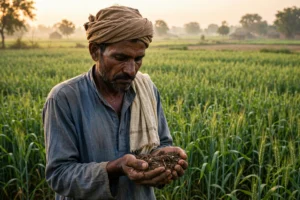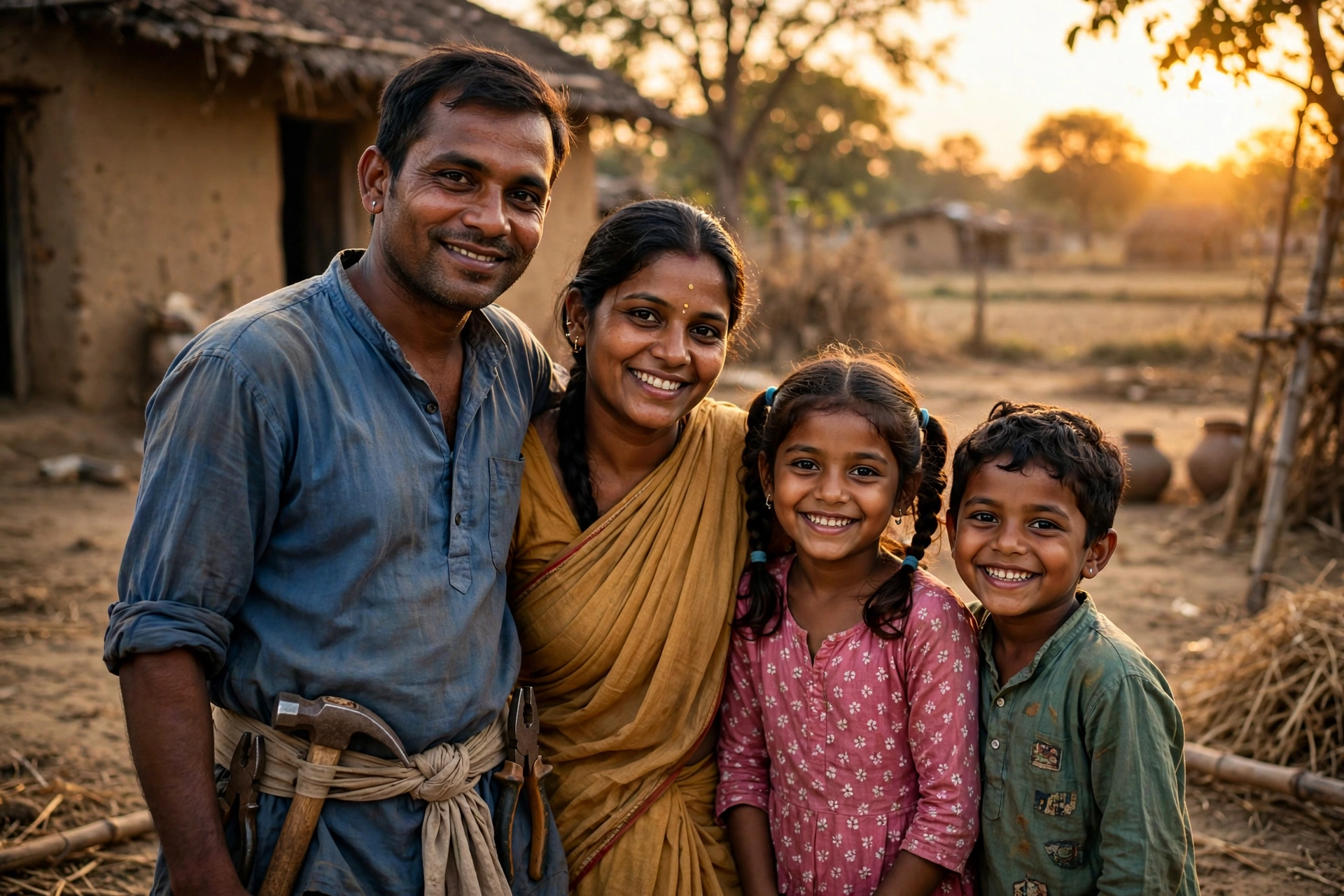
Picture a daily-wage labourer who steps out every morning looking for work. Whatever he earns by evening is what feeds his family that night. He has no job security, no pension, no insurance. If he falls ill or meets with an accident, the entire family faces a crisis. Madhya Pradesh is home to crores of such hardworking people in the unorganised sector — and the state government runs a large umbrella scheme for them, called the sambal 2.0 yojana.
This article is a complete guide to the scheme. We will explain what Sambal 2.0 is, every benefit it offers, who can register, the full registration process step by step, how to check your application status, and a recent update that shows the scheme is actively paying beneficiaries. Read till the end — we have answered all the common questions people usually ask.
Quick Facts: Sambal 2.0 Yojana at a Glance
| Detail | Information |
|---|---|
| Scheme name | Mukhyamantri Jan Kalyan (Sambal 2.0) Yojana |
| State | Madhya Pradesh |
| Implementing department | Labour Department, Government of Madhya Pradesh |
| First launched | 2018 |
| Relaunched as | Sambal 2.0 — with a simpler process and a new portal |
| Official portal | sambal.mp.gov.in |
| Registrations reported | Over 1.88 crore |
| Who can benefit | Unorganised-sector workers of MP, aged 18–60 |
| How to register | Online with Samagra ID + e-KYC |
| After registration | Beneficiary receives a Sambal Card after verification |
What Is the Sambal 2.0 Yojana?
The Mukhyamantri Jan Kalyan (Sambal) Yojana is an umbrella welfare scheme of the Madhya Pradesh government, run by the state’s Labour Department. It is designed especially for people working in the unorganised sector — those who have no company job, no provident fund, no gratuity, and no large insurance cover.
The scheme was first launched in 2018. It was later improved and relaunched as Sambal 2.0, with a simpler registration process and a new portal so that ordinary workers and poor families can register with ease. After registration and verification, the beneficiary is issued a Sambal Card, which becomes the identity for all benefits under the scheme.
In simple words, this scheme is a safety net for unorganised-sector workers and their families — medical treatment in illness, maternity support, compensation in case of accidents, help with children’s education, and relief in everyday life, all linked to a single card.
All Benefits Under Sambal 2.0
Here are the main benefits under Sambal 2.0. Every amount is fixed by the government, and payments are made directly into the beneficiary’s bank account.
| Benefit | Amount / Detail |
|---|---|
| Funeral assistance (Antyeshti Sahayata) | ₹5,000 |
| Natural death assistance | ₹2,00,000 |
| Accidental death assistance | ₹4,00,000 |
| Partial disability | ₹1,00,000 |
| Permanent disability | ₹2,00,000 |
| Maternity assistance | ₹16,000 |
| Free medical treatment | Up to ₹5 lakh per year under Ayushman Bharat–Niramay |
| Ration eligibility slip | Eligibility for subsidised food grains |
| Electricity bill relief | Under the Saral Bijli Bill Yojana |
| Education support for children | Under the Shiksha Protsahan Yojana |
| Equipment grant | Grant for tools/equipment for better business (Unnat Vyavsay hetu Upkaran Anudan) |
Every Benefit Explained in Simple Words
1. Funeral assistance — ₹5,000: If a registered worker passes away, the family receives ₹5,000 immediately for funeral expenses. In that hour of grief, even this small amount brings real relief.
2. Natural death — ₹2 lakh: In case of death due to illness or other natural causes, the family gets ₹2 lakh as ex-gratia assistance. This helps the family recover from the sudden financial shock.
3. Accidental death — ₹4 lakh: This is the largest benefit of the scheme. If a worker dies in an accident, the family receives ₹4 lakh. For people working at construction sites, farms, or on roads, this protection is extremely important.
4. Partial disability — ₹1 lakh: If an accident causes partial damage to a body part, assistance of ₹1 lakh is provided.
5. Permanent disability — ₹2 lakh: If an accident leaves the worker permanently disabled and unable to work as before, ₹2 lakh is paid as assistance.
6. Maternity assistance — ₹16,000: Registered women workers receive ₹16,000 at the time of childbirth, so that both mother and newborn get proper care.
7. Free treatment — up to ₹5 lakh per year: Beneficiaries get free medical treatment of up to ₹5 lakh per year under Ayushman Bharat–Niramay. The cost of a major illness or operation no longer has to crush the family’s savings. If you have not got your card yet, read our complete guide on how to make an Ayushman card.
8. Ration eligibility slip: Beneficiaries get a ration eligibility slip for subsidised food grains, making it easier to buy grain at low prices.
9. Electricity bill relief: Under the Saral Bijli Bill Yojana, relief is given on electricity bills so that poor families carry a lighter power burden.
10. Education support: Under the Shiksha Protsahan Yojana, financial help is given for the education of workers’ children, so that no child’s studies stop for lack of money.
11. Equipment grant: Under the equipment grant for better business, workers can get a grant to buy tools that improve their work — for example, a sewing machine for a tailor or tools for a carpenter.
Sub-Schemes Under the Sambal 2.0 Umbrella
Sambal is an umbrella scheme, meaning several smaller schemes run under it. Their names are:
- Antyeshti Sahayata Yojana — financial help for funeral expenses.
- Anugrah Sahayata Yojana — ex-gratia amount to the family in case of death or disability.
- Free medical and maternity support — help at the time of treatment and childbirth.
- Saral Bijli Bill Yojana — relief in electricity bills.
- Rojgaaronmukhi Prashikshan Yojana — work-related training.
- Upkaran Anudan Yojana — grant for buying business equipment.
- Shiksha Protsahan Yojana — support for children’s education.
- Bakaya Bijli Bill Mafi Yojana — relief on old pending electricity bills.
All of these are linked to one registration and one Sambal Card — there is no need to apply separately for each scheme.
Who Can Register for Sambal 2.0? (Eligibility)
There are three basic conditions to get the scheme’s benefits:
- You must be a resident of Madhya Pradesh.
- Your age must be between 18 and 60 years.
- You must work in the unorganised sector.
Who Counts as an Unorganised-Sector Worker? Everyday Examples
The phrase “unorganised sector” makes many people think the scheme is not for them, but in reality most hardworking people around us fall in this category. Here are some common examples:
- Labourers at construction sites, helpers of masons, workers carrying soil and mortar.
- Agricultural labourers working in fields, sowing and harvesting crops.
- Street vendors with carts and thelas, small vegetable and fruit sellers.
- Auto-rickshaw and e-rickshaw drivers, cycle-rickshaw pullers.
- Domestic helpers working in homes.
- Small artisans like tailors, barbers, washermen, and cobblers.
- Mistris like carpenters, plumbers, electricians, and painters.
- Small shopkeepers and tea-snack cart owners.
- Loaders and hammals who load and unload goods in warehouses and mandis.
If you do similar work and are between 18 and 60 years of age, you may be eligible for this scheme. Another important system for unorganised workers is the central government’s e-Shram card registration — its details are also available on our site.
How to Register for Sambal 2.0 (Step by Step)
As reported, registration in Sambal 2.0 is online and the process has been made simpler than before. The steps are:
- Visit the official portal: Open sambal.mp.gov.in on your mobile or computer.
- Choose the registration option: On the homepage, click “पंजीयन हेतु आवेदन करें” (Apply for Registration).
- Enter your Samagra ID: Enter your Samagra ID and Family ID and search. Your basic details will appear on the screen.
- Complete e-KYC: Finish the Aadhaar-linked e-KYC process. This is needed to verify your identity.
- Fill in the details: In the form, enter your name, parents’ names, address, Gram Panchayat, work category, profession, and education details.
- Accept the terms and save: Accept the terms and conditions and save the form. You will then receive an application number and a user ID — keep them safe, as you will need them to check your status later.
After verification is complete, the beneficiary is issued the Sambal Card. This card is the basis of all benefits under the scheme, so keep it safe.
How to Check Your Sambal Application Status
If you have already applied and want to know how far your application has reached, look for the “संबल आवेदन की स्थिति” (Sambal Application Status) section on the portal. Enter your Samagra ID and application number there to see the current status of your application — for example, whether it has been received, is under verification, or has been approved and the card issued.
A tip: note down the application number and user ID you received at the time of applying, in a diary or on your phone. These two details are the most useful when checking status.
Latest Update: ₹160 Crore Paid in December 2025
This scheme is not just on paper — fresh proof came in December 2025. As reported, Chief Minister Mohan Yadav transferred ₹160 crore in a single click to the accounts of 7,227 beneficiaries. This amount was ex-gratia assistance for death and disability cases.
The payment was made through DBT (Direct Benefit Transfer), which means the money reached the beneficiaries’ bank accounts directly — with no middlemen. A distribution of such a large amount at one go is proof that the Sambal 2.0 scheme is running actively and eligible families are receiving its benefits.
What Is DBT? Explained Simply
DBT stands for Direct Benefit Transfer — the system in which the government sends scheme money directly into the beneficiary’s bank account. In earlier times, money passed through many hands and often got stuck on the way, but with DBT the money comes straight to your account. That is why it is important that your bank account is linked with Aadhaar and active, so that every payment under the Sambal scheme reaches you without interruption.
What to Do If Samagra e-KYC Fails
Sometimes e-KYC does not complete during registration — the fingerprint does not match, the mobile number is not linked with Aadhaar, or there is a name mismatch. There is no need to panic in such cases. Some general guidance:
- First check whether your mobile number is linked with Aadhaar, because the OTP comes to that number.
- If there is a difference in name or date of birth, get it corrected in Aadhaar first — this can be done at the nearest Aadhaar service centre.
- If the fingerprint does not match, you can also try the iris (eye) scan option.
- If it keeps failing, contact your area’s Gram Panchayat, Janpad office, or the local office of the Labour Department — they will guide you correctly.
Remember: do the registration only on the official portal. Never share your Samagra ID, Aadhaar, or bank details with any unknown person.
Official Links and Contact
For correct and updated information about the scheme, always use official sources:
- Sambal portal: sambal.mp.gov.in — for registration, application, and status check.
- Samagra portal: Madhya Pradesh’s Samagra portal — for Samagra ID related information.
- Labour Department, Government of Madhya Pradesh: see the department’s official information for scheme rules and new announcements.
For another major government housing scheme, you can also read our article on the PM Awas Yojana list 2026.
Sambal 2.0 Yojana — Frequently Asked Questions (FAQs)
1. What is the sambal 2.0 yojana?
It is an umbrella welfare scheme run by the Labour Department of the Madhya Pradesh government for unorganised-sector workers. Through a single Sambal Card it gives many benefits — death assistance, disability assistance, maternity assistance, free treatment, ration, electricity bill relief, and education support. It was started in 2018 and later relaunched as Sambal 2.0 with a simpler process.
2. Who can apply for the sambal 2.0 yojana?
Any resident of Madhya Pradesh aged between 18 and 60 years who works in the unorganised sector can apply — for example, daily-wage labourers, agricultural workers, cart vendors, auto drivers, domestic helpers, tailors, carpenters, or small shopkeepers.
3. What is needed for registration?
As reported, registration needs a Samagra ID and Family ID, followed by e-KYC. The form asks for your name, parents’ names, address, Gram Panchayat, work category, profession, and education details. After applying, you get an application number and a user ID.
4. What is the Sambal Card and how do I get it?
The Sambal Card is the identity card given to the scheme’s beneficiaries. It is issued after online registration and verification are complete. All benefits of the scheme — assistance amounts, treatment, ration slip, and so on — are given on the basis of this card.
5. Can I check my Sambal application status online?
Yes. On the sambal.mp.gov.in portal, in the “संबल आवेदन की स्थिति” (Sambal Application Status) section, enter your Samagra ID and application number to see your application status.
6. Is the sambal 2.0 yojana still active?
Yes. In December 2025, CM Mohan Yadav transferred ₹160 crore of ex-gratia assistance to 7,227 beneficiaries in a single click through DBT. As reported, the portal has over 1.88 crore registrations, which shows the scheme is running at a large scale.
Disclaimer: This article is for information only. GramSuvidha is a private information portal, not a government website. Scheme amounts, rules, and processes may change from time to time — please verify the latest information on the official portal sambal.mp.gov.in before applying.